What should you check before choosing?
First decide whether you’re looking for the intensity of dark chocolate or the sweetness of white chocolate. Then compare the labels of recipes that suit your taste, always using the same 100 g basis.
| Criterion |
What to check |
Who is it for? |
| Intensity and sugars |
Cocoa percentage in the dark chocolate and the ‘of which sugars’ line per 100 g. |
For my break, I want a clear cocoa flavour and the chance to compare sugars without assuming that a high percentage is enough. Around 50% of consumers put this search for intensity and check on sugars first. |
| White chocolate sweetness |
Ingredients, sugars per 100 g and whether milk is listed as an allergen. |
If I prefer a milky flavour, I choose white chocolate knowing it won’t taste like intense dark chocolate. Around 30% of consumers put this preference for sweetness ahead of other criteria. |
| Reading the label |
Nutritional values per 100 g, ingredients and allergen information; Nutri-Score if displayed. |
When faced with several bars, I mainly want to be able to check their composition and the information that matters to me. Around 20% of consumers chiefly want labels that are easy to compare. |
Lindt France’s product information lists 15 g of sugars per 100 g for an EXCELLENCE Dark 85% bar and 0.5 g for an EXCELLENCE Dark 100% bar. Carrefour lists 43.2 g of added sugars per 100 g for its Bio white chocolate bar. Each figure relates to a specific recipe: they don’t represent a standard amount for all dark or white chocolate. ‘Added sugars’ is also a different line from total sugars.
Brands to compare
These ranges offer examples of white and dark chocolate to compare recipe by recipe. A brand name alone isn’t enough to determine what a bar contains.
Lindt
The EXCELLENCE range includes dark chocolate bars with different cocoa percentages, as well as combinations of dark and white chocolate.
- Lindt France lists 15 g of sugars per 100 g for its EXCELLENCE Dark 85% example and 0.5 g for its 100% example.
- These figures apply to these specific recipes. Also check the ingredients and any ‘may contain traces’ information on the bar you choose.
Nestlé
GALAK is an option if you’re looking for white chocolate, while the Nestlé Dessert range includes dark, intense and white varieties designed for recipes.
- Nestlé describes GALAK as a white chocolate with a milky sweetness. It’s a guide to flavour, not an indication of an intense dark cocoa flavour.
- To compare two Nestlé products, read the ingredients and nutritional values for each one.
Carrefour
Carrefour and Carrefour Bio products let you compare different white and dark chocolate recipes.
- The Carrefour Bio white chocolate product information details its recipe and lists 43.2 g of added sugars per 100 g.
- This information applies to this particular bar and doesn’t describe all Carrefour products.
E.Leclerc / Marque Repère
The EQUADOR 85% and Eco+ white chocolate products are examples of two flavours to compare using their respective labels.
- E.Leclerc’s product information for the Eco+ white chocolate bar lists 67 g of sugars per 100 g.
- The EQUADOR 85% product information shows a Nutri-Score D based on the previous calculation method. Check the information on the product you’re buying.
Auchan
The Auchan Gourmet range includes an 85% dark chocolate bar whose product information lets you check its nutritional values.
- Auchan lists 14 g of sugars and 13 g of fibre per 100 g for this bar.
- The product information mentions possible traces of several allergens. This relates to this recipe, not the brand as a whole.
Bars for these two preferences
This Joybuy selection brings together dark chocolate with 85% or 70% cocoa and a block of white chocolate. The 70% options offer another choice, but don’t meet the 85% or higher criterion; the white chocolate block is for a different flavour preference.
 Image unavailable
Lindt Excellence Dark 85% Cocoa, 100 g
Worth considering if your main criterion is dark chocolate with 85% cocoa. Lindt France lists 15 g of sugars per 100 g for its EXCELLENCE Dark 85% bar. Compare the other nutritional values and allergens on the packaging too.
View on Joybuy
 Image unavailable
Poulain Dark 70% Cocoa, 100 g
An option if you want dark chocolate without limiting your choice to 85% cocoa or more. The title states 70%: check the sugars, ingredients and any sweeteners on the packaging before comparing it with other bars.
View on Joybuy
 Image unavailable
Lindt Excellence Dark 70% Cocoa, 35 g
The 35 g size may appeal if you’re looking for a small bar for your break. With 70% cocoa stated, this product doesn’t meet a criterion of 85%. Compare its values per 100 g rather than assuming its composition from its size.
View on Joybuy
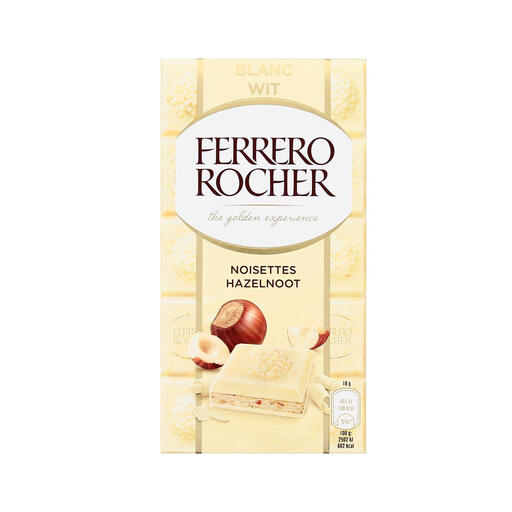 Image unavailable
Ferrero Rocher White Block, 90 g
Worth considering if you prefer a white chocolate confectionery product to the intensity of dark chocolate. This 90 g block isn’t suitable if you’re looking for dark chocolate with 85% cocoa; check its exact product description, ingredients, allergens and sugars per 100 g.
View on Joybuy
Frequently asked questions
Can white chocolate be ‘dark’?
White chocolate isn’t dark chocolate with a very high cocoa content. The French Ministry of the Economy describes it as being made with cocoa butter, milk and sugars. If a bar combines dark and white chocolate, check the product description and the composition of the whole recipe.
Does the ‘soda tax’ apply to chocolate bars?
No. It isn’t a criterion that applies to a solid bar: the French Ministry of the Economy describes this levy as applying to sugary drinks. To choose your chocolate, compare the information shown on the products instead.
Does chocolate have to display Nutri-Score?
No. Santé publique France explains that displaying Nutri-Score is voluntary. It can help you compare products, but whether or not it’s shown, you should still read the nutritional information, ingredients and allergens.
How can you compare two bars for a study break?
Start with their values per 100 g, especially energy, sugars and saturated fatty acids, then check the ingredients and allergens. For dark chocolate, the cocoa percentage tells you about the recipe as described, but doesn’t sum up its nutritional values.
What should you check if certain ingredients are a concern?
Read the allergens and ‘may contain traces’ information on the packaging of the product you choose, including for dark chocolate. For example, the product information for an Auchan 85% dark chocolate bar mentions possible traces of milk, gluten, soya, eggs and nuts. This list doesn’t apply to all bars.


