Who are these options for?

Parents of children who already enjoy dark chocolate

If your child already likes a pronounced cocoa flavour, look for a clearly stated percentage. Check whether it applies to the dark chocolate or to the entire filled product: the two figures are not interchangeable.

Parents preparing a snack to share or take to school

When nuts need to be avoided, the exact recipe matters more than the name of the confectionery. If your child has an individual care plan (PAI), follow the dietary adjustments it specifies, as advised by the French Ministry of Education.

Parents who want to control portion sizes

One bite and a few squares may not be the same amount. Compare the sugars and energy per 100 g, then check the weight of the portion you actually serve. Don’t assume the nutritional values from the word ‘dark’ alone.

What should you check before buying?

For a child’s afternoon snack, first check that the ingredients meet their dietary requirements. Then look at what the cocoa percentage refers to and how much you want to serve.

What matters What to check Who is it for?
Nuts and snacks to share Read the ingredients and any ‘may contain traces’ statements on the pack you buy. At school, check the applicable guidance, especially if a PAI is in place. When I’m preparing a snack to share, I need to avoid recipes that don’t meet a child’s dietary restrictions. Around 42% of consumers put this first.
Cocoa intensity Look for the stated percentage and check whether it applies to the dark chocolate or the whole product. Check the filling too. If my child already enjoys a rich chocolate flavour, I look for a clearly defined cocoa percentage. Around 33% of consumers prioritise this clear indication of intensity.
Portion size and nutritional values Compare the sugars and energy per 100 g, then check the weight of the bite or squares you’re serving. When I’m preparing an afternoon snack, I want to choose how much to serve without relying on the word ‘dark’ alone. Around 25% of consumers prioritise portion control and nutritional comparisons.

Common pitfalls to avoid

  • Assuming ‘dark chocolate’ describes the whole praline

    The chocolate description alone doesn’t tell you about the filling or nutritional values. For example, Lindt CREATION Noir Praliné Rocher combines dark chocolate with an almond and hazelnut praline filling; Lindt states that it contains 44 g of sugars per 100 g.

    Check the ingredients list and nutritional information for the specific product before deciding how much to serve.

  • Guessing allergens from the name or brand

    The praline products featured contain hazelnuts, and some also contain almonds. Other allergens or traces may be listed, depending on the product.

    Read the highlighted allergen information on the pack you buy and follow your child’s specific requirements. The DGCCRF reminds consumers that allergenic ingredients must be clearly highlighted on labels.

  • Comparing cocoa percentages without checking what they refer to

    Ferrero Rocher states that its dark hazelnut bar contains at least 70% cocoa in the dark chocolate, but 45.5% cocoa in the product as a whole. These figures refer to different things.

    Check the wording alongside each percentage before comparing this bar with a praline or another filled chocolate.

Brands and products to know

Lindt

The CREATION Noir Praliné Rocher bar combines dark chocolate with an almond and hazelnut praline filling.

  • Lindt states that the dark chocolate in this product contains at least 47% cocoa.
  • It contains almonds, hazelnuts, milk and soya. Lindt also warns that it may contain wheat and other nuts.

Ferrero Rocher

Its dark hazelnut bar is an option to break into portions, rather than an individually wrapped praline.

  • Ferrero Rocher distinguishes between the cocoa content of the dark chocolate, stated as at least 70%, and that of the whole product, stated as 45.5%.
  • The bar contains hazelnuts and may contain other nuts.

Carrefour EXTRA

The dark chocolate praline clusters come as individual bites, rather than as a bar to break into portions.

  • The format makes it easy to count how many bites you plan to serve.
  • The recipe contains hazelnuts and milk. Carrefour warns that it may contain traces of other nuts and cereals containing gluten.

EQUADOR

This Marque Repère product from E.Leclerc is a dark chocolate cluster filled with hazelnut praline.

  • E.Leclerc lists the dark chocolate with hazelnut pieces separately from the praline filling; these proportions are not cocoa percentages.
  • The product contains hazelnuts, milk and soya. Its product information states that it contains 50 g of sugars per 100 g.

Auchan

The dark chocolate cluster comes in a box of seven.

  • Auchan’s product information gives nutritional values per 35 g piece, including 17 g of sugars.
  • The product contains hazelnuts, milk and soya. It is also labelled as potentially containing traces of almonds and cereals containing gluten.

A block of chocolate from Joybuy

If a block of chocolate is more suitable than individual pralines for your afternoon snack, this hazelnut and almond bar lets you choose how much to serve. Check your child’s dietary requirements before choosing it.
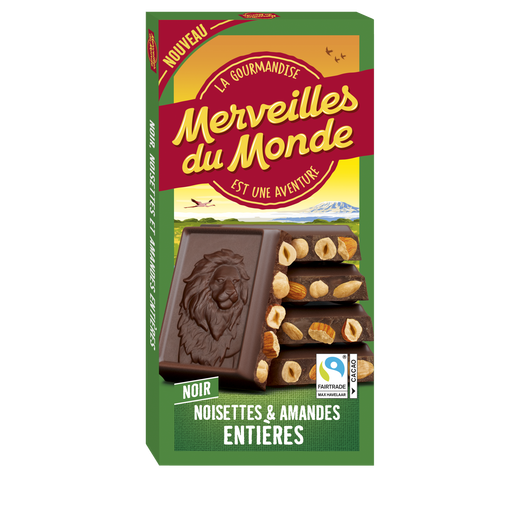
MERVEILLES DU MONDE Black Block with whole hazelnuts and almonds, 170 g

MERVEILLES DU MONDE Black Block, whole hazelnuts and almonds, 170 g

This block is a good choice if you’d rather break off portions of chocolate than serve individual pralines. It contains whole hazelnuts and almonds, so don’t choose it for a child who needs to avoid these nuts.

View on Joybuy

Frequently asked questions

Does ‘dark chocolate’ always mean a very intense flavour?

No. The description alone doesn’t tell you how an individual filled praline will taste. The DGCCRF states that, in France, dark chocolate must contain at least 43% total dry cocoa solids. When choosing a specific product, also check the stated percentage, what part of the product it refers to and the filling ingredients.

Can you take pralines to a school snack?

First check the ingredients and the guidance for the snack. The praline products featured contain hazelnuts or almonds. If a child has a PAI, it may set out dietary adjustments to follow at school, as advised by the French Ministry of Education.

How do you compare the sugar in a chocolate cluster and a bar?

Check the ‘of which sugars’ figure per 100 g, then take the actual serving weight into account. Auchan’s product information states that its 35 g chocolate cluster contains 17 g of sugars, while Lindt states that CREATION Noir Praliné Rocher contains 44 g per 100 g. The portions and the basis for these two figures are different.

How should you store pralines before serving them?

Follow the storage instructions on the pack you buy. Auchan’s product information notes that heat and humidity can affect the appearance of its chocolate cluster. This product-specific guidance doesn’t replace the instructions on the packaging.