What should you check before choosing?
For a school lunchbox, start with anything that could rule out a bar, especially allergens and the school’s rules. Then compare the certification, nutritional information and flavour of the recipe you’re considering.
| Criteria |
What to check |
Who is it for? |
| Fairtrade certification |
Identify the logo and read the information on the back about which ingredients are covered. Max Havelaar France recommends doing this when an arrow appears alongside the Fairtrade/Max Havelaar label. |
If I choose this bar for its Fairtrade credentials, I want to know exactly what the label covers. Around 36% of consumers would make this their priority. |
| Sugar and portion size |
Compare the sugar and saturated fat content per 100 g, then decide how much to pack. |
For a snack with other foods, I’d rather decide how many squares to pack after checking the nutritional information. This would be a priority for around 29% of consumers. |
| Allergens and school rules |
Read the ingredients and “may contain” warnings, and check the rules that apply at the school. |
If an allergy or classroom rule is a factor, I need to check the exact recipe before putting the chocolate in the lunchbox. Around 21% of consumers would make this their top criterion. |
| Dark chocolate flavour |
Check whether your child likes the recipe you’ve chosen; don’t assume they’ll like it based on the cocoa percentage alone. |
If my child is new to dark chocolate, I’d rather try a few squares at home than pack a bar they might leave uneaten. Taste would come first for around 14% of consumers. |
Two formats of dark chocolate with almonds
These two Tony’s Chocolonely formats combine dark chocolate, almonds and sea salt, and are described as Fairtrade. For a school lunchbox, check the logo and its details on the packaging, along with the allergens and the school’s rules.
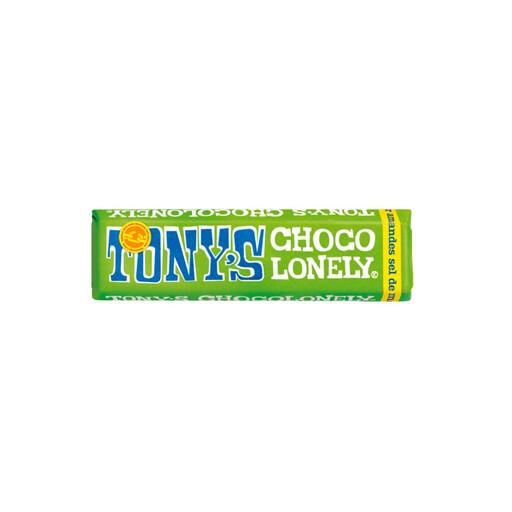 Image unavailable
TONY'S dark chocolate with almonds and sea salt 47 g
The 47 g format could be a good option if you’re packing a few squares for school. Before choosing it, check the Fairtrade label, almonds, soya and any “may contain” allergen warnings on the packaging, taking your child’s needs and the school’s rules into account.
View on Joybuy
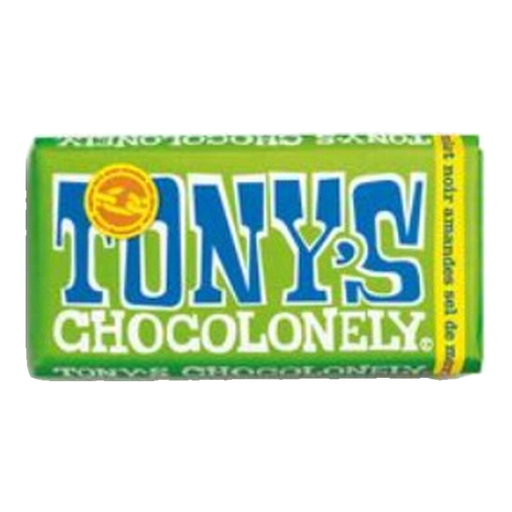 Image unavailable
TONY'S dark chocolate with almonds and sea salt 180 g
For a school lunchbox, pack the amount you want rather than taking this 180 g bar. Auchan France’s listing for this recipe gives 10% almonds and 41.58 g of sugar per 100 g. Also check for soya, other allergen warnings and details of what the label covers on the packaging you buy.
View on Joybuy
Frequently asked questions
Does the “sugar tax” apply to dark chocolate bars in France?
No. The French Ministry of the Economy describes this levy as applying to sugary drinks, not dark chocolate bars. If sugar content matters to you, check the bar’s nutrition declaration instead.
Is Nutri-Score required on dark chocolate?
No. Santé publique France says that displaying it is voluntary in France. For a prepacked bar, check the ingredients list and nutrition declaration even if Nutri-Score isn’t shown.
How can you check what a Fairtrade/Max Havelaar label covers?
Look for the exact logo and read the information on the back of the packaging. Max Havelaar France says that when an arrow appears alongside its label on a product made with several ingredients, you should check which ingredients are covered and how they are traced.
Can you put dark chocolate in a school lunchbox every day?
Chocolate can be part of a varied snack without being the only thing in it. Manger Bouger suggests, for example, bread, a few squares of chocolate and a piece of fruit, while also recommending that you limit fatty and sugary foods day to day.
Which allergens should you check before packing chocolate for school?
Read the ingredients list for the product you’ve chosen, check which allergens are highlighted and look for “may contain” warnings. Depending on the recipe, nuts, soya, sesame, milk or gluten may be present. Also follow the school’s rules and, if applicable, the individualised care plan in place.


