People who avoid ingredients of animal origin
A ‘dark chocolate’ recipe may contain milk. If you’re shopping for vegan products, check the ingredients list, particularly for milk powders and fats.


When shopping for vegan products, first choose a spread explicitly labelled vegan or check that its ingredients contain nothing of animal origin: ‘dark chocolate’ alone isn’t enough. Then compare the cocoa content, sugars and fat per 100 g. A vegan cocoa recipe isn’t necessarily a dark chocolate recipe.
A ‘dark chocolate’ recipe may contain milk. If you’re shopping for vegan products, check the ingredients list, particularly for milk powders and fats.
You’re looking for a recipe with a higher cocoa content. Check whether it contains cocoa powder or dark chocolate, and look at the proportions given. These alone won’t tell you what the product tastes like.
When choosing between jars, you prefer to check the ingredients and nutritional values per 100 g rather than relying solely on claims such as ‘organic’ or ‘palm oil-free’.
When shopping for vegan products, start with the ingredients. Then look at the cocoa content and nutritional information, depending on what matters most to you.
| Criteria | What to check | Who is it for? |
|---|---|---|
| Vegan suitability | The vegan label, followed by the ingredients list. Look out in particular for milk, milk powder, whey and milk fats. Check any ‘may contain’ statements separately. | If I want to avoid ingredients of animal origin, the word ‘dark’ on the jar isn’t enough. Around 46% of consumers would put vegan suitability at the top of their list of criteria. |
| Cocoa content | The stated proportion of cocoa powder or dark chocolate, and where they appear in the ingredients list. These two ingredients aren’t interchangeable. | I’m mainly looking for a recipe where cocoa has a clear place, without assuming that ‘dark chocolate’ means vegan. For around 27% of consumers, this would be the main criterion. |
| Sugars and ingredients | Sugars and saturated fat per 100 g, followed by the ingredients used. The Nutri-Score is an additional guide when shown. | When choosing between two spreads that suit my shopping needs, I want to compare their nutritional values on the same basis. This would come first for around 27% of consumers. |
A dark cocoa spread isn’t necessarily labelled vegan. Conversely, Nutella Plant-Based isn’t specifically marketed as a ‘dark chocolate’ recipe.
Check the full ingredients list and look for a vegan label where one is shown on the product. Any ‘may contain milk’ statement needs to be considered separately from the ingredients list.
‘Vegan’, ‘organic’ and ‘palm oil-free’ don’t tell you how much sugar a product contains. Auchan’s product listing for Nutella Plant-Based states 45.4 g of sugars per 100 g.
Compare the sugars and fat per 100 g across spreads rather than relying on a single claim.
The recipes featured may also contain hazelnuts, almonds or soya. The absence of dairy ingredients doesn’t mean a product is free from these allergens.
Before switching recipes, read the highlighted allergen information and any ‘may contain’ statements that are relevant to you.
According to Santé publique France, displaying the Nutri-Score is voluntary. Its absence alone therefore doesn’t tell you what a jar contains.
When it is shown, use it as an additional guide. Also check the ingredients list and, for the relevant pre-packed foods, the nutrition declaration.
Nutella Plant-Based is a hazelnut and cocoa spread that the brand describes as suitable for a vegan diet.
Choko Noir is described on its Naturalia product listing as an organic, vegan and dairy-free spread with a focus on cocoa and hazelnut.
Chocolade Sans Lait focuses on hazelnuts and being dairy-free, rather than a high proportion of dark chocolate.
The dark cocoa description may appeal to people comparing the amount of dark chocolate in the ingredients.
This option is a match if you’re looking for a cocoa and hazelnut spread explicitly labelled vegan. If your priority is a dark chocolate recipe, check its cocoa content before choosing.
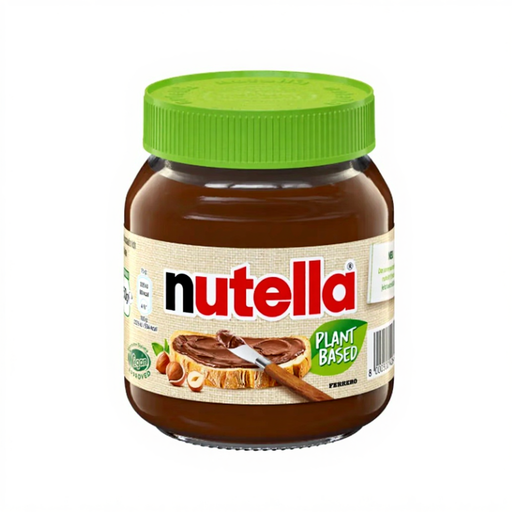 Image unavailable
Worth considering if you’re primarily looking for a cocoa and hazelnut spread labelled vegan, rather than a recipe specifically made with dark chocolate.
According to the Auchan listing for this product, it contains 7.4% fat-reduced cocoa powder and 45.4 g of sugars per 100 g. Its ingredients also include palm oil, hazelnuts and soya.
No. Check all the ingredients, not just whether the spread contains dark chocolate. Naturalia describes Choko Noir as suitable for a vegan diet, while the Auchan listing for Jardin Bio Étic cacao noir doesn’t make this claim and warns that the product may contain milk.
No. According to Santé publique France, displaying the Nutri-Score is voluntary in France. When comparing products, also check their ingredients and nutrition declaration, which is required for pre-packed foods subject to the applicable exceptions.
No. This statement warns that milk may be present unintentionally; it’s separate from the ingredients used in the recipe. If you need to avoid milk because of an allergy, don’t assume a product is suitable for you based on a vegan label alone. Check the labelling and contact the manufacturer for more information if needed.
Follow the instructions on the jar you’ve chosen, particularly for storage after opening. They can vary from one recipe to another, so don’t automatically apply the guidance for another brand.