Organisers looking for a pronounced cocoa flavour
If you want the chocolate to come through in the finished cake, check the cocoa percentage and look for a baking recommendation. The result also depends on the recipe and how much chocolate you add.


For a school cake sale where you want a pronounced chocolate flavour, start by comparing dark chocolate bars labelled for baking and showing 70% cocoa. Then check how much the recipe calls for, the sugars per 100 g and the allergens listed for the specific product you plan to use. The cocoa percentage alone won’t answer these questions.
If you want the chocolate to come through in the finished cake, check the cocoa percentage and look for a baking recommendation. The result also depends on the recipe and how much chocolate you add.
Check how much chocolate your recipe calls for and the weight of each bar before choosing a pack size. A dark chocolate bar intended for baking won’t necessarily have a high cocoa content.
Keep the wrappers from the products you use so you can check the ingredients, allergens and any ‘may contain’ warnings. The DGCCRF reminds consumers that allergens must be emphasised in the ingredients list of prepacked foods.
For a school cake sale, start with the recipe and the quantity you need to make, then compare the flavour intensity you’re looking for with the information on each bar.
| What matters | What to check | Who is this for? |
|---|---|---|
| Cocoa intensity | Stated cocoa percentage and whether it’s recommended for baking. | If I want the chocolate to stand out in my cake, I look for a bar with an intensity that suits my recipe. Around 29% of consumers put this cocoa flavour first. |
| Quantity for your batches | Net weight and the amount of chocolate called for in the recipe. | When I’m making several batches, I want to make sure I have enough chocolate without mixing up the different bar sizes. The quantity needed is the top priority for around 29% of consumers. |
| Sugars and nutritional information | The ‘of which sugars’ line per 100 g; any sweeteners and warnings. | To compare products, I need to check the sugar content on the same basis and look out for sweeteners. Around 21% of consumers prioritise checking this information on the label. |
| Allergens | Allergens in the ingredients and any ‘may contain’ warnings on the bar you use. | If I need to inform families, I want to be able to identify the ingredients in each cake without assuming dark chocolate is allergen-free. This information comes before other criteria for around 21% of consumers. |
According to Santé publique France, displaying Nutri-Score is voluntary. The DGCCRF explains that nutrition declarations on prepacked foods are generally compulsory, subject to certain exemptions.
Compare the nutritional values per 100 g and read the ingredients list. If Nutri-Score appears on the packaging, use it as additional information, but don’t assume it means the bar is right for your recipe.
Article 1613 ter of the General Tax Code, in the version in force on 1 September 2026 published by Légifrance, applies to drinks and liquid drink preparations that meet the conditions set out in the text, not to chocolate bars.
When choosing a bar, focus instead on whether it’s suitable for baking, its cocoa content, its sugars and its allergens.
Ingredients vary by product: dark chocolate bars from Lindt, Nestlé Dessert and Côte d’Or include allergenic ingredients or ‘may contain’ warnings. The product category name alone isn’t enough to inform families.
Keep the wrapper from every bar you use, and note separately any allergens in the ingredients and any ‘may contain’ warnings.
An Auchan dark chocolate bar marketed as low in sugars contains maltitol and lactitol. Its product information warns that excessive consumption may have laxative effects.
If you’re considering this type of bar for cakes sold at school, check the sweeteners and warnings for the specific product, then make sure it’s suitable for your recipe.
Lindt Dessert includes a 200 g Noir Intense 70% cocoa bar, which Lindt France presents as suitable for baking.
The range includes a 205 g dark chocolate dessert bar and a 170 g baking bar with 70% cocoa.
Côte d’Or offers an intense 70% cocoa dark chocolate bar for eating, in a 2 × 100 g pack.
This brand, sold by E.Leclerc, offers a 200 g dark chocolate bar for baking, as well as a stronger variety.
The range includes 200 g dark chocolate bars for baking with 52% cocoa, as well as stronger 64% cocoa bars.
These bars let you compare different cocoa percentages and pack sizes for your cake recipe. If a product isn’t labelled for baking, check that it’s suitable for the preparation you have in mind.
 Image unavailable
Worth considering if your recipe calls for dark chocolate with 85% cocoa. This bar weighs 100 g; check that it’s suitable for the baking you have in mind, and read the allergen information before making your cakes.
 Image unavailable
This 100 g bar contains 70% cocoa. If you’re considering it for a school cake sale, check that it’s suitable for your recipe and look for the stated sweetener, soya lecithin and warning about excessive consumption.
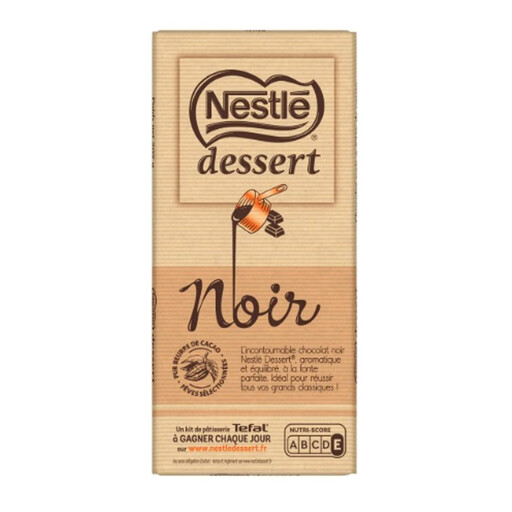 Image unavailable
This 205 g dessert chocolate bar is presented as suitable for baking and melting, so you could consider it for a cake recipe. If you’re looking for a specific cocoa percentage, check the packaging. Also look for any ‘may contain’ warnings for milk and nuts.
 Image unavailable
At 35 g, you’ll need to check how many bars your recipe requires. The product title states 70% cocoa; also check whether it’s suitable for your baking and look for any ‘may contain’ warnings for nuts, milk and soya.
No. Santé publique France explains that displaying Nutri-Score is voluntary. The DGCCRF says nutrition declarations are generally compulsory for prepacked foods, subject to exemptions. Check the sugars and fat per 100 g, and don’t rely on Nutri-Score alone to decide whether a product is right for your recipe.
No. Article 1613 ter of the General Tax Code, published by Légifrance in the version in force on 1 September 2026, applies to drinks and liquid drink preparations that meet the conditions it sets out, not to chocolate bars.
Keep the wrapper from every chocolate bar you use, and note the allergenic ingredients and any ‘may contain’ warnings for the product you bought. Do the same for the other recipe ingredients, and check with the school or organising association how families should be informed.
Follow the storage instructions on the packaging of the product you choose. For its Nestlé Dessert 70% bar, Auchan recommends storing it in a cool, dry place away from light, at between 15 and 18 °C.