Fans of rich cocoa flavours
If dark chocolate flavour matters most to you, look for the stated cocoa content of the specific product rather than relying on the word “dark” alone.


To go with a bakery sandwich, choose a dark chocolate bar based on the cocoa flavour you’re looking for, its texture and the portion size you want to offer. Then compare the sugar content and ingredients of the exact product. The word “dark” guarantees neither a low sugar content nor the absence of allergens.
If dark chocolate flavour matters most to you, look for the stated cocoa content of the specific product rather than relying on the word “dark” alone.
To compare similar products, check the sugars and fat per 100 g, as well as the portion size you have in mind. If a Nutri-Score is shown, it can help you make your decision.
A dark chocolate recipe may also contain cereals, milk, soya or nuts. Check the ingredients and any “may contain” warnings on the packaging of the product you choose.
| Criterion | What to check | Who is it for? |
|---|---|---|
| Cocoa content | The stated cocoa content and format of the exact product. | With a sandwich, I’m mainly looking for a pronounced dark chocolate flavour, rather than choosing based on the word “dark” alone. Around 33% of consumers put verifiable cocoa content at the top of their list. |
| Nutritional information | Sugars and fat per 100 g, followed by the portion size you have in mind; check the Nutri-Score if it appears on comparable products. | Before choosing a bar to go with a sandwich, I want to be able to compare its nutritional content with that of another product. This is the main consideration for around 42% of consumers. |
| Ingredients and allergens | The ingredients list, highlighted allergens and any “may contain” warnings on the packaging. | If certain ingredients need to be avoided, taste and texture aren’t enough to make a decision: you need to know the exact recipe. For around 25% of consumers, checking allergens comes before all other criteria. |
Cocoa content and sugar content describe two different things. The term “dark chocolate” alone doesn’t tell you how a product compares nutritionally.
Compare the “of which sugars” figure per 100 g for the products you’re considering, then take the portion size into account. If several comparable products show a Nutri-Score, use it alongside the nutritional information.
Dark chocolate products may contain nuts, cereals, milk or soya, and may carry “may contain” warnings. So a recipe chosen for its crunch may not be suitable for someone who needs to avoid certain allergens.
Read the label on the actual pack you plan to offer. If it’s essential to avoid a particular allergen, choose a product whose information confirms it meets that requirement.
In France, the charge known as the “soda tax” applies to sugary drinks, according to the Ministry of the Economy. It isn’t a regulatory criterion for choosing a chocolate bar.
When comparing bars, focus instead on their ingredients and nutritional information.
Carrefour France states that the KITKAT DARK product contains at least 70% cocoa in its dark chocolate and comes in a 41,5 g format.
The 45 g dark chocolate and hazelnut bar described on Joybuy France states that it contains 23% hazelnuts. It’s a different format from the 180 g bar shown below.
Carrefour France describes a crunchy cereal bar with dark chocolate, sold in a pack of five 36 g bars.
These products give you the choice of a smaller format with a stated cocoa content or dark chocolate bars, either plain or with nuts. If you’re choosing something to go with a sandwich, check that the format suits the portion you want to offer.
 Image unavailable
This smaller format is a good choice if you’re looking for a bar with a stated cocoa content to go with a sandwich.
Check the nutritional information and allergen warnings on the packaging before choosing this product.
 Image unavailable
This bar is for anyone looking for a clearly stated cocoa content who wants to choose their own portion size.
Cocoa percentage alone doesn’t tell you the sugar or fat content. Compare the nutritional values on the packaging.
 Image unavailable
This bar is a good option if you’re looking for a stated cocoa content and plan to serve a portion rather than the whole bar.
To compare it with other products, check the sugars per 100 g and the ingredients list on the packaging.
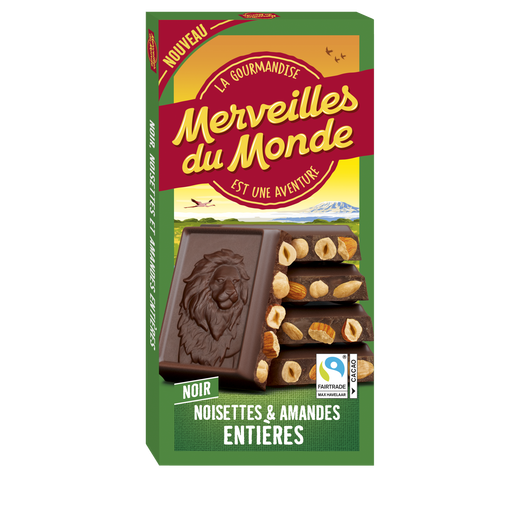 Image unavailable
This large bar is a good choice if you’re looking for dark chocolate with nuts, provided the recipe is suitable for the people you’re buying it for.
Hazelnuts and almonds are listed in the product name. Check the full ingredients list, allergens and the portion size you have in mind.
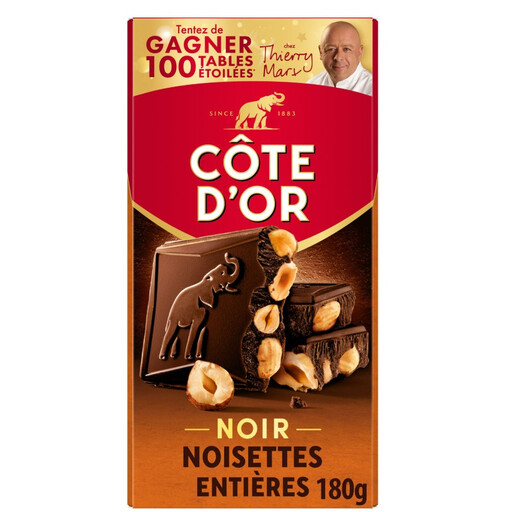 Image unavailable
This large bar is a good choice if you’re after dark chocolate with hazelnuts, rather than a small bar to serve as it is with a sandwich.
Check the portion size you plan to serve and the nutritional information. If anyone has an allergy, make sure you check the hazelnuts and other allergens.
No. According to Santé publique France, producers display Nutri-Score voluntarily. Pre-packed bars must carry a nutrition declaration under the labelling rules outlined by the DGCCRF, so check it even if no Nutri-Score is shown.
No. The term doesn’t tell you how much sugar a bar contains. To compare two products, check the “of which sugars” figure per 100 g for both, then take into account the portion you plan to serve.
Check the ingredients and any “may contain” warnings on the specific bar before offering it. The European Commission states that allergens must be highlighted in the ingredients list of pre-packed foods. Depending on the recipe, dark chocolate may also contain other ingredients, including milk, soya or nuts.