What should you look for before buying?
First decide whether you want a bar that’s ready to eat or a block you can break into pieces. Then compare the recipes and nutritional information on a like-for-like basis.
| What matters to you |
What to check |
Who is it for? |
| A set portion |
The weight of each bar and the number of bars; check separately whether each bar is individually wrapped. |
If I don’t want to break off a piece from a sharing block in the evening, a bar with a known weight gives me a portion to choose when I buy it. Around 40% of consumers are said to prioritise this portion guide. |
| The recipe and allergens |
The ingredients list, the proportion of dark chocolate if stated, and the allergens in the variant you choose. |
If I’m looking for plain dark chocolate or need to avoid certain ingredients, the word ‘dark’ on the front of the pack isn’t enough to make a decision. The ingredients are said to be the main concern for around 30% of consumers. |
| Nutritional values |
Sugars and energy per 100 g, then per bar where these values are available; check the Nutri-Score only if one is shown. |
To compare two bars of different weights before my evening snack, I need a common basis and to know how much I plan to eat. Around 20% of consumers are said to put this comparison first. |
| A recipe with nuts |
The proportion of nuts and chocolate, as well as the allergens listed. |
If I prefer a peanut or almond bar for its recipe and texture, I’m happy for it not to be made mainly from dark chocolate. This type of recipe is said to be the top priority for around 10% of consumers. |
Dark chocolate bars available on Joybuy
These two bars have set weights but suit different tastes: one is 70% cocoa dark chocolate, while the other combines dark chocolate and hazelnuts. If individual wrapping matters to you, check this on the product you choose.
 Image unavailable
Lindt Excellence 70% dark chocolate, 35 g mini bar
Worth considering if you’d prefer a 35 g bar to a sharing block you have to break into pieces. The product name states that it contains 70% cocoa. If you need to avoid nuts, milk or soya, check the allergen information on the packaging. Also check whether the bar is individually wrapped.
View on Joybuy
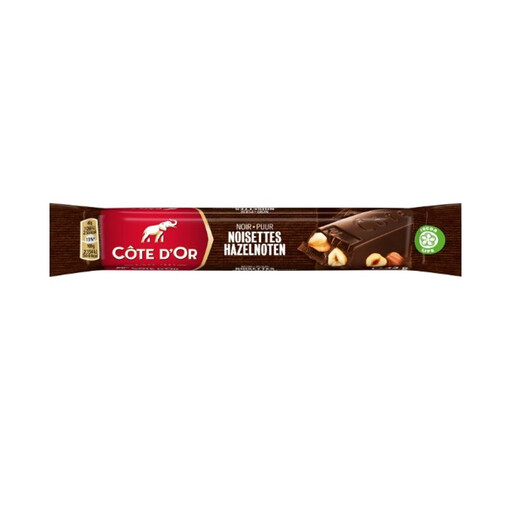 Image unavailable
Côte d’Or dark chocolate and hazelnut, 45 g bar
Worth considering if you’re looking for a 45 g dark chocolate and hazelnut bar. The recipe information states that it contains 23% hazelnuts and 41 g of sugars per 100 g. It contains milk and soya, and may contain other nuts. Check the label if you have an allergy, and check whether it’s individually wrapped if that matters to you.
View on Joybuy
Frequently asked questions
How do I compare two bars that weigh different amounts?
First compare their nutritional values per 100 g, then check the weight of each bar and its values per bar where these are stated. As the DGCCRF explains, the nutrition declaration on prepacked food provides a common basis for comparison.
Is Nutri-Score compulsory on a chocolate bar?
No. In France, Nutri-Score is voluntary, according to the DGCCRF and the Ministry for the Economy. For the prepacked foods it applies to, the nutrition declaration remains the information to check when comparing factors such as energy and sugars.
Is a dark chocolate and nut bar suitable if I avoid certain allergens?
It depends on the exact recipe: the products featured by Carrefour France, Lindt and Auchan may contain hazelnuts, peanuts, almonds, milk or soya, among other ingredients. Check the ingredients and allergen information for the variant you’ve chosen before buying.
Does a dark chocolate bar come under France’s ‘soda tax’?
No. A solid chocolate bar isn’t covered by the tax on drinks and liquid preparations for drinks described in Article 1613 ter of the French General Tax Code, published by Légifrance. The sugar content is still worth checking on the label when comparing products.


