For a bar of dark chocolate to take for lunch, start by choosing an intensity you’ll enjoy: around 70% cocoa is a good place to start, while 85% or more offers a bolder flavour. A smaller format can be easier to carry, but neither the cocoa percentage nor the weight of the bar is a substitute for checking the ingredients, sugars and allergen information on the exact packaging.
Who is this choice for?
Fans of bold cocoa flavours
You’re looking for a pronounced cocoa flavour and don’t mind a more intense bitterness. The ranges featured by Lindt and Carrefour include bars with 70%, 85% and 90% cocoa. Choose according to the flavour you’re after, rather than judging the ingredients by the percentage alone.
Those who pay close attention to ingredients
You check the sugars, ingredients and allergen information before choosing. A bar labelled ‘dark’ may contain milk or soya, or carry a ‘may contain nuts’ warning. The label on the exact product you buy is what matters.
People who like to take a snack break
You want to pack an amount that suits your break in your bag. The 35 g Lindt EXCELLENCE Dark 70% mini bar is one example of a handy format; check the weight of other bars and multipacks too.
What should you check before buying?
For a snack on the go, start with the flavour you’re looking for, then check the recipe and the weight of the specific product. These three criteria meet different needs.
| What matters |
What to check |
Who is it for? |
| Cocoa intensity |
The stated cocoa percentage and flavour description, especially if you’re choosing between 70% and 85%. |
If I’m trying bolder chocolate, I want to choose an intensity I’ll enjoy. Around 33% of consumers put flavour choice at the heart of their decision. |
| Ingredients and allergens |
The ingredients, the ‘of which sugars’ line per 100 g, and any ‘may contain’ warnings for the exact product. |
When I need to avoid an ingredient or compare recipes, the colour and cocoa percentage aren’t enough. For around 42% of consumers, checking the ingredients is the priority. |
| On-the-go format |
The net weight, the number of bars in the pack and how easy it is to take along for your planned break. |
I’m looking for a handy amount to pop in my bag rather than a large bar to carry around. Format comes first for around 25% of consumers. |
Common misconceptions to avoid
-
Assuming ‘dark’ means no milk or soya
Recipes vary. The product listing for Milka Tendre Noir includes skimmed milk powder and concentrated butter, while the one for Côte d’Or Dark 70% lists concentrated butter and soya lecithins, among other ingredients. Bars with a higher cocoa content may also carry warnings about traces.
Read the ingredients list and any ‘may contain’ warnings on the packaging of the product you buy, particularly if you need to avoid an allergen.
-
Judging the sugar content by the cocoa percentage alone
A high cocoa percentage doesn’t mean a recipe has no added sugar. The percentage on the front of the pack and the ‘of which sugars’ line describe different things.
Compare the nutrition information on the same basis, per 100 g, then consider how much you plan to take with you.
-
Confusing eating chocolate with baking chocolate
Nestlé Dessert and TABLETTE D’OR Dessert products are presented for melting or baking. That doesn’t mean you can’t enjoy them as they are, but their stated use and format may be less suited to a quick break.
Check the net weight and the stated use on the bar. A smaller format or squares may be easier to take with you.
-
Assuming Nutri-Score or the soft drinks tax applies to chocolate bars
In France, Santé publique France describes Nutri-Score as a voluntary label. The Ministry of the Economy says the so-called ‘soft drinks tax’ applies to sugary drinks, not chocolate bars.
If a Nutri-Score appears on the product, treat it as additional information. When comparing chocolate bars, also check the ingredients, allergens and nutritional values.
Brands to know
Lindt
Lindt’s EXCELLENCE range includes bars with 70%, 85%, 90% and 99% cocoa, as well as a 35 g mini bar with 70% cocoa.
- A choice of intensities and a smaller format make it easier to find an option that suits your taste and how much you want to take with you.
- Ingredients and trace warnings vary by product, so check the exact packaging.
Côte d’Or
Carrefour features a Côte d’Or Dark 70% bar, as well as recipes containing nuts.
- The Dark 70% version is a useful option if you’re looking for this cocoa percentage.
- The product listing for this version mentions concentrated butter, soya lecithins and the possibility of nuts. Recipes with added inclusions have different ingredients.
Carrefour
Carrefour’s ranges include several cocoa percentages, including dark chocolate bars with 80% cocoa and an organic option with 90%.
- These products make it easy to compare different intensities from the same retailer.
- Check the ingredients and allergen warnings for each product, even for a bar with 90% cocoa.
E.Leclerc / Marque Repère
E.Leclerc’s EQUADOR and TABLETTE D’OR ranges include dark chocolate bars with different cocoa percentages, as well as products intended for baking.
- The cocoa percentage and stated use help you tell eating chocolate apart from bars made for baking.
- If you’re looking for a ready-to-go snack, check the format and intended use of the specific product.
Nestlé Dessert
Nestlé Dessert dark chocolate bars are presented for melting and baking.
- Their stated use may suit you if you’d also like to cook with the bar.
- For a small snack to take with you, check the weight and allergen information for the product you choose.
Milka
The Tendre Noir product featured by Auchan is a dark chocolate recipe containing milk, sold as a pack of two 85 g bars.
- It’s an option if you’re looking for this specific recipe rather than a simple dark chocolate.
- Its ingredients include skimmed milk powder and concentrated butter, so it isn’t suitable if you’re looking for a milk-free recipe.
Chocolate bars available on Joybuy
These dark chocolate bars come in different cocoa percentages, weights and recipes for a snack on the go. Compare the exact product if you’re looking for a bold flavour, a smaller format or a recipe with added inclusions.
 Image unavailable
Lindt EXCELLENCE Dark 70%, mini bar, 35 g
The 35 g size is a handy option if you’re looking for a small bar to take with you, with 70% cocoa as stated.
The listing for this mini bar mentions sugars and possible allergens due to traces. Check these details on the packaging you buy.
View on Joybuy
 Image unavailable
Lindt EXCELLENCE Dark 85%, 100 g
This 100 g bar is for those looking for 85% cocoa rather than a smaller format.
Before buying, check the ingredients and allergen information on the current packaging for this product.
View on Joybuy
 Image unavailable
Poulain Dark Chocolate 70%, 100 g
This 100 g bar is an option if you’re looking for dark chocolate with 70% cocoa.
The product listing notes maltitol and a warning about excessive consumption. Read the ingredients and this warning on the packaging.
View on Joybuy
 Image unavailable
CARRE SUISSE Dark Chocolate with Lemon and Green Pepper, 100 g
This 100 g bar is a good fit if you’re specifically looking for a recipe with lemon and green pepper, rather than a simple dark chocolate.
Check the ingredients list and allergen information before choosing this bar with added inclusions.
View on Joybuy
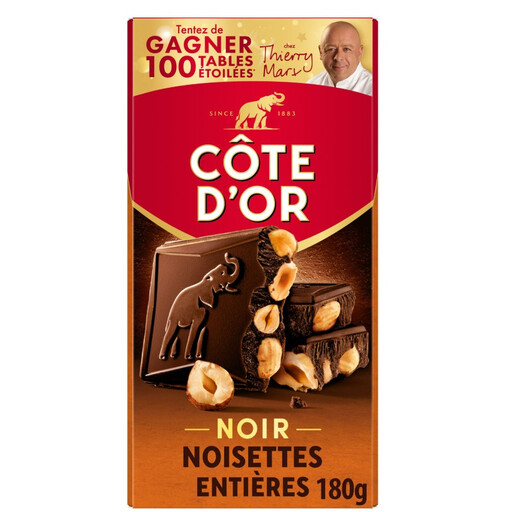 Image unavailable
Côte d’Or Dark Chocolate with Hazelnuts, 180 g
This 180 g hazelnut bar is a good option if you’re looking for a recipe with nuts, but its weight sets it apart from a mini snack-sized bar.
If your priority is a very bold cocoa flavour or avoiding an allergen, check the cocoa percentage, ingredients and warnings on the packaging.
View on Joybuy
Frequently asked questions
Is a 70% dark chocolate bar guaranteed to be free from milk and allergens?
No. The listing for Côte d’Or Dark 70% includes concentrated butter and soya lecithins, and mentions the possibility of nuts. Check the ingredients and any trace warnings on the packaging of the bar you’re buying.
Does a high cocoa percentage mean there’s no added sugar?
No. The cocoa percentage alone doesn’t tell you whether a bar has no added sugar. Check the ingredients list and the ‘of which sugars’ line in the nutritional information per 100 g for the specific product.
Is Nutri-Score compulsory on chocolate bars?
No. In France, Santé publique France says that producers display Nutri-Score on a voluntary basis. If it appears on a chocolate bar, use it alongside the ingredients, allergens and nutritional values.
Does the soft drinks tax apply to chocolate bars in France?
No. The Ministry of the Economy says this levy applies to sugary drinks, not chocolate bars. When choosing a bar, check its recipe and the sugar information on the label instead.


