What should you look for?
For drinks and nibbles, start with the fair-trade claim, then compare bars based on your group’s tastes and what everyone can eat.
| Criteria |
What to check |
Who is it for? |
| Evidence of fair trade |
A Fairtrade/Max Havelaar label or another named third-party standard, plus any traceability details on the packaging. |
If I want to identify the fair-trade credentials before serving the bar, a general sustainability claim isn’t enough. Around 36% of consumers put this first. |
| Cocoa intensity |
The cocoa percentage and whether the bar contains nibs or other inclusions. |
When guests have different tastes, I first look for a cocoa profile that suits them. This is the top priority for around 29% of consumers. |
| Sharing and allergens |
The bar’s weight, allergenic ingredients and any ‘may contain’ warnings for the specific recipe. |
To share chocolate while keeping guests’ allergies in mind, I need a suitable size and an ingredient list I can check. This is the top priority for around 21% of consumers. |
| Availability at your retailer |
The product stocked by your usual retailer and the fair-trade claim on the specific bar you choose. |
If I’m preparing drinks and nibbles using my usual shopping route, I first want to find a bar there whose labelling I can check. Around 14% of consumers prioritise this option. |
Chocolate bars available on Joybuy
These two sizes of Tony’s Chocolonely dark chocolate with almonds and sea salt are worth considering if you’re looking for a bar with inclusions to serve with drinks and nibbles. To choose between them, think about how much you’ll be sharing and check the information on each pack.
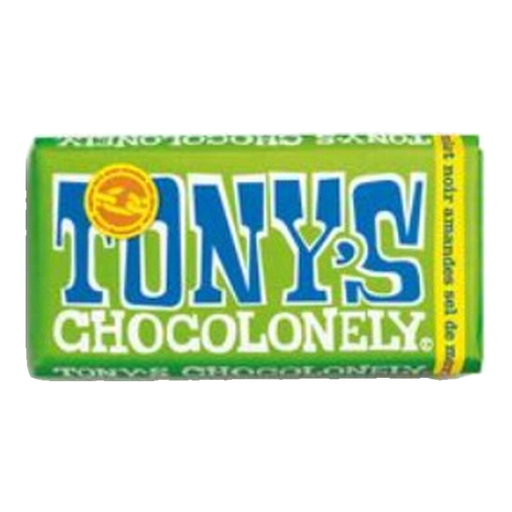 Image unavailable
Tony’s Chocolonely dark chocolate with almonds and sea salt, 180 g
The 180 g size is worth considering if you’re planning to break up a bar for several guests. Check the packaging for allergens, sugar per 100 g and cocoa percentage if intensity matters to you.
View on Joybuy
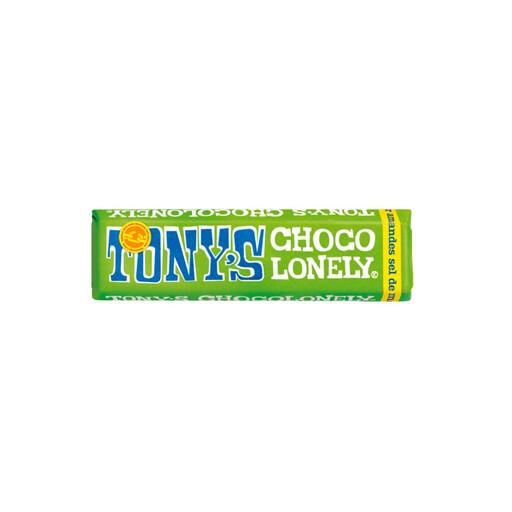 Image unavailable
Tony’s Chocolonely dark chocolate with almonds and sea salt, 47 g
The 47 g size is a good option if you’d prefer a smaller bar of this almond and sea salt recipe. Before serving it to guests, check the allergen and ‘may contain’ warnings, as well as the nutrition information and cocoa percentage.
View on Joybuy
Frequently asked questions
How can you identify fair-trade dark chocolate?
Look for a clearly named fair-trade label or standard, rather than a general ‘responsible’ claim. For Fairtrade/Max Havelaar, details on the back of a composite product may specify which ingredients are covered and how they are traced.
Is Nutri-Score required on dark chocolate bars in France?
No. The Ministry of Health describes Nutri-Score as recommended labelling. If it isn’t shown, you can compare the nutrition information, including sugar per 100 g, and the ingredients in the bars you’re considering.
Does the soft drinks tax apply to dark chocolate bars?
No. In France, the tax on sugary drinks described by the Ministry of the Economy applies to drinks, not dark chocolate bars. To compare bars, check their sugar content in the nutrition information.
How should you store chocolate bars until you’re ready to serve them?
Follow the storage instructions on each bar’s packaging. Keep the packaging to hand when serving, too, so guests can check the ingredients and allergen warnings.


