Who are these options for?

For those seeking an intense cocoa flavour

You want a stronger chocolate flavour, and the cocoa percentage matters to you. Check the ingredients list and any percentage shown on the packaging, rather than judging the contents by the word ‘dark’ alone.

For fans of indulgent textures

You prefer a crunchy coating, a sauce or added pieces. These features describe the texture of the lolly, not its total cocoa content; compare the nutritional information per portion too, if that matters to you.

For shoppers mindful of allergens

You need to check the ingredients and any possible traces before choosing a chocolate recipe. Depending on the product, the label may mention milk, nuts, soya or cereals containing gluten.

What should you look for?

First, distinguish between dark chocolate used in one part of the lolly and the cocoa content of the whole product. Then check the allergens, pack size and nutritional information that will help you compare your options.

What to consider What to check Who is it for?
Cocoa intensity The type of chocolate in each part of the lolly and any cocoa percentage stated for the product. If I’m mainly looking for a pronounced chocolate flavour, I want to be able to distinguish the flavour name from the actual ingredients; around 33% of consumers put this check first.
Texture and portion size Whether it has a coating, sauce or added pieces, followed by the weight of each lolly. For my afternoon treat, crunch or a mix of textures matters more than a cocoa threshold; this is the top priority for around 27% of consumers.
Allergens The ingredients in the variant you choose and any ‘may contain’ warnings on the box. I need to rule out any recipe that doesn’t suit my dietary requirements, even if I like the sound of it; around 20% of consumers prioritise this check.
Pack size The number of lollies, the total weight and the variants included in an assortment. If I’m sharing my afternoon treat, I want to know how many portions are in the box and which recipes it contains; around 20% of consumers prioritise pack size.

Common misconceptions to avoid

  • Assuming ‘dark chocolate’ means a cocoa percentage for the whole lolly

    The description may refer to the coating without stating the total cocoa content of the ice cream and coating combined.

    If you have a specific threshold in mind, look for a figure on the packaging that applies to the product in question. Otherwise, compare the ingredients without attributing a percentage to them that they don’t provide.

  • Relying on the flavour to judge allergens

    Two chocolate lollies can contain different ingredients and have different trace warnings, particularly if one recipe includes nuts or other added pieces.

    Read the label for each variant. The DGCCRF reminds consumers that allergenic ingredients must be highlighted on prepacked foods; check the ‘may contain’ warnings too.

  • Comparing boxes without checking how much ice cream they contain

    The number of lollies doesn’t tell you how large the portions are, and a box may contain several flavours.

    Check the total weight, the weight of each lolly and the ingredients in each variant before choosing a pack for your afternoon treat.

Brands to know when comparing

Magnum

According to Magnum, its Double Chocolat product combines chocolate ice cream, a cocoa coating and chocolate sauce.

  • Its product page lets you check the ingredients, allergens and nutritional information per portion.
  • ‘Double Chocolat’ describes the recipe, but doesn’t give the total cocoa content of the lolly.

Carrefour

Carrefour lists Classic’ chocolate and vanilla boxes, as well as Sensation lollies, including Double Chocolat and Chocolat Lait et Noir varieties.

  • These names help you identify recipes and pack sizes to compare separately.
  • The Classic’ assortment shouldn’t be mistaken for a box of dark chocolate lollies; check the ingredients and trace warnings for the product you’re considering.

Auchan

Auchan lists chocolate ice cream in a tub, rather than as individual ice lollies.

  • The product page details some chocolate ingredients, including dark chocolate flakes and cocoa powder.
  • The percentages of these ingredients don’t directly show the total cocoa content of the ice cream, and the product isn’t an ice lolly.

ALDI / MUCCI

ALDI lists MUCCI lollies with a double coating and, separately, dark chocolate ice cream in a tub.

  • A double coating is a texture feature to look for if that’s your priority.
  • It doesn’t, on its own, mean the lolly is made with dark chocolate: check the flavour and ingredients of the box you’re considering.

Dark chocolate ice lollies on Joybuy

This selection features a multipack whose name mentions dark chocolate. If you’re choosing based on a specific cocoa content, check the information on the packaging of the multipack you buy.
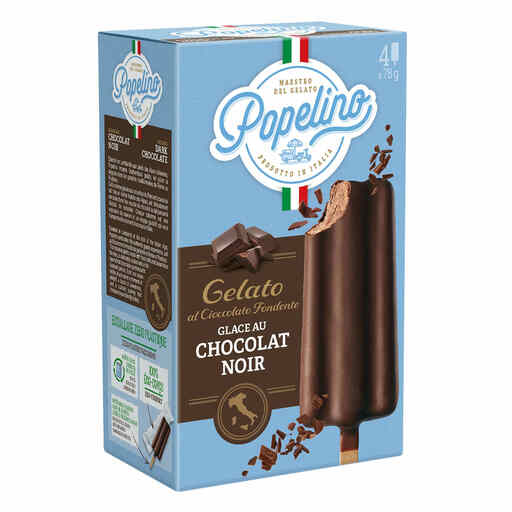
Pack of four POPELINO Intense Dark Chocolate ice lollies

POPELINO Intense Dark Chocolate, 4 ice lollies, 312 g

Worth considering if you’re looking for ice lollies whose name mentions dark chocolate for your afternoon treat.

Pack of 4 lollies, 312 g in total. If a specific cocoa percentage will determine your choice, check the packaging before you buy.

View on Joybuy

Frequently asked questions

How do I choose an ice lolly with a more intense chocolate flavour?

Compare the chocolate used in the ice cream and the coating, then read the ingredients list. If you’re looking for a specific cocoa threshold, check that a percentage applying to the product is stated: ‘dark’ or ‘dark chocolate’ isn’t enough to establish the cocoa content of the whole lolly.

Which allergens should I check in a chocolate ice lolly?

Check the ingredients and any trace warnings for the exact recipe, rather than relying on the flavour. Carrefour’s product page for the NUII Brazil Nut Chocolate lolly mentions Brazil nuts, milk, soya, barley and wheat, as well as other ingredients that may be present in traces.

How do I compare the nutritional information for two ice lollies?

Compare the nutritional information per 100 g on a like-for-like basis, then check the weight of each lolly to work out the size of each portion. The DGCCRF states that the nutritional declaration for prepacked foods is given per 100 g or 100 ml; a per-portion figure, if also shown on the packaging, answers a different question.

Should I follow the date and storage instructions on the box?

Yes, follow the instructions for the product you’ve bought. Anses recommends observing the dates shown on the label; also check the storage instructions on the box for this frozen product.