Anyone organising a children’s party
If you need to share chocolate between several children, a bag of individual chocolates means you won’t have to break up a bar on the spot. A bar is still an option if you can prepare the portions before serving.


For a no-prep way to serve dark chocolate at a children’s party, choose a bag of individual chocolates. A bar is suitable if you can break it up and prepare the portions before serving. For a group of children, check the ingredients and allergen information for the exact product, then compare the sugars per 100 g: the chocolate’s colour or cocoa content alone won’t tell you what’s in the recipe.
If you need to share chocolate between several children, a bag of individual chocolates means you won’t have to break up a bar on the spot. A bar is still an option if you can prepare the portions before serving.
To compare recipes, check the ingredients, allergen information and nutritional values for the product you’ve chosen. The DGCCRF reminds consumers that this information appears on the labels of pre-packed food.
The net weight of a bag or multipack can help you plan how much to share with a group. Also check whether the portions are already separate or if an adult will need to break up the bars.
First, choose a format that suits the way you’ll be serving it, then check the ingredients and how much you’ll need for the group.
| What to consider | What to check | Who is it for? |
|---|---|---|
| Easy to serve | Individual chocolates or a bar to break up; net weight and stated number of portions, if applicable. | If the chocolate will be passed around at a children’s party, being able to serve it without any preparation is especially important: around 42% of consumers prioritise this convenience. |
| Ingredients and allergens | Ingredients and allergen information; sugars per 100 g. | If the children have different dietary requirements, I want to know what’s in the recipe before serving. Ingredients are the main consideration for around 33% of consumers. |
| How much to share | Total net weight; number of portions stated on the packaging. | For a large group, make sure you have enough chocolate rather than judging by the apparent size of the pack. Around 25% of consumers put the amount to serve first. |
A bar intended for baking needs to be broken up or used in a recipe. It isn’t as convenient for serving straight away as individual chocolates.
If you’re serving it at the venue, check the shape of the chocolate first. A bar is better suited to serving when prepared in advance or using in a dessert.
Two dark chocolates can have different sugar levels and ingredients. Some recipes contain milk or soya, or carry a warning that they may contain nuts.
Before serving it to the group, check the sugars per 100 g and allergen information on the packaging of the exact product.
According to Santé publique France, displaying the Nutri-Score is voluntary. If it appears on a chocolate product, it won’t tell you about allergens or how easy it is to share.
If it’s shown, use it alongside the ingredients list, nutritional information and product format.
If you’re ordering in warm weather, the delivery conditions and when the parcel arrives may affect how well the chocolate is kept.
Before ordering, check the delivery method on offer and make sure you’ll be able to receive the parcel.
Lindt France describes its 1 kg bag of LINDOR Noir 70% as a large format for sharing.
Auchan lists L’Original Noir in a pack of 2 × 200 g bars, with 16 portions stated for the pack.
Carrefour describes the Dessert Corsé bar as dark chocolate for baking, with at least 65% cocoa.
The Carrefour Original dark chocolate dessert bar needs to be portioned before serving.
E.Leclerc lists several dark chocolate bars, including a 200 g Tablette d’Or bar with whole almonds.
These are dark chocolate bars to break up or portion before serving, not bags of individual chocolates. When choosing between them, consider how much you need to serve and check the ingredients on each pack.
 Image unavailable
Worth considering if you can prepare the pieces before serving several people. The bar weighs 200 g; check the ingredients and think about how you’d like to portion it.
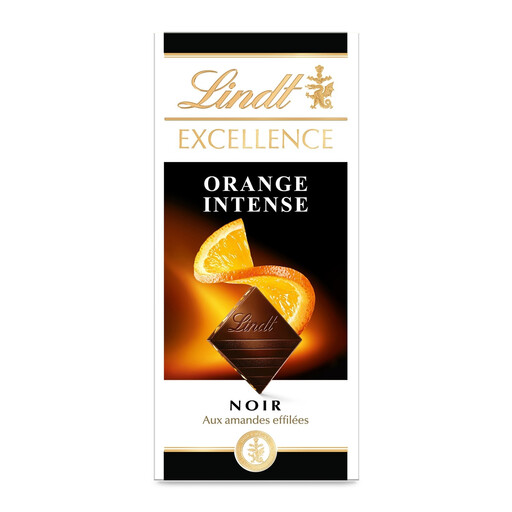 Image unavailable
This 100 g bar is suitable for sharing if you prepare the portions in advance. Check the orange recipe on the packaging, particularly if you need to take any allergies into account.
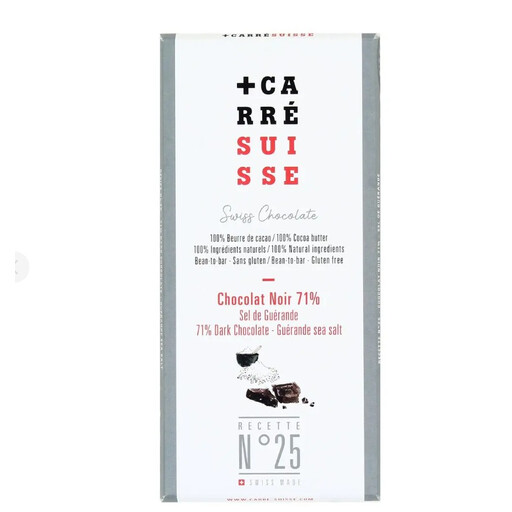 Image unavailable
Choose this if you can portion up a 100 g bar before serving. Check that the Guérande sea salt recipe and allergen information are suitable for the people you’re serving.
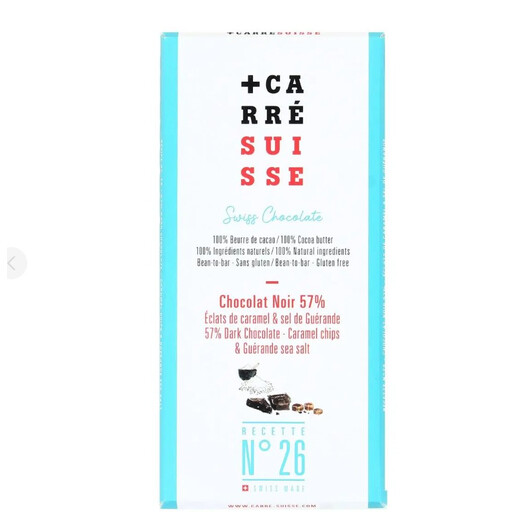 Image unavailable
This 100 g bar needs to be portioned before sharing with a group. Check the label for the ingredients and allergen information for this caramel recipe.
 Image unavailable
This 100 g bar needs to be portioned before serving. Its name indicates 70% cocoa; also read the ingredients list and nutritional information, rather than assuming the cocoa percentage tells you everything about its composition.
No. According to Santé publique France, displaying it is voluntary in France. For pre-packed chocolate, also read the ingredients and nutrition declaration required under the labelling rules outlined by the DGCCRF. A Nutri-Score, if shown, doesn’t replace checking for allergens.
Before serving, check the ingredients and allergen information on the packaging of the exact product. Don’t assume that dark chocolate is free from milk, soya or nuts: recipes and precautionary statements vary.
No. The cocoa percentage tells you one thing about the recipe, but not the sugar content, allergens or the group’s taste preferences. Compare these details across the products you’re considering.
No. The scale published by the Bulletin officiel des finances publiques-Impôts applies to non-alcoholic drinks containing added sugars or sweeteners, not solid chocolate. When choosing a bar or bag, check its format and label instead.