What should you check before choosing?
For a coffee break, start with the flavour you’re looking for, then compare the bars you’re interested in by checking their labels and stated uses.
| What matters to you |
What to check |
Who might find this useful? |
| Cocoa intensity |
The percentage shown for the exact product, and whether it is presented as a tasting bar. |
I want to taste the cocoa with my coffee, without choosing a level of bitterness I won’t enjoy. An intensity that suits their tastes would be the priority for around 44% of consumers. |
| Ingredients and nutrition information |
Sugars and saturated fat per 100 g, followed by the ingredients list; check the Nutri-Score only if one is shown. |
When choosing between two bars with the same cocoa percentage, I want to understand what each one contains first. Ingredients would be the top priority for around 33% of consumers. |
| Use, pack size and allergens |
Whether it is labelled ‘tasting’ or ‘dessert’, the net weight and the allergen information for the bar in question. |
If I want my bar to go with coffee and sometimes use it in cooking, its stated use matters. If I have an allergy, I also need to check the exact labelling. Pack size, use or allergens would come first for around 23% of consumers. |
Chocolate bars available on Joybuy
These dark chocolate bars offer a range of options for your coffee break: products with 70% or 85% cocoa, a smaller pack size and flavoured recipes. Which one suits you depends on the taste you’re looking for and the information on each individual pack.
 Image unavailable
Lindt EXCELLENCE dark chocolate, 85% cocoa, 100 g
Worth considering if you already enjoy intensely flavoured dark chocolate with your coffee. The bar contains 85% cocoa and weighs 100 g. Check its label to compare sugars and allergens with other products.
View on Joybuy
 Image unavailable
POULAIN fine dark chocolate, 70%, 100 g
An option to consider if you’re looking for a 70% cocoa bar to enjoy with coffee. This product contains maltitol; the label warns that excessive consumption may have a laxative effect. Also check the soya information if it’s relevant to you.
View on Joybuy
 Image unavailable
Lindt EXCELLENCE mini dark chocolate, 70%, 35 g
The 35 g pack could suit you if you’d like a small bar for your coffee break, without making assumptions about the number of portions. It contains 70% cocoa. Compare its sugars per 100 g and check the packaging for information about nuts, milk and soya.
View on Joybuy
 Image unavailable
CARRÉ SUISSE organic dark chocolate, lemon and green pepper, 100 g
This flavoured recipe could appeal if you’d like to try something other than plain dark chocolate with your coffee. Its 70% cocoa claim applies to the chocolate part, not the whole bar. Also check the ingredients and allergen information for this product.
View on Joybuy
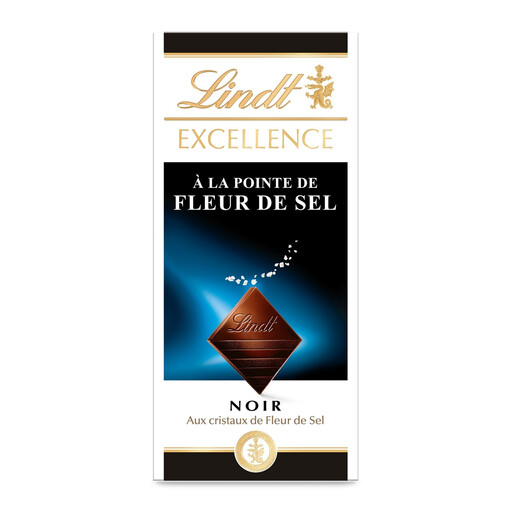 Image unavailable
Lindt EXCELLENCE dark chocolate with sea salt, 100 g
If you like the sound of dark chocolate and sea salt with your coffee, take a look at this 100 g bar. If you’re looking for a particular intensity, check the cocoa percentage on the packaging, along with the sugars per 100 g and any information about milk and soya.
View on Joybuy
Frequently asked questions
Does the sugar tax apply to dark chocolate bars in France?
No. The levy known as the ‘sugar tax’, as described by the French Ministry of the Economy, applies to sugary drinks, not chocolate bars. To compare the sugar content of two bars, check the ‘of which sugars’ line in their nutrition information.
Does a chocolate bar have to display the Nutri-Score?
No. According to Santé publique France, displaying it is voluntary for producers. A nutrition declaration is generally required for prepacked foods sold in the European Union, subject to applicable exemptions; it includes information such as sugars and fat.
Are two bars with 70% cocoa equally suited to a coffee break?
Not necessarily: the same percentage doesn’t guarantee the same recipe or stated use. Compare the ingredients, sugars per 100 g, allergens and pack size, then check whether each bar is presented for tasting or baking.
Where can I check the allergens in a particular bar?
Read the ingredients list and any ‘may contain’ statements on the packaging. In the European Union, allergens used as ingredients must be emphasised in the list, as the European Commission explains. Don’t assume they’re absent based on the cocoa percentage alone.


