Anyone looking for a stated cocoa percentage
If simply saying ‘dark’ isn’t enough, look for a cocoa percentage that applies to the exact product. The proportion of dark chocolate in a recipe answers a different question.


To choose a dark chocolate bar to serve on national day, look for a cocoa percentage clearly linked to the exact variant, then compare the sugars, allergens and packaging. In a recipe containing wafer, cereal or nuts, the proportion of dark chocolate does not necessarily indicate the cocoa content of the whole bar. If sharing portions fairly matters most, check the number of servings rather than relying on the pack weight alone.
If simply saying ‘dark’ isn’t enough, look for a cocoa percentage that applies to the exact product. The proportion of dark chocolate in a recipe answers a different question.
If you’re serving several guests, check the number of bars and the weight of each one. A pack of individual portions and a large bar to break up require different approaches.
Before putting together a selection, compare the sugars and read the ingredients and allergen information for each variant. Recipes mentioned here may contain milk, soya, cereals or nuts.
Start with the factor that will really determine your purchase: a clearly stated cocoa percentage, easy sharing between guests or the ingredients in each portion.
| What to consider | What to check | Who is it for? |
|---|---|---|
| Cocoa content | The cocoa percentage should apply to the exact variant. Distinguish it from the proportion of dark chocolate in a recipe containing other ingredients. | If I’m looking for a strong cocoa flavour, I want to know exactly what the stated percentage refers to. Around 42 % of consumers put checking the cocoa content first. |
| Sharing format | Compare the number of bars and the weight of each one, or check how a large format can be divided up. | If I’m serving several guests and don’t want to cut the bar up on the spot, I prefer portions that are easy to hand out. Sharing is the top priority for around 25 % of consumers. |
| Ingredients and allergens | Check the sugars in the nutritional information and the allergens on the packaging of your chosen variant. | When guests have different dietary requirements, I need to be able to identify the ingredients in each product before serving it. Around 33 % of consumers prioritise ingredients and allergens. |
Carrefour gives the proportion of dark chocolate in some bar recipes, but that figure alone does not measure the cocoa content of the whole bar. So it cannot be used to rank these products by intensity.
Before comparing two products, check which ingredient or product each percentage refers to.
Santé publique France explains that displaying the Nutri-Score is voluntary. Its presence does not replace the nutritional information or the ingredients and allergen list.
Check the sugars, portion size and ingredients of your chosen variant, whether or not it displays a Nutri-Score.
The recipes mentioned contain different ingredients, including dairy products, soya, hazelnuts and cereals containing gluten. Warnings about possible traces also vary.
Keep the packaging to hand when serving, and check each product separately if a guest needs to avoid an allergen.
For orders placed through its French shop when temperatures are high, Lindt recommends suitable transport to help prevent the chocolate from deteriorating.
If you’re ordering for a particular date, check the delivery conditions and expected arrival date offered by your chosen seller.
Carrefour lists a 45 g dark chocolate and hazelnut bar for anyone who prefers whole hazelnuts to plain dark chocolate.
Bueno Dark combines a wafer and hazelnut filling with dark chocolate, so the choice is as much about texture as it is about the chocolate.
EXCELLENCE Noir 70 % is an alternative if a stated cocoa percentage matters more to you than an individual bar format.
These three formats give you the option of choosing dark chocolate with a stated percentage or a nut-filled bar to share. If you’re serving them on national day, check what the cocoa percentage refers to for each variant and how best to divide the portions.
 Image unavailable
Worth considering if you’re looking for a dark chocolate bar with a stated cocoa percentage. It weighs 100 g. If you’re planning to share it, check the number of pieces and the allergens on the packaging of the variant on sale.
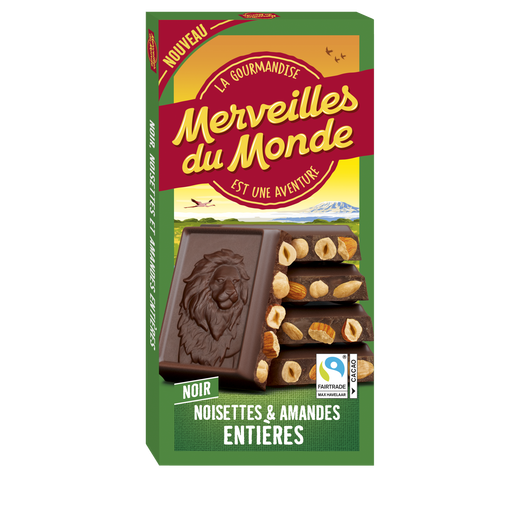 Image unavailable
This 170 g format is ideal if you’re looking for dark chocolate with hazelnuts and almonds to share. Before choosing it for a group, check the allergens and distinguish the cocoa content of the chocolate from that of the whole bar.
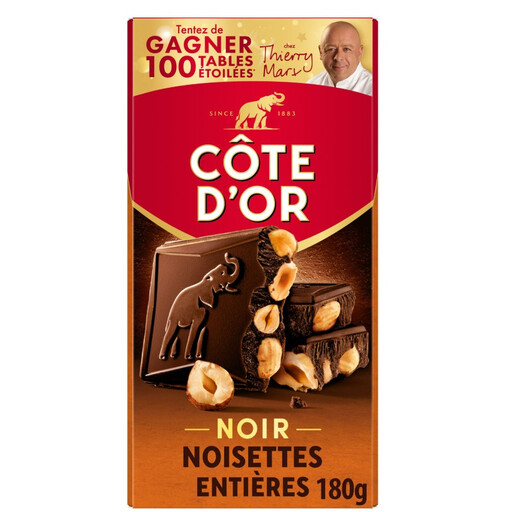 Image unavailable
This 180 g variant is a good choice if you’re looking for dark chocolate with hazelnuts to share. Don’t confuse it with the 45 g individually wrapped bar mentioned above. Check the packaging for this format for allergens, portion information and what any cocoa percentage measures.
No. The levy on sugary drinks described by the French Ministry of the Economy applies to drinks. To compare chocolate bars, check the amount of sugars in their nutritional information.
No. According to Santé publique France, displaying it is voluntary. Its absence alone does not tell you about a bar’s ingredients: check its ingredients, allergens and nutritional information.
First, check what the figure measures. The 31.5 % dark chocolate stated by Carrefour for Kinder Bueno Dark refers to a proportion of the recipe, not the cocoa content of the whole bar. To compare cocoa content, look for a percentage explicitly linked to the exact product.
Check the allergens for each variant and keep its packaging to hand. According to the recipes listed by Carrefour, ingredients or trace warnings may include milk, soya, hazelnuts, cereals containing gluten or other nuts.
Check the delivery method and expected arrival date offered for your order. Lindt recommends suitable transport through its French shop when temperatures are high; the conditions offered by your chosen seller may be different.