Fans of rich cocoa flavours
If cocoa flavour is your priority at the weekend breakfast table, look for a stated cocoa percentage. In a cereal bar, “dark chocolate” may refer to pieces or a coating rather than the composition of the whole bar.


If a pronounced cocoa flavour is your top priority, choose a chocolate slab that states its cocoa percentage. If you prefer an individually wrapped bar, choose between a nutty chocolate bar, a cereal bar or a protein bar based on the ingredients you’re looking for. The words “dark chocolate” alone don’t tell you how much cocoa the whole bar contains: compare the ingredients, nutritional values per serving and per 100 g, and the allergens.
If cocoa flavour is your priority at the weekend breakfast table, look for a stated cocoa percentage. In a cereal bar, “dark chocolate” may refer to pieces or a coating rather than the composition of the whole bar.
To compare sugars, saturated fatty acids and serving sizes, start with the nutritional information and ingredients list. According to Santé publique France, displaying the Nutri-Score is voluntary, so if it’s missing, you’ll still need to check these details.
A cereal or protein bar may suit you if you’re looking for cereals, nuts or a stated amount of protein. Check what’s in the serving you’ve chosen and whether it contains any allergens. Don’t assume that a bar on its own makes a complete breakfast.
For a weekend breakfast, start with what matters most to you, then compare products in the relevant format.
| Criteria | What to check | Who is it for? |
|---|---|---|
| Cocoa flavour | The cocoa percentage, if stated, and the proportion of chocolate ingredients in a bar made with multiple ingredients. | If I mainly want to taste the cocoa, a slab with a stated percentage gives me a clearer guide than a bar simply called “dark chocolate”. Around 36% of consumers put this first. |
| Nutritional composition | Sugars and saturated fatty acids on the same basis: per 100 g, then for the serving you’ll eat. | To compare two products without being swayed by their names alone, I need to check their nutritional values. This is the top priority for around 29% of consumers. |
| Breakfast format | The serving size and, depending on the format, the cereals, nuts or protein actually listed. | If the bar is going alongside other foods, I look for a serving size and ingredients that suit the meal. Around 21% of consumers put this choice of format first. |
| Dietary suitability | Allergens in the specific recipe and any “may contain” warnings. | If I need to avoid an ingredient, I check the label of the exact product before considering its flavour or format. This comes first for around 14% of consumers. |
In a cereal bar, dark chocolate may be just one part of the recipe. For example, the Grainea product listing published by E.Leclerc includes dark chocolate pieces and dark chocolate among the ingredients, with glucose syrup listed first.
If cocoa intensity matters most, look for a stated percentage and check what it applies to: the chocolate used or the whole product.
The French Ministry of the Economy describes this levy as applying to sugary drinks. It isn’t a useful way to compare chocolate bars.
Instead, compare the “sugars” line, the ingredients list and the nutritional values for the serving you’ll eat.
According to Santé publique France, producers choose whether to display it. A Nutri-Score can provide an additional guide, but its absence alone doesn’t tell you what a product contains.
Check the nutrition declaration and ingredients too. If the packaging explains how the score was calculated, take that into account when comparing products.
Examples published by Carrefour France include hazelnuts, peanuts, milk or soya, depending on the bar. A “gluten-free” statement doesn’t tell you about all the other ingredients.
If you have dietary requirements, check the ingredients and “may contain” warnings on the specific product you’re buying.
These examples show how recipes can differ: a chocolate bar, a cereal bar and a protein bar aren’t the same type of product.
The dark chocolate and hazelnut bar featured by Carrefour France is a good choice if you’re looking for chocolate with nuts.
Its organic dark chocolate protein bar is aimed at people looking for a stated amount of protein per serving.
The peanut and dark chocolate product featured by Carrefour France is a cereal and protein bar, not a slab of dark chocolate.
This Marque Repère product featured by E.Leclerc is a dark chocolate cereal bar.
The dark chocolate and peanut cereal bar featured by E.Leclerc combines oats, chocolate and nuts.
These slabs are suited to comparing dark chocolate, its cocoa percentage where stated, and choosing a portion for a weekend breakfast. They aren’t a selection of cereal or protein bars.
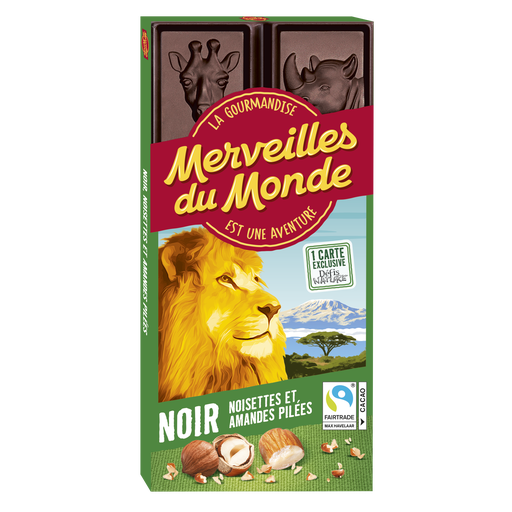 Image unavailable
For a chocolate tasting where both the stated cocoa content and the nuts matter. Before choosing your serving, check the cocoa percentage for this variant and the allergen information on the packaging.
 Image unavailable
For anyone who wants to choose a slab based on a clearly stated cocoa percentage. The 85% figure doesn’t tell you everything about sugars or saturated fatty acids, so compare the values per 100 g and the amount you plan to eat too.
 Image unavailable
For comparing another slab with its cocoa percentage in the name. The listing for this product mentions maltitol: check the ingredients and any guidance on the packaging, then compare the nutritional values with your serving size.
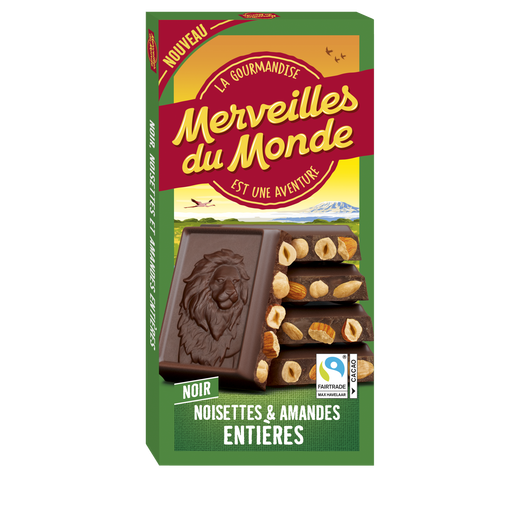 Image unavailable
For sharing a dark chocolate slab with nuts, or taking a portion for yourself. If cocoa content is a deciding factor, check whether the percentage on the packaging refers to the chocolate used or the whole slab. Also check the allergens.
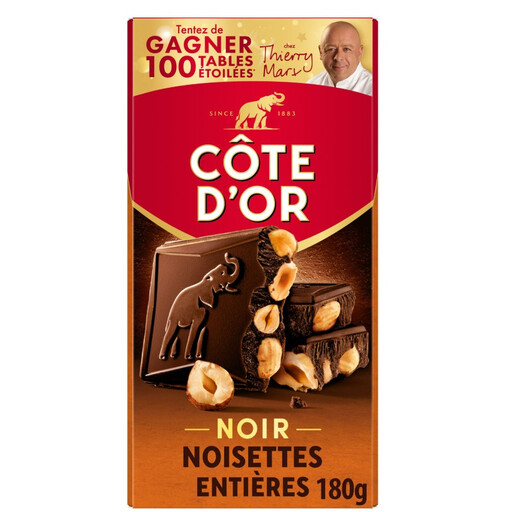 Image unavailable
For a slab combining dark chocolate and hazelnuts, rather than a cereal bar. The name doesn’t state the cocoa content of the whole product, so check the label if this matters to you. Also look out for milk, soya and nuts.
No. It isn’t the right measure to use when comparing these bars: the French Ministry of the Economy describes the “soda tax” as a levy on sugary drinks. To check how much sugar a bar contains, look at its nutrition declaration and ingredients instead.
No. According to Santé publique France, producers choose whether to display it. For pre-packed food, the nutrition declaration required under the labelling rules described by the DGCCRF provides the values to check, even if no Nutri-Score is shown.
Compare the nutritional information on the same basis: first per 100 g, then for your serving. Check energy, fat, saturated fatty acids, carbohydrates, sugars, protein and salt. The DGCCRF lists these as elements of the nutrition declaration; the ingredients list can also help you identify cocoa, cereals and sweetening ingredients.
No. The wording may refer to chocolate added to a cereal bar without stating how much cocoa the whole product contains. For example, the Grainea product listing published by E.Leclerc distinguishes between dark chocolate pieces and dark chocolate in the recipe. If cocoa is your top priority, look for a stated percentage and check which part of the product it applies to.