Hoteliers looking to serve a chocolate-coated caramel
If you want the caramel to be the star of the sweet, look for a caramel-filled sweet or one coated in dark chocolate. Before serving it with coffee, check its ingredients and allergens carefully.


To serve with coffee in a hotel, choose a caramel sweet coated or filled with dark chocolate if you want the caramel to take centre stage. A dark chocolate bar with caramel pieces is a better choice if you’re looking for a chocolate-led bite that you can portion out. The words ‘dark chocolate’ alone don’t guarantee a high cocoa content: check the percentage shown, the allergens and the serving format. In France, according to the DGCCRF and Santé publique France, nutrition labelling is mandatory for prepacked foods, while Nutri-Score is optional.
If you want the caramel to be the star of the sweet, look for a caramel-filled sweet or one coated in dark chocolate. Before serving it with coffee, check its ingredients and allergens carefully.
A dark chocolate bar with caramel pieces is a better fit if you want the chocolate to take centre stage. However, check the cocoa content of the product you choose rather than relying on the word ‘dark’ alone.
For prepacked confectionery in France, the DGCCRF distinguishes between mandatory nutrition labelling and Nutri-Score, which Santé publique France says is voluntary. Compare the nutritional values per 100 g; don’t treat the absence of a logo as a labelling defect.
For coffee served in a hotel, first decide whether you want the caramel or the chocolate to dominate the bite. Then check the serving requirements and the information you need to share with customers.
| Criteria | What to check | Consumers concerned |
|---|---|---|
| Role of the chocolate | Product name and the cocoa percentage shown for the product you choose. | If I want the chocolate flavour to stand out over the caramel, I need to know the cocoa content before choosing. Around 40% of consumers rank this intensity as their top priority. |
| Serving and allergens | Ready-to-serve format or bar to portion; ingredients and allergens in the batch received. | To serve with each coffee, I’m looking for a bite that’s easy to serve and whose ingredients I can share. Ease of serving and allergen checks are the top priorities for around 40% of consumers. |
| Nutritional information | Nutritional values per 100 g; Nutri-Score only if displayed. | Before choosing a sweet, I want to compare its nutritional values without confusing Nutri-Score with a labelling requirement. This is the main priority for around 20% of consumers. |
In France, Nutri-Score is voluntary, according to Santé publique France and the DGCCRF. Its absence does not mean that prepacked confectionery lacks the mandatory nutrition declaration.
To compare two products, read their nutritional values per 100 g and their ingredients. Use Nutri-Score as additional information when it appears on the packaging.
A sweet coated in dark chocolate may still be made mostly of caramel. For example, Maximo lists the Michoko recipe on its product page as 74.5% caramel and 25.5% dark chocolate; these figures don’t tell you the cocoa content of the chocolate.
If cocoa content matters for your service, choose a product that states the percentage on its packaging or in an up-to-date product listing.
The published ingredient lists for Michoko and Confiseo products mention milk and soya, among other ingredients. The ingredients in one product shouldn’t be assumed to apply to another.
Keep information about the product you’re serving to hand, and check the labelling on the batch received before advising customers who need it.
A dark chocolate bar with caramel pieces isn’t presented as an individually wrapped sweet. It’s a good choice if you’re looking for chocolate with caramel, but it calls for a different serving routine.
Before buying, decide whether you want to serve an individually wrapped sweet or prepare portions of chocolate for each coffee.
Portioning adds an extra preparation step before serving.
Auchan describes Michoko as caramel-filled sweets coated in dark chocolate.
E.Leclerc stocks dark chocolate sweets filled with caramel under the Confiseo brand.
Auchan describes Caram’choc as dark chocolate sweets filled with caramel.
The Equador product featured by E.Leclerc is a dark chocolate bar with caramel pieces and fleur de sel, rather than an individually wrapped caramel sweet.
For serving dark chocolate with caramel alongside coffee, this Joybuy selection features a bar to portion rather than a caramel sweet that’s ready to serve.
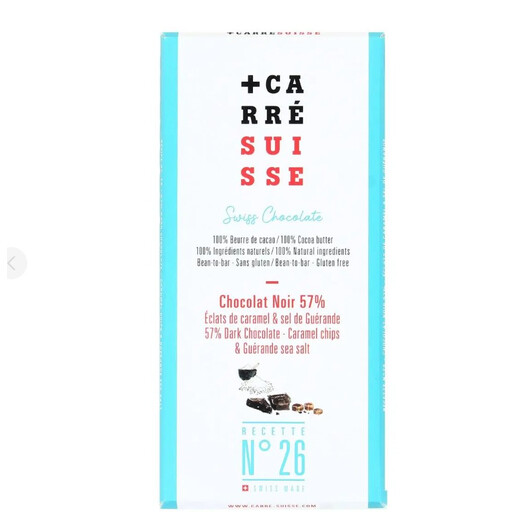 Image unavailable
This bar is a good choice if you’d like to prepare portions of dark chocolate with caramel to serve with coffee. The product name highlights Guérande salt and the 100 g format. Allow time for portioning, then check the cocoa content, ingredients and allergens on the batch packaging before serving.
No. Santé publique France and the DGCCRF state that displaying Nutri-Score is voluntary. For prepacked confectionery, don’t confuse this logo with the mandatory nutrition declaration.
Compare their nutritional values on the same basis, particularly per 100 g. The DGCCRF states that nutrition labelling is mandatory for prepacked foods. Values per portion can also be useful, but make sure you take portion sizes into account before comparing them.
No. This wording alone doesn’t tell you the cocoa percentage of the chocolate used. If you’re looking for a specific cocoa content, check the figure given for the product you’ve chosen, and don’t confuse it with the proportion of chocolate in the sweet.
Check the labelling for the product and batch you’re serving. The published ingredient lists for Michoko and Confiseo products mention milk and soya, among other things, but they don’t cover every caramel and dark chocolate sweet.
It can be served with coffee if you plan to portion it, but it doesn’t serve the same purpose as a sweet that’s ready to serve. Choose the format based on whether you want the chocolate or caramel to take centre stage, and on what you can prepare before serving.