Fans of rich chocolate flavour
If you’re looking for an intense flavour, distinguish between the cocoa percentage of the chocolate used and the proportion of dark chocolate in the cake recipe. One doesn’t automatically tell you the other.


When shopping for Christmas, first decide whether you want a ready-to-serve cake or to bake one at home. The words ‘dark chocolate’ alone don’t guarantee that a cake has a high cocoa content. For a ready-to-eat product, compare the proportion of dark chocolate in the recipe, the pack size and the allergens. If you want to know the cocoa percentage of the chocolate used, a bar that displays this figure can help you choose what to bake with, but it won’t tell you the cocoa content of the finished cake.
If you’re looking for an intense flavour, distinguish between the cocoa percentage of the chocolate used and the proportion of dark chocolate in the cake recipe. One doesn’t automatically tell you the other.
Whether you’re putting out a plate of biscuits or serving a dessert to share, check the number of portions, how much preparation is needed and the storage instructions before choosing.
Check the ingredients and any ‘may contain’ warnings on the exact product packaging. Dark chocolate recipes can differ in whether they contain milk, egg, soya or nuts.
Choose these if: you want to hand out biscuits easily when visiting people or over a Christmas coffee.
Keep in mind: individually portioned biscuits aren’t a substitute for a dessert to share around the table.
Choose this if: you’re looking for a dessert to share with several guests without baking it yourself.
Keep in mind: a frozen fondant needs room in your freezer, and you’ll need to follow its storage instructions.
Choose this if: you want to pick chocolate with a stated minimum cocoa percentage and are happy to bake.
Keep in mind: this percentage refers to the chocolate you choose, not to each slice of the cake once it’s made.
| What to consider | What to check | Who it matters to |
|---|---|---|
| Chocolate intensity | Distinguish the proportion of dark chocolate in the recipe from the cocoa percentage stated for the chocolate used. | I want to choose chocolate with a rich flavour without relying on the word ‘dark’ on the packaging alone; around 42% of consumers put this check first. |
| Size and serving | Check the number of portions or sachets, then look at the preparation and storage instructions. | When I’m hosting, I prefer a dessert that suits the number of guests and the storage space I have; around 33% of consumers put ease of serving first. |
| Allergens | Read the ingredients and any ‘may contain’ warnings on the exact product. | If I need to take an allergy into account, the ingredients in the specific product determine my choice; around 25% of consumers make this their priority. |
St Michel states that its Galette gourmande contains 21% dark chocolate, Carrefour Extra gives 14% for its fondant, and Brossard states 5.9% for its family-sized Savane. These figures refer to the proportion of dark chocolate in each recipe, not the cocoa content of the finished cake.
If you’re looking for a specific cocoa percentage, check which ingredient the figure refers to. When baking at home, remember to take the rest of the recipe into account too.
The Carrefour Extra fondant is frozen, so you’ll need space in your freezer and must follow its defrosting instructions.
Check the instructions and make sure you have enough space before adding it to your Christmas meal shopping.
Two cakes labelled ‘dark chocolate’ may have different ingredients and ‘may contain’ warnings.
Check the packaging of the exact product and pack size you’re buying, even if you’re familiar with another product from the same brand.
Its Galette gourmande dark chocolate biscuits come individually wrapped, making them worth considering for Christmas breaks rather than as a cake to serve whole.
Its frozen dark chocolate fondant is a dessert to share around the table.
The Brossard family-sized dark chocolate Savane is a cake to share, rather than a pack of individually portioned biscuits.
The dessert range includes options such as a dark chocolate, hazelnut and almond crisp, which you’ll need to check product by product.
These products include a dark chocolate biscuit to serve as it is, and chocolates to consider for baking at home. If you’re choosing a chocolate bar, make sure it suits your recipe: the percentage shown for the chocolate doesn’t describe the cake you’ll make.
 Image unavailable
A biscuit option to consider for a Christmas platter or a coffee break. The pack is listed as 150 g; check its label for the ingredients and what any stated cocoa percentage refers to.
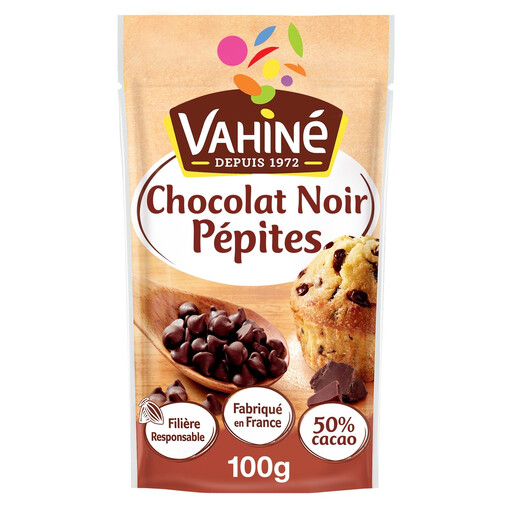 Image unavailable
Worth considering if you’re making a chocolate dessert rather than buying a ready-to-serve cake. The listed pack size is 100 g; check the exact packaging for allergen information before use.
 Image unavailable
This bar is worth considering if you want to choose chocolate with a stated percentage for your dessert. Its name gives a cocoa percentage of 70% and a pack size of 100 g. Check that it suits your recipe, and read the ingredients and instructions for use.
No. This wording doesn’t give the cocoa content of the finished cake. St Michel, Carrefour and Auchan state that the products mentioned here contain 21%, 14% and 5.9% dark chocolate respectively. These proportions aren’t the cocoa percentages of the cakes.
Start by comparing the ingredients and checking what any stated percentages refer to. Then look at the pack size and the nutritional information per 100 g if these are relevant to your choice. Anses reminds consumers that ingredients are listed in descending order by quantity; DGCCRF explains that presenting nutritional information per 100 g makes products easier to compare.
Make room in your freezer and follow the storage, defrosting and preparation instructions for the product you buy. Carrefour says its Extra fondant can be enjoyed hot or cold and must not be refrozen once defrosted.
Before serving it to someone with an allergy, check the packaging of the exact product too. DGCCRF says that allergenic ingredients must be highlighted in the ingredients list on prepacked foods. Also read any ‘may contain’ warnings that apply to the product you’ve chosen.