If you’re looking for a pronounced cocoa flavour, choose a recipe that specifies dark chocolate and check the chocolate’s cocoa content if it’s given. The name alone isn’t enough to rank recipes by intensity. For school holiday snacks, compare individually shareable formats with family-sized cakes that need slicing, then check the allergens and nutritional information on the pack.
Who are these formats for?
Fans of bold cocoa flavours
You’re looking for a recipe that clearly states it contains dark chocolate. A biscuit with a dark chocolate centre and a soft cake have different textures; the chocolate’s cocoa content, if shown on the packaging, gives you another point of comparison.
Parents planning several snack breaks
You’re comparing biscuits to share with a family-sized cake to slice, based on the number of snack breaks planned and how easy each option is to serve once opened. The format alone doesn’t tell you what’s in the product.
Label-conscious shoppers
You check the ingredients, allergens and nutritional information on the exact pack, especially if allergies are a concern or you’re choosing between several recipes.
What should you look for before choosing?
First, distinguish the type of chocolate named from the chocolate’s cocoa content. Then choose a format that suits your planned snack breaks and check the pack’s label.
| What to consider |
What to check |
Who it matters to |
| Cocoa character |
Look for dark chocolate in the ingredients and, if stated, check the chocolate’s cocoa content. Don’t confuse this with the proportion of chocolate in the recipe. |
If I’m looking for a pronounced dark chocolate flavour, I want to compare the ingredients rather than rely on the product name alone. This would be a priority for around 40% of shoppers. |
| Format and sharing |
Compare the net weight and packaging, and check whether you’ll need to slice the cake or protect the portions after opening. |
For several snack breaks, I need a format I can share without making serving or transport more complicated. Around 30% of shoppers would put this need first. |
| Label and snack break |
Read the ingredients, allergens and nutritional information on the pack. For children aged 4–17, Manger Bouger recommends varying snacks and limiting foods high in fat and sugar. |
If a child has an allergy or I’m comparing several recipes, I first need to know what the product contains and how it fits into their snack break. This would be the main consideration for around 30% of shoppers. |
Mistakes to avoid
-
Assuming “dark chocolate” means a particular level of cocoa intensity
The proportion of dark chocolate in a cake and the cocoa content of that chocolate are two different things. For example, Auchan states that Brossard’s Savane family-sized cake recipe contains 5.9% dark chocolate. This figure doesn’t tell you the cocoa content of the chocolate used.
Compare cocoa content only when it’s stated for the products you’re considering, and also take the texture you’re looking for into account.
-
Choosing a family-sized cake without planning how to serve it
Auchan’s 310 g Brossard Savane family-sized dark chocolate cake isn’t presented in individual sachets. For a snack away from home, you’ll need to plan differently for slicing and protecting the portions than you would with biscuits.
Check the packaging and storage instructions on the pack to make sure they suit the number of snack breaks you have planned.
-
Overlooking allergens and the rest of the snack
Ingredients vary from one recipe to another. For children aged 4–17, Manger Bouger also recommends varying snacks and limiting foods high in fat and sugar.
Check the allergens on every pack you buy, and choose the other parts of the snack to suit the child’s habits and needs.
Brands to know for these recipes
St Michel
St Michel offers a 121 g Galette gourmande dark chocolate biscuit, which the brand describes as a pure butter biscuit with a dark chocolate centre.
- A specific product and format to look for if you want a crisp biscuit with dark chocolate.
- The mention of dark chocolate isn’t enough to compare its cocoa content with another recipe. Check the packaging if this matters to you.
Brossard
Auchan lists Brossard’s Savane family-sized dark chocolate cake in a 310 g format.
- The Auchan product listing states that the recipe contains 5.9% dark chocolate and that it doesn’t come in individual sachets.
- The 5.9% figure isn’t the cocoa content of the chocolate. With this family-sized format, you’ll need to plan for slicing and storage after opening.
Bio Village
E.Leclerc lists 150 g organic dark chocolate tablet biscuits and 185 g organic wholegrain wheat snacks filled with dark chocolate under the Bio Village brand.
- Two distinct recipes let you choose between tablet-style biscuits and filled snacks.
- The organic label alone doesn’t tell you the cocoa content or nutritional information. Check the label of the product you choose.
Dark chocolate biscuits on Joybuy
These two products are worth considering if you’re looking for dark chocolate biscuits to share at snack time. To compare the recipes, check the ingredients and, if stated, the chocolate’s cocoa content on the pack you choose.
 Image unavailable
PETIT ECOLIER Dark chocolate 150 g
A handy choice if you want to share dark chocolate biscuits at snack time. The pack is listed as 150 g; check the ingredients and allergens on the pack you buy.
View on Joybuy
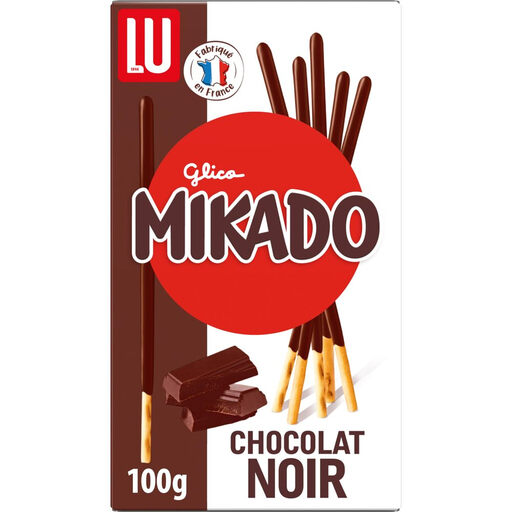 Image unavailable
Mikado Dark Chocolate 100 g
A snack of chocolate-coated biscuit sticks, rather than a cake you need to slice. The pack is listed as 100 g; if cocoa intensity is important to you, check the chocolate’s cocoa content on the packaging.
View on Joybuy
Frequently asked questions
Is the term “dark chocolate” enough to judge cocoa intensity?
No. It identifies the type of chocolate stated, but it doesn’t tell you how the flavour compares across different recipes. If the chocolate’s cocoa content is given, you can compare it across the products in question. Don’t confuse it with the proportion of chocolate in the cake or biscuit.
What place should a dark chocolate cake have in a child’s snack?
A cake can be part of a varied snack rather than the only thing on offer every time. For children aged 4–17, Manger Bouger recommends varying snacks and limiting foods high in fat and sugar.
What should you check on a pack of pre-packed biscuits?
Check the product name, ingredients, allergens and nutritional information on the pack you’re buying. The DGCCRF lists the ingredients and nutrition declaration among the labelling information required for pre-packed food. If you have an allergy, check the details for the exact product you’re buying.


