Fans of biscuits with plenty of dark chocolate
You want to compare how much dark chocolate different recipes contain, without assuming that its mere mention guarantees an intense flavour.


When choosing a dark chocolate biscuit for a late-night snack, first check how much of the recipe is made up of dark chocolate, then look at its cocoa content if stated: these percentages measure different things. If you’d like to keep track of how much you open, compare packs with individually wrapped portions. In any case, check the ingredients, allergens and nutritional information rather than relying on the words ‘dark chocolate’ alone.
You want to compare how much dark chocolate different recipes contain, without assuming that its mere mention guarantees an intense flavour.
You’re looking for a small pack or individually wrapped biscuits, so you can decide how much to open before you eat.
You compare sugars, fats, ingredients and allergens before choosing a dark chocolate biscuit.
To compare dark chocolate biscuits, start with what matters most for your snack: how much chocolate the recipe contains, the pack format or the ingredients.
| What to consider | What to check | Who is it for? |
|---|---|---|
| Dark chocolate content | How much dark chocolate the biscuit contains and, if stated, the cocoa content of that chocolate. Don’t confuse the two. | If I’m mainly looking for a biscuit with plenty of dark chocolate, I want to compare recipes that state the chocolate content; around 42% of consumers would prioritise this. |
| Snack format | The pack weight, the number of biscuits in each sachet and the nutritional information per portion, where shown on the packaging. | For a late-night craving, I prefer to decide what to open before I start eating; portion size would be the priority for around 33% of consumers. |
| Ingredients | Sugars and saturated fatty acids per 100 g, as well as the ingredients list and allergen information. | When comparing several recipes, I want to know what’s in them and check their nutritional information before choosing; around 25% of consumers would put this first. |
The amount of dark chocolate in a biscuit and the cocoa content of that chocolate are two different measures. Depending on the product, St Michel and E.Leclerc product listings show different proportions of dark chocolate in their recipes.
Compare the stated proportion of dark chocolate in each biscuit, then check the cocoa content of the chocolate if it’s specified.
A dark chocolate coating alone doesn’t tell you the biscuit’s nutritional values. E.Leclerc lists 30.2 g of sugars per 100 g for its Eco+ product and 34 g per 100 g for its Bio Village product.
Compare sugars and saturated fatty acids on the same basis, per 100 g, then consider these values against the amount you plan to eat.
Auchan’s listing for Gullón biscuits mentions maltitol and naturally occurring sugars. So the wording on the pack doesn’t replace checking the ingredients and nutritional information.
Check the full ingredients list for the specific product rather than choosing on the basis of this claim alone.
Ingredients vary between biscuits. The product listings checked mention wheat, milk, soya or eggs, depending on the product.
If you need to avoid an ingredient, check the allergens and any ‘may contain’ information on the packaging of the exact product you’re buying.
Carrefour’s listing for LU Mikado describes thin biscuits coated in dark chocolate. They’re worth considering if you prefer biscuit sticks to biscuits topped with a slab of chocolate.
The Galette gourmande au chocolat noir combines a stated proportion of chocolate with individually wrapped portions.
Carrefour lists dark chocolate biscuits, including LU Mikado and Carrefour Extra.
E.Leclerc’s listings for these two chocolate-topped biscuits state the proportion of dark chocolate in each recipe.
Auchan Bio’s listing for its chocolate-coated biscuits gives the stated dark chocolate content and notes that they come in sachets.
These Joybuy products are dark chocolate biscuits in pack sizes from 75 g to 150 g. Compare their shape and pack weight, then check the ingredients for the variant you choose if the dark chocolate content is important to you.
 Image unavailable
Consider these if you’re after a biscuit topped with a slab of dark chocolate, as described on the Petit Écolier Joybuy listing. For an evening snack, decide how many you want from the 150 g pack.
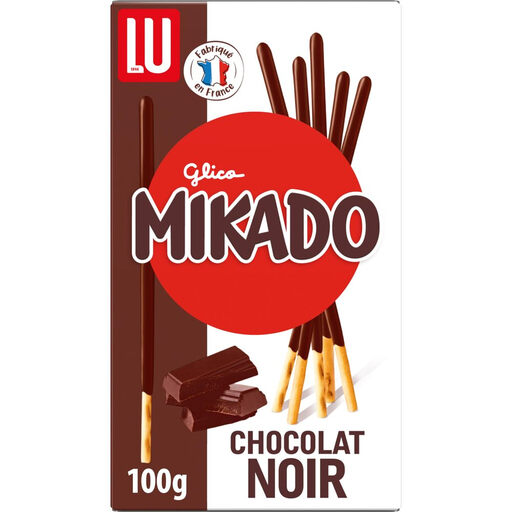 Image unavailable
The coated-stick format is a good choice if you prefer to count how many biscuits you have. To compare this 100 g pack with a biscuit topped with a slab of chocolate, also check the stated dark chocolate content on the listing or packaging for each product.
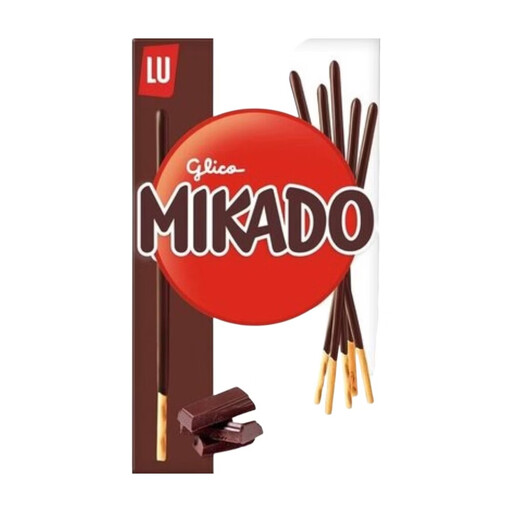 Image unavailable
This 75 g pack is a different size from the 100 g Mikado variant, so choose according to how much you’d like to open. If chocolate intensity is your top priority, check the dark chocolate content and its cocoa content for this specific variant.
No: it describes the type of chocolate used, not the proportion of cocoa in the biscuit as a whole. When comparing recipes, distinguish the amount of dark chocolate in the biscuit from the cocoa content of that chocolate, if stated.
No: it doesn’t replace checking the ingredients. Auchan’s listing for Gullón biscuits mentions maltitol and naturally occurring sugars, so compare the ingredients and nutritional information for the product you’re interested in.
Follow the storage instructions on the packaging. If the product comes in several sachets, open only the one you plan to use and check the product’s own guidance for the rest of the pack.
No: the ingredients and ‘may contain’ information depend on the exact product. The listings checked mention wheat, milk, soya or eggs, depending on the product. Read the pack label before choosing.