Who is this guide for?

Fans of a pronounced cocoa flavour

If you’re looking for an intense flavour, check the cocoa percentage of the chocolate when it’s stated. Carrefour France lists 27% dark chocolate in its Classic’ biscuit, while Auchan France lists 29% in its organic chocolate-topped biscuit. These figures show the proportion of chocolate in each biscuit, not its cocoa content.

Busy shoppers comparing labels

Nutrition information per 100 g makes it easier to compare sugars, saturates, salt and energy on a like-for-like basis. The DGCCRF states that nutrition labelling is mandatory for the relevant prepacked foods; Santé publique France notes that displaying the Nutri-Score is voluntary.

People mindful of allergens and pack size

Ingredients and allergen warnings can vary between products, so check the packaging of the pack you’re choosing. If you plan to take it with you or split it between several breaks, also check whether it contains individually wrapped portions and how many servings there are.

What to look for on the shelf

What to checkLook forWho it’s for
Cocoa intensity Look for the cocoa percentage of the chocolate, and distinguish it from the proportion of chocolate in the biscuit. If cocoa flavour is your priority, the words ‘dark chocolate’ alone won’t tell you how intense it is. Around 33% of consumers put this check first.
Nutrition information Compare sugars, saturates, salt and energy per 100 g, then check the serving size. When choosing between two packs, some consumers look at the nutrition information first rather than relying on the packaging alone. This is the main priority for around 27% of them.
Pack format Check the net weight, number of servings and whether the biscuits are individually wrapped. If you need to take the pack with you or open it over several occasions, the packaging becomes the top priority. Around 20% of consumers prioritise this practical consideration.
Ingredients and allergens Read the ingredients list and any warnings about traces on the exact pack you’re buying. For consumers who need to avoid certain ingredients or allergens, the recipe matters more than taste or pack format. This is the main concern for around 20% of them.

Common mix-ups to avoid

  • Assuming ‘dark chocolate’ means a high cocoa content

    The amount of chocolate in a biscuit and the cocoa content of that chocolate are two different measures. The 27% listed by Carrefour France for Classic’ and the 29% listed by Auchan France for its organic chocolate-topped biscuit refer to the first measure.

    If you’re looking for a really intense flavour, check for an explicitly stated cocoa percentage rather than relying on the product name alone.

  • Treating the Nutri-Score as mandatory or definitive

    Santé publique France says that displaying the Nutri-Score is voluntary. Its absence alone is therefore no basis for judging a biscuit. Nutrition labelling for the relevant prepacked foods is a separate requirement, as specified by the DGCCRF.

    Use the Nutri-Score when it appears on the pack, but don’t let it replace checking the nutrition information per 100 g and the ingredients.

  • Confusing ‘no added sugars’ with ‘sugar-free’

    Auchan France’s product page for Karéléa filled biscuits lists 0.8 g of sugars and 25 g of polyols per 100 g; it also mentions maltitol and isomalt. So a single claim on the front of the pack won’t tell you everything about what’s in the product.

    Read the nutrition table and ingredients list for the product you’re interested in.

  • Overlooking allergens in a familiar biscuit

    Ingredients and warnings about traces can differ from one recipe to another. The DGCCRF notes that allergenic ingredients must be highlighted on the labels of relevant foods.

    Check the packaging of the product you’re buying, even if you already know the brand.

Brands worth knowing

Carrefour Classic’

A supermarket own-brand dark chocolate biscuit.

  • Carrefour France’s product page lists 27% dark chocolate in the biscuit and provides its ingredients and nutrition information.
  • This proportion of chocolate doesn’t tell you the cocoa percentage of the chocolate used.

Auchan Bio

A range of distinct filled or chocolate-topped dark chocolate biscuits.

  • Auchan France lists individually wrapped portions for the filled and chocolate-topped products reviewed; the chocolate-topped biscuit contains 29% dark chocolate.
  • Check the recipe and allergens for each product: the filled and chocolate-topped formats aren’t interchangeable.

Delichoc

A biscuit combining a biscuit base with a dark chocolate bar.

  • Carrefour France’s product page lists 40% chocolate in this biscuit.
  • This figure doesn’t tell you the cocoa content of the chocolate.

Karéléa

A dark chocolate-filled biscuit made with sweeteners.

  • Auchan France’s product page lists 0.8 g of sugars per 100 g for this product.
  • It also lists 25 g of polyols per 100 g; this profile doesn’t indicate how intense the cocoa flavour is.

Biscuits available on Joybuy

These two dark chocolate-flavoured biscuit formats could be handy for a quick shop, particularly if you’re looking for a pack to take with you. To compare their cocoa intensity, check the cocoa percentage on the packaging.
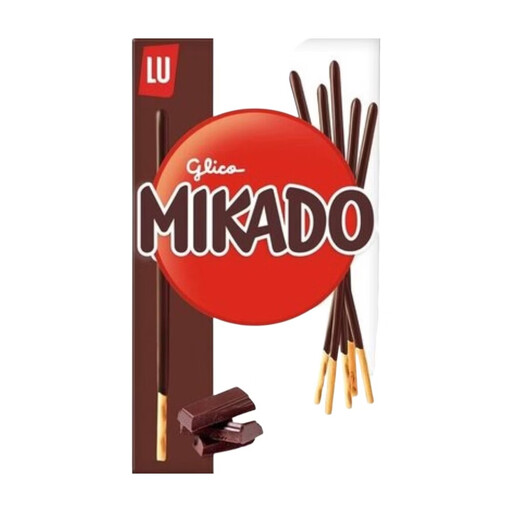
Pack of Mikado Dark Chocolate sticks, 75 g

Mikado Dark Chocolate 75 g

These dark chocolate-coated sticks are described as individually wrapped, making them worth considering if you need a snack to take with you.

The product information lists 32 g of sugars and 18 g of saturates per 100 g. It identifies wheat, milk and soya, and warns that the product may contain traces of nuts. If cocoa intensity is important to you, check the packaging for the cocoa percentage before choosing.

View on Joybuy
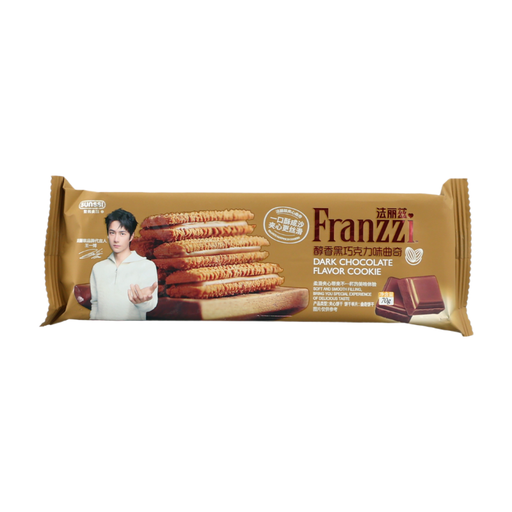
Pack of Franzzi dark chocolate-flavoured biscuits, 70 g

Franzzi dark chocolate-flavoured biscuits 70 g

The 70 g pack and stated individual wrapping may make these biscuits a convenient snack to take with you.

The ingredients include cocoa powder and cocoa mass, but this alone doesn’t tell you how intense the flavour is. Before comparing the product nutritionally, check the sugars and saturates on the packaging. Also check the warnings relating to wheat, milk, eggs and soya.

View on Joybuy

Frequently asked questions

Is the Nutri-Score compulsory on biscuits?

No. Santé publique France says that displaying it is voluntary. The DGCCRF distinguishes this from the mandatory nutrition labelling for the relevant prepacked foods, so compare the information per 100 g even if there’s no Nutri-Score on the pack.

How can I quickly compare two dark chocolate biscuits?

Start by comparing energy, sugars, saturates and salt per 100 g. If you’re mainly looking for a pronounced cocoa flavour, check the cocoa percentage of the chocolate separately: the proportion of chocolate in the biscuit won’t tell you this.

Do individually wrapped portions change a biscuit’s nutritional values?

The packaging alone doesn’t change the values listed per 100 g. If you’re choosing a pack to take with you, check how many individual packs it contains, the weight of each portion and the ingredients of the exact product.

Which allergens should I check before buying?

Read the highlighted ingredients and any warnings about traces on the pack you’re choosing. Depending on the recipe, the products mentioned here may contain wheat, milk, eggs or soya. Don’t assume the labelling for one biscuit applies to another.

Does the soft drinks tax apply to dark chocolate biscuits?

No. According to the Ministry of the Economy, the so-called ‘soft drinks tax’ applies to sugary drinks, not dark chocolate biscuits. To compare these biscuits, check their sugar content in the nutrition information instead.