Parents looking for a noticeable chocolate flavour
Whether you’re making a crumb base, adding pieces or decorating, check the stated proportion of chocolate in the biscuit. This isn’t necessarily the same as the cocoa content of the chocolate.


Choose the biscuit shape to suit your recipe: a chocolate-coated biscuit or one with a chocolate layer gives you a distinct layer of chocolate, while chocolate chip biscuits add small pieces throughout. When baking with children, check the allergens and the rules for your baking session too. The words ‘dark chocolate’ alone don’t tell you the cocoa content or whether the product is suitable for your group.
Whether you’re making a crumb base, adding pieces or decorating, check the stated proportion of chocolate in the biscuit. This isn’t necessarily the same as the cocoa content of the chocolate.
If the biscuits will also be served as a snack, compare the sugars, fibre and saturated fat per 100 g. Nutri-Score can be a useful guide when it appears on the packaging, but displaying it is voluntary, as the Directorate General for Enterprise explains.
For a class or holiday club, check the allergens in the biscuits and the other recipe ingredients, then ask what rules apply at the venue. A ‘gluten-free’ label doesn’t tell you whether other allergens are present.
Start with the group’s requirements and how you plan to use the biscuits in your recipe. Then compare the flavour you’re looking for and the nutritional information.
| Criterion | What to check | Who is this for? |
|---|---|---|
| Allergens and rules for the baking session | Read the ingredients and any ‘may contain’ information on the pack you buy. Ask about the venue’s rules before bringing in your recipe. | For a group baking session, you need to choose ingredients that meet the group’s requirements. Around 31% of consumers put this first. |
| Biscuit shape | Choose a chocolate coating, a chocolate layer or chocolate chips depending on whether you want visible pieces or small inclusions. | If you’re making a crumb base or adding pieces, the shape matters just as much as the biscuit’s name. This is the top priority for around 25% of consumers. |
| Chocolate flavour | Look for the stated proportion of chocolate. If the cocoa content matters, check the packaging for this information separately. | When several children will be trying your creation, you may want a noticeable chocolate flavour without assuming they’ll all enjoy the same intensity. Around 25% of consumers put this flavour choice first. |
| Nutritional information | Compare the sugars, fibre and saturated fat per 100 g. Check the Nutri-Score if it’s shown. | If the biscuits will also be served as a snack, nutritional information can help you choose between similar products. Around 19% of consumers make this their top criterion. |
The proportion of chocolate in a biscuit doesn’t tell you the cocoa percentage of the chocolate used. Carrefour France states that its Carrefour Bio petit beurre biscuits contain 48% dark chocolate; E.Leclerc states that its Eco+ chocolate-layer biscuits contain 37%. These figures refer to the chocolate content of the biscuits.
If the cocoa content is important for your recipe, look for an explicit statement on the pack.
The Directorate General for Enterprise explains that displaying it is voluntary. The Directorate General for Competition Policy, Consumer Affairs and Fraud Control distinguishes this logo from the labelling information required for pre-packed food.
If the logo isn’t shown, use the nutrition table and ingredients list to compare biscuits.
Ingredients and ‘may contain’ information vary from one product to another. A gluten-free biscuit may also contain eggs or nuts, as shown in the product information for a Chaque Jour Sans Gluten product published by E.Leclerc.
Ask about the rules for the baking session, check every recipe ingredient and keep the packaging to hand during the activity.
These labels relate to different criteria. For example, E.Leclerc gives its Bio Village dark chocolate-coated biscuits a Nutri-Score E.
Check allergens, suitability for your recipe and the available nutritional information separately.
Granola dark chocolate-coated shortbread biscuits can be crumbled or used in pieces when you’re looking for a distinct chocolate layer.
The dark chocolate petit beurre combines biscuit and chocolate in a format worth considering if you want visible pieces in your recipe.
Dark chocolate-layer biscuits are another option to consider if your recipe calls for a distinct chocolate layer.
Dark chocolate-coated biscuits can add a crumbly texture and a chocolate coating to a crumbled-biscuit mixture.
Wholegrain oat biscuits with dark chocolate chips are suitable for recipes where you want small pieces throughout rather than a layer of chocolate.
These chocolate chip shortbread biscuits are worth considering if you want to crumble biscuits or add chocolate chips to a recipe. If using dark chocolate chips is essential, check the packaging to confirm that’s what they contain.
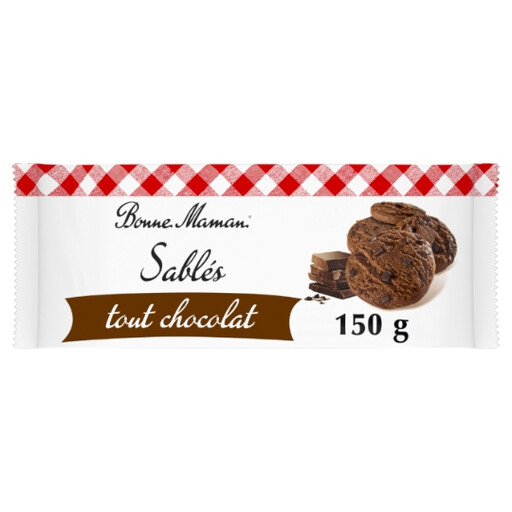 Image unavailable
Worth considering for recipes where you’ll crumble the biscuits or leave chocolate chips in the mixture. Before bringing them to a baking session, check the packaging for allergens, any ‘may contain’ information and what type of chocolate the chips contain.
No. The Directorate General for Enterprise explains that displaying it remains voluntary. To compare biscuits without this logo, check their nutrition declaration, particularly the sugars and fat per 100 g.
Check the ingredients, allergens and any ‘may contain’ information for every product you’ll use, then ask about the school’s or organiser’s rules. The Directorate General for Competition Policy, Consumer Affairs and Fraud Control reminds food businesses that allergens must be highlighted on the labels of pre-packed foods.
No: this wording alone doesn’t tell you the cocoa content. Carrefour France states that its Carrefour Bio petit beurre biscuits contain 48% dark chocolate, while E.Leclerc says its Eco+ chocolate-layer biscuits contain 37%. These figures refer to the proportion of chocolate in each biscuit, not the cocoa content of the chocolate.
Follow the storage instructions on the pack and check the best-before date. The product information for Auchan Bio oat and chocolate chip biscuits, for example, says to protect them from heat and moisture.
No. The product information for a Chaque Jour Sans Gluten biscuit published by E.Leclerc lists eggs, almonds and hazelnuts. Check the other allergens in the product you choose and the rules for the activity before bringing it along.