For Friday drinks where the taste of dark chocolate matters, start by comparing the proportion of chocolate in the biscuit, then look for the cocoa percentage of the chocolate used: these are two different things. Before choosing a packet to share, check the ingredients, allergens and pack size too. Any Nutri-Score shown can help you make your choice, but it isn’t compulsory.
Who are these biscuits for?
Fans of a rich dark chocolate taste
If chocolate needs to play a starring role in the biscuits you serve with drinks, the proportion of dark chocolate in the recipe is a good place to start. To find out the cocoa content of the chocolate itself, look for a separate figure on the packet.
Hosts who pay attention to ingredients
To compare two recipes, check their ingredients and nutritional values per 100 g, particularly sugars and saturated fatty acids. If a Nutri-Score appears on the packaging, you can use it as part of your comparison too.
Guests with dietary restrictions
A ‘gluten-free’ or ‘no added sugars’ claim addresses a specific requirement, not every dietary restriction. Check the ingredients, allergens, possible traces and, for some recipes, sweeteners separately.
Which criteria should you prioritise?
For drinks, start with what matters most to your guests: a strong chocolate flavour, ingredients, dietary restrictions or how much you need to share. Then compare packets using the same information.
| Criterion |
What to check |
Who is it for? |
| Chocolate flavour |
The proportion of dark chocolate in the biscuit and, separately, the cocoa percentage of the chocolate, if stated. |
If I’m looking for a strong dark chocolate taste to serve with drinks, I want to be able to distinguish between these two figures before choosing. Around 33% of consumers put this chocolate flavour first. |
| Nutritional composition |
Sugars and saturated fatty acids per 100 g; the ingredients and any sweeteners. |
When comparing several packets to serve, I look at what each recipe contains rather than relying on its name alone. Around 27% of consumers prioritise checking the ingredients and nutritional composition. |
| Dietary restrictions |
Allergens, ‘may contain’ warnings and the precise meaning of a ‘gluten-free’ or ‘no added sugars’ claim. |
If a guest needs to avoid an ingredient, I check the packet I’m actually going to serve before thinking about how intense the chocolate tastes. This is the main concern for around 20% of consumers. |
| Pack size for sharing |
Net weight, the number of biscuits if stated, and the pack format. |
If several people will be helping themselves during drinks, I look for a packet with a quantity and presentation that suit the occasion. Around 20% of consumers prioritise pack size and format. |
A higher proportion of dark chocolate in a biscuit doesn’t necessarily mean that the chocolate contains more cocoa. For example, E.Leclerc product listings state that an ECO+ biscuit contains 37% dark chocolate and a Bio Village variety contains 48%: these figures describe the biscuit recipe. To compare nutritional values, use the same basis for each product—per 100 g—then take into account how much you plan to serve.
Which pitfalls should you avoid?
-
Confusing dark chocolate with cocoa
A statement such as ‘48% dark chocolate’ refers to the proportion of chocolate in the biscuit, not the percentage of cocoa in that chocolate. On its own, it therefore doesn’t let you rank biscuits by cocoa content.
Look for an explicit cocoa percentage on the packaging. If there isn’t one, compare the proportion of dark chocolate and the ingredients, without turning that comparison into a ranking of cocoa content.
-
Assuming a missing Nutri-Score means the label is incomplete
Santé publique France says that displaying the Nutri-Score is voluntary. Its absence therefore tells you nothing by itself about a biscuit’s nutritional composition.
Read the nutritional information and ingredients list. Use the Nutri-Score as an additional guide when it appears on the pack.
-
Confusing ‘no added sugars’ with ‘sugar-free’
Auchan’s listing for Karéléa biscuits with a chocolate filling and no added sugars states that they contain 0.8 g of sugars and 25 g of polyols per 100 g, as well as sweeteners. The claim on the front of the pack doesn’t tell you everything about the recipe.
Check the sugars, polyols, sweeteners and allergens if this is the reason you’re buying them.
-
Serving a packet without checking its allergens
Allergens vary from one product to another. For example, a biscuit labelled gluten-free may still contain other ingredients that a guest needs to avoid.
Check the label on every packet you buy, and choose a suitable alternative separately if someone has told you they need to avoid a particular ingredient.
Brands to compare
These products showcase a range of recipes and pack sizes. The brand name is no substitute for checking the label of the product you choose.
Carrefour Classic'
Carrefour France lists a dark chocolate biscuit in a 195 g packet.
- The recipe contains 27% dark chocolate and wholemeal wheat flour. This proportion doesn’t tell you the cocoa content of the chocolate.
- The listing identifies wheat, milk and soya, and warns that the product may contain traces of egg and nuts.
ECO+
E.Leclerc describes a biscuit topped with a bar of dark chocolate, in a 150 g packet.
- The recipe contains 37% dark chocolate.
- E.Leclerc lists 30.2 g of sugars and 12.1 g of saturated fatty acids per 100 g. Check availability with your local E.Leclerc store.
Bio Village
This E.Leclerc product combines a biscuit topped with a bar of dark chocolate with ingredients from organic farming, in a 150 g packet.
- The listing states that the biscuit contains 48% dark chocolate, but this figure isn’t the cocoa percentage.
- It also lists 34.0 g of sugars and 14.8 g of saturated fatty acids per 100 g. Organic status doesn’t tell you everything about these nutritional values.
Gerblé
Carrefour France lists a 150 g dark chocolate biscuit whose recipe contains 48% dark chocolate.
- The stated proportion of chocolate gives you a point of comparison with other biscuits, but doesn’t establish the cocoa content of the chocolate.
- The listing identifies wheat, milk and egg, and says the product is made in a facility that also handles nuts, sesame and soya.
Karéléa
Auchan France describes chocolate-filled biscuits with no added sugars, in a 170 g packet.
- The listing states that they contain 0.8 g of sugars per 100 g and are made with maltitol and isomalt.
- The same listing shows 25 g of polyols per 100 g and identifies wheat, milk and oats, among other ingredients. Check the packet for other allergens and possible traces.
Biscuits to consider on Joybuy
These products offer different ways to enjoy biscuits associated with dark chocolate at drinks, from biscuits topped with a bar of chocolate to bite-sized pieces and dark chocolate-flavoured recipes. Their names alone don’t establish that they have the same cocoa content.
 Image unavailable
PETIT ECOLIER dark chocolate, 150 g
Worth considering if you prefer a biscuit topped with a bar of dark chocolate to serve with drinks. The packet is listed as 150 g. If the cocoa content matters to you, check the information on the packaging of the product you buy. Also check the allergens if you need to avoid wheat, milk or soya.
View on Joybuy
 Image unavailable
Mikado dark chocolate, 75 g
The stick format may suit drinks where everyone can help themselves easily; the packet is listed as 75 g. If you’re looking for a specific cocoa content, check the packaging rather than relying on the words ‘dark chocolate’ alone. Check the allergens before serving.
View on Joybuy
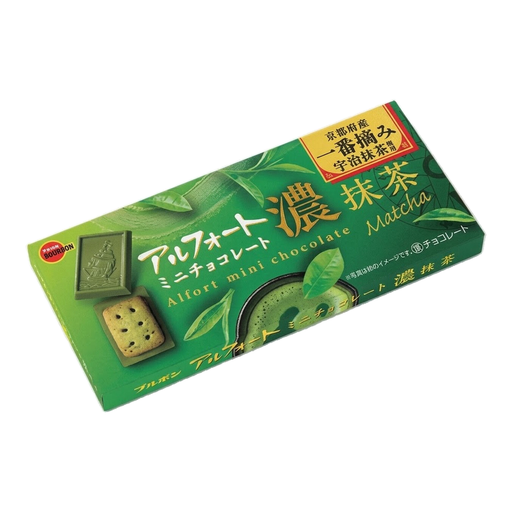 Image unavailable
Bourbon Alfort Mini Chocolate Dark Matcha, 12 pieces, 60 g
The 12 bite-sized pieces may suit you if you want individual portions to put out with drinks. This variety combines dark chocolate and matcha, so it offers a different flavour from a biscuit made with dark chocolate alone. Check the packaging for the ingredients, cocoa content and allergens.
View on Joybuy
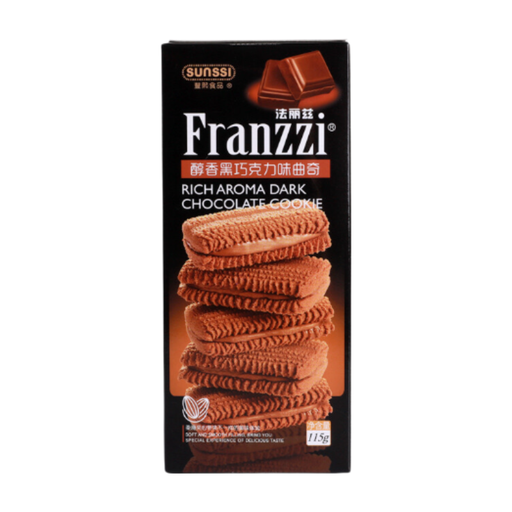 Image unavailable
Franzzi Mellow, dark chocolate-flavoured biscuits, 115 g
This 115 g product may appeal if you’re considering biscuits with a dark chocolate flavour rather than a recipe that specifies a bar of dark chocolate. The product name doesn’t tell you the proportion of dark chocolate or the cocoa content, so check the ingredients and allergens on the packet.
View on Joybuy
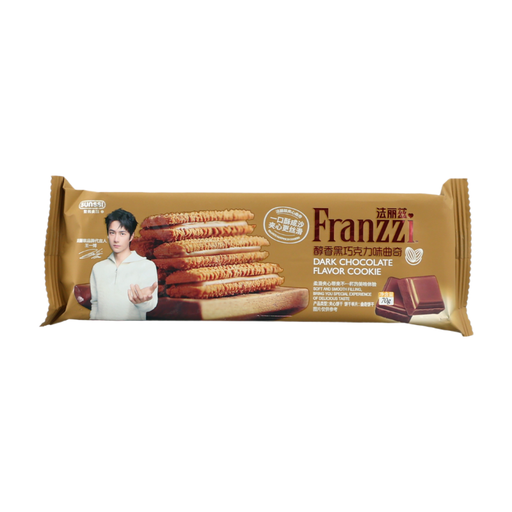 Image unavailable
Franzzi Premium, dark chocolate-flavoured biscuits, 70 g
This 70 g packet is another option if you’re looking for dark chocolate-flavoured biscuits to serve with drinks. Before comparing it with a recipe containing a bar of dark chocolate, check the ingredients and the cocoa content stated on the packaging. Also check the nutritional information and allergens.
View on Joybuy
Frequently asked questions
Does the sugar tax apply to chocolate biscuits in France?
No. The charge described by the Directorate General for Competition, Consumer Affairs and Fraud Control and the Ministry of the Economy applies to drinks, not chocolate biscuits. When choosing biscuits, compare their sugar content in the nutritional information, rather than confusing this with a tax rule that applies to the product.
Does a packet of biscuits have to show a Nutri-Score?
No. Santé publique France says that displaying it is voluntary. If it is shown, you can consider it alongside the nutritional values and ingredients. Its absence doesn’t let you judge the biscuit’s composition on its own.
Is a Nutri-Score enough to compare two dark chocolate biscuits?
No. When shown, it provides an additional guide for products in a similar category. For drinks, also compare the values per 100 g, the ingredients list, the allergens and how much you plan to serve.
How should you store biscuits before serving them with drinks?
Follow the instructions on the packet you buy. Gerblé and Karéléa product listings recommend storing their biscuits in a cool, dry place. The Karéléa listing adds that temperatures above 20 °C may cause the chocolate to develop a whitish bloom, without affecting the product’s quality.


