Who is this guide for?

Anyone looking for a pronounced cocoa flavour

You want to understand what ‘dark chocolate’ means when it appears on a biscuit pack. Look for a minimum cocoa percentage for the chocolate used, which is different from the proportion of chocolate in the recipe.

Anyone planning to share treats at an event

You want a format that’s easy to offer during the event, without overlooking allergens or the storage instructions on the pack you choose.

Anyone comparing nutritional information

You’d like to check the sugars and saturates per 100 g before choosing, rather than relying on the packaging alone.

What should you check?

If anyone in your group needs to avoid an allergen, check the exact pack’s recipe first. Then compare the cocoa, nutritional information and format according to what matters most to you.

What to considerWhat to checkWho is it for?
Cocoa content The minimum cocoa percentage for the chocolate itself and the proportion of dark chocolate in the biscuit. If I’m looking for a pronounced cocoa flavour, I’ll distinguish between these two figures before choosing. Around 31% of consumers would make this their top priority.
Nutritional information Sugars and saturates per 100 g; the Nutri-Score, if shown. To compare two recipes, I need figures based on the same amount of biscuit. Around 31% of consumers would prioritise checking the nutritional information.
Sharing format Chocolate-coated sticks, tablet biscuits or an assortment; pack weight and storage instructions. At the event, I’d prefer a format that’s easy to offer to the group. Around 23% of consumers would put ease of sharing first.
Ingredients and allergens The ingredients list, declared allergens and ‘may contain’ warnings. If someone in the group needs to avoid an ingredient, I must check the pack before serving. Around 15% of consumers would make suitability their top criterion.

Common misconceptions to avoid

  • Confusing the proportion of chocolate with its cocoa percentage

    According to E.Leclerc product listings, Eco+ and Bio Village tablet biscuits contain 37% and 48% dark chocolate in their recipes respectively. These figures don’t tell you the minimum cocoa percentage of that chocolate.

    If you’re looking for a more pronounced cocoa flavour, look for a clearly stated minimum cocoa percentage for the chocolate itself.

  • Using the ‘soda tax’ as a criterion for biscuits

    The French Ministry of the Economy describes this French levy as applying to sugary drinks, not chocolate biscuits.

    To compare biscuits, check the sugars per 100 g in their nutritional information instead.

  • Assuming a missing Nutri-Score means something is wrong

    The French Ministry of the Economy explains that displaying the Nutri-Score is still voluntary in France. Nutritional declarations are covered by other rules for prepacked foods, with some exemptions.

    Use the Nutri-Score if it appears on the product, and compare the nutritional values per 100 g too.

  • Assuming dark chocolate means there’s no milk

    The dark chocolate biscuit recipes reviewed may contain wheat, milk or soya, among other ingredients. Some also warn that they may contain nuts.

    If you have an allergy or follow a specific diet, check the ingredients list and warnings on the pack you buy.

Brands to consider when comparing recipes

LU / Mikado

Slim biscuit sticks coated in dark chocolate, worth considering when an easy-to-share format matters more than finding a specific cocoa percentage.

  • Carrefour describes a slim coated biscuit; the Auchan listing for the 3 × 90 g multipack states that it contains 49% dark chocolate.
  • This proportion doesn’t tell you the minimum cocoa percentage of the chocolate. Check the ingredients and allergens for the format you buy too.

E.Leclerc / Eco+ et Bio Village

Tablet and coated biscuits with product listings that let you compare the proportion of dark chocolate and nutritional values for specific products.

  • According to E.Leclerc, Eco+ tablet biscuits contain 37% dark chocolate and 30.2 g of sugars per 100 g; Bio Village tablet biscuits contain 48% dark chocolate and 34 g of sugars per 100 g.
  • Both tablet biscuits have a Nutri-Score of E. Neither their proportion of dark chocolate nor this score tells you on its own what the chocolate will taste like or its minimum cocoa percentage.

Carrefour Bio

An organic dark chocolate-filled biscuit for anyone wanting to compare a filled recipe with tablet or coated formats.

  • The Carrefour listing states that this product contains 15.9% dark chocolate and 15% wholemeal wheat flour.
  • The proportion of dark chocolate doesn’t tell you its minimum cocoa percentage. The listing mentions wheat, butter and milk, as well as possible traces of nuts and eggs.

Auchan Collection

An assortment to consider if the group would enjoy different types of chocolate rather than a recipe made exclusively with dark chocolate.

  • The Auchan listing describes an assortment combining dark, milk and white chocolate.
  • The stated minimum cocoa percentage of 70% applies to a separate Ghanaian dark chocolate component that makes up 0.5% of the recipe, not the assortment as a whole.

Dark chocolate biscuit sticks on Joybuy

These two Mikado Dark Chocolate formats are suitable if you’re looking for biscuit sticks to share on Music Day. If you’re looking for a specific cocoa percentage, check the information on the pack before buying.
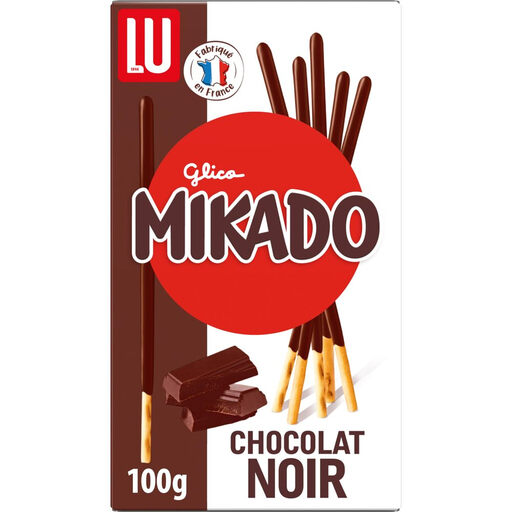
Mikado Dark Chocolate 100 g pack

Mikado Dark Chocolate 100 g

Dark chocolate biscuit sticks to consider for sharing. The pack is listed as 100 g; check the minimum cocoa percentage of the chocolate and the allergens on the exact packaging.

View on Joybuy

Mikado Dark Chocolate 75 g pack

Mikado Dark Chocolate 75 g

A 75 g pack of dark chocolate biscuit sticks if you’d prefer this size for the event. Check the stated minimum cocoa percentage, ingredients and allergen warnings on the pack you choose.

View on Joybuy

Frequently asked questions

How can I tell the cocoa percentage of dark chocolate in a biscuit?

Look for the minimum cocoa percentage of the chocolate itself, rather than confusing it with the proportion of chocolate in the biscuit. In the Auchan Collection assortment listing, the stated minimum cocoa percentage of 70% applies to a component that makes up 0.5% of the recipe, not to all the biscuits.

Does the Nutri-Score have to appear on chocolate biscuits in France?

No. The French Ministry of the Economy says that displaying it is still voluntary. The DGCCRF explains that a nutritional declaration is required for relevant prepacked foods, subject to applicable exemptions. It allows you to compare sugars and saturates per 100 g, among other things.

Are chocolate biscuits subject to the soda tax?

No: the levy described by the French Ministry of the Economy applies to sugary drinks. When choosing between two biscuits, compare their nutritional information directly rather than relying on this tax.

Can you serve dark chocolate biscuits to someone who avoids milk?

The words ‘dark chocolate’ aren’t enough to confirm that a product is milk-free. Some of the products reviewed contain milk, so check the ingredients and allergen information on the exact pack before serving.

How should you store coated biscuits before an outdoor event?

Follow the instructions on the pack you choose. For the Mikado product reviewed, Auchan recommends keeping it in a cool, dry place away from light; its assortment listing also notes that it is sensitive to heat and humidity.