Dark chocolate lovers
You’re looking for a pronounced chocolate flavour. Compare the proportion of dark chocolate stated in the recipe with the ingredients list, and don’t confuse it with the cocoa content of the whole biscuit.


For a festival camping trip, choose a biscuit whose proportion of dark chocolate, ingredients and allergens you can check. The words ‘dark chocolate’ alone don’t tell you how much cocoa the biscuit contains. Individually wrapped portions make sharing easier and let you keep the rest sealed, but you should also follow the storage instructions on the pack. A higher proportion of dark chocolate in the recipe doesn’t prove that the biscuit contains more cocoa or has a more intense flavour.
You’re looking for a pronounced chocolate flavour. Compare the proportion of dark chocolate stated in the recipe with the ingredients list, and don’t confuse it with the cocoa content of the whole biscuit.
You’re planning to open the pack more than once or share the biscuits around. The number of individual packs and the instructions for protecting them from heat and moisture matter just as much as the pack weight.
Check the ingredients and any ‘may contain’ warnings on the pack for the product you buy: these details vary between dark chocolate biscuits.
First, distinguish the amount of dark chocolate in the recipe from the cocoa content of the chocolate. Then choose a pack that suits sharing and the storage conditions.
| What to consider | What to check | Who it matters to |
|---|---|---|
| Chocolate and cocoa | The proportion of dark chocolate in the recipe and, if stated on the pack, the minimum cocoa content of the chocolate. These figures mean different things. | I’m looking for a pronounced chocolate flavour and want to know what the stated percentage measures. Around 36% of consumers prioritise this. |
| Sharing and transport | The number of individual packs and biscuits in each pack, along with the storage instructions. | If I’ll be opening the biscuits at different times during my trip, I’d rather be able to keep the rest sealed. Around 29% of consumers put this need first. |
| Allergens | The allergens listed in the ingredients and any ‘may contain’ warnings on the pack you buy. | Before choosing based on flavour or format, I need to make sure the recipe suits my dietary requirements. Around 21% of consumers make this their priority. |
| Quantity | The net weight and number of portions, considered against the number of people you’re catering for and the length of your stay. | To avoid taking the wrong amount for my group, I start by counting how many portions we’ll need. Quantity is the top consideration for around 14% of consumers. |
The percentage of dark chocolate used as an ingredient isn’t the cocoa content of the finished biscuit. On its own, it also can’t tell you how bitter the biscuit will taste.
Read the ingredients list and check what each percentage on the pack refers to.
A pack that’s opened several times is less convenient to share and protect from heat or moisture.
If you’ll be eating the biscuits over several days, compare individually wrapped options and keep portions sealed in line with the pack instructions.
Recipes and ‘may contain’ warnings vary between products; ‘dark chocolate’ doesn’t tell you everything about the biscuit’s ingredients.
Check the allergen information on the pack you actually buy, even if you already know the brand.
A product listing alone doesn’t confirm that the biscuit will be available in the shop or Drive you’re planning to use.
Check availability at your chosen shop before working out how many portions to take for your trip.
St Michel’s 121 g Galette gourmande with dark chocolate comes in 4 packs of 3 biscuits.
The LU range includes Mikado sticks coated in dark chocolate, including a 100 g product listed by Carrefour.
Carrefour sells dark chocolate biscuits under its Extra brand in a 125 g box.
Auchan’s Auchan Bio range includes biscuits coated or filled with dark chocolate, sold in individual packs.
E.Leclerc sells a 150 g Bio Village biscuit in a bar shape with dark chocolate.
These products include a biscuit in a bar shape and two types of dark chocolate sticks. To choose which to take with you, compare the weight, the packaging details and the storage instructions. Don’t assume the cocoa intensity from the product name alone.
 Image unavailable
A dark chocolate biscuit to consider if you’re looking for a 150 g pack for your trip. Before taking it with you, check the allergens, biscuit packaging and storage instructions on the pack.
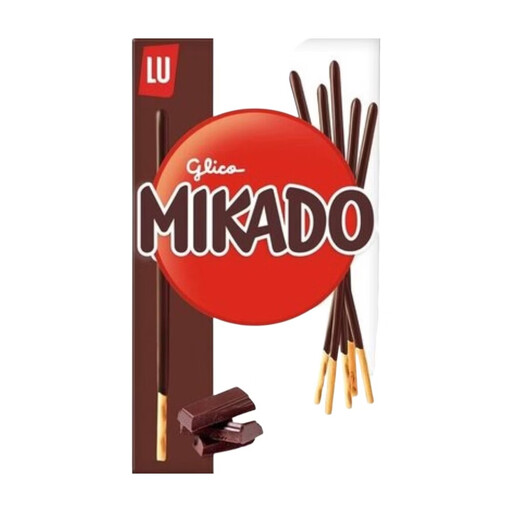 Image unavailable
This 75 g pack of dark chocolate sticks could suit you if you’re after a compact option to take along. Check the number of portions, allergens and any cocoa information on the pack if that’s an important factor in your choice.
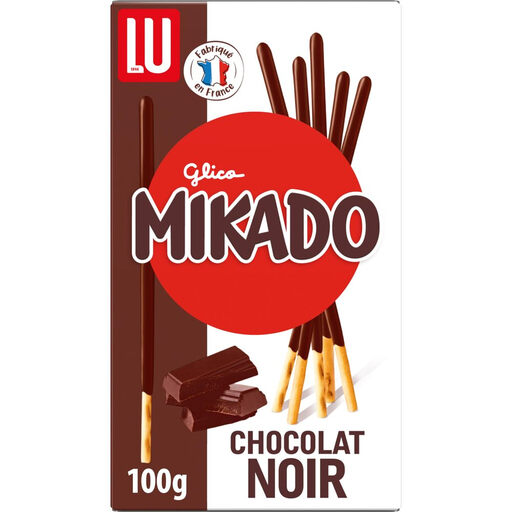 Image unavailable
This 100 g option is for anyone who wants to compare a different pack size for their trip. Before choosing between the two Mikado formats, check the portion sizes, allergens and storage instructions for each.
No. The name alone doesn’t tell you the cocoa content of the finished biscuit. The proportion of dark chocolate in the recipe and the minimum cocoa content of the chocolate are two different things; check what the figure on the pack refers to.
Follow the storage instructions for the product you’ve chosen rather than assuming a tent is suitable. For its Galette gourmande, St Michel recommends storing it in a dry place, away from heat and light, at a maximum of 25 °C. Auchan warns that its chocolate biscuits are sensitive to heat and moisture.
You shouldn’t assume a cool bag is needed for dry biscuits: follow the storage instructions on the pack. The DGCCRF recommendation to use a cool bag is aimed in particular at transporting food that needs to be kept chilled.