People who bake biscuits at home
You’re looking for chocolate to add to your recipe. A bar labelled for baking is a more straightforward starting point for this use than a gift box designed to give as a present.


For baking biscuits, start with dark chocolate labelled for baking, then choose a cocoa content to suit the flavour you want. The documented bars range from 51–52% to 70%. A gift box is better suited to giving; if you’d also like to use it in baking, check the ingredients and allergen information for the specific chocolates it contains.
You’re looking for chocolate to add to your recipe. A bar labelled for baking is a more straightforward starting point for this use than a gift box designed to give as a present.
You want a pronounced cocoa flavour in your biscuits. The documented 70% bars let you choose this intensity, which differs from baking bars with around 51–52% cocoa.
Presentation and variety matter most to you. If some of the gift is also intended for baking, check the ingredients of the chocolates you plan to use separately.
First decide whether the chocolate is mainly for baking biscuits or for giving as a gift, then choose how intense you want it to be. In either case, read the ingredients and allergen information on the product you buy.
| Criteria | What to check | Who is it for? |
|---|---|---|
| Use in baking | Whether it is labelled “baking” or “dessert”; a shape and quantity suited to the recipe. | If I bake biscuits often, I want chocolate that’s presented for adding to a mixture, rather than chosen for its packaging. Around 46% of consumers prioritise using chocolate in baking. |
| Cocoa intensity | The stated cocoa percentage; the flavour you want alongside the dough or filling. | For dark chocolate biscuits, I can go for a milder or more pronounced flavour depending on the recipe. Intensity is the top priority for around 36% of consumers. |
| Gift and ingredients | The contents of the assortment and the ingredients in each chocolate; allergen information. | When I’m buying a gift, I first look at what’s in the box and what will suit the recipient. This is the priority for around 18% of consumers. |
The levy described by the French Ministry of the Economy applies to sugary drinks, not dark chocolate bars or gift boxes. So it won’t help you choose between these products.
Instead, compare the ingredients, the sugars listed per 100 g and the cocoa content.
The French Ministry of Agriculture says that displaying the Nutri-Score is optional in France. Its absence alone tells you nothing about the nutritional values of a chocolate bar.
Check the nutritional information and ingredients list for the specific product, whether or not it has a logo.
Chocolate intended for tasting or presented in a gift box may have different ingredients from the bar specified in your recipe, particularly if it has a filling or inclusions.
If you’re planning to bake with an assortment, check each chocolate you intend to use. For a recipe you make regularly, a simple baking bar gives you a more straightforward starting point.
The Lindt and Carrefour products described have ingredient or possible trace warnings that vary by product, particularly for soya, milk and nuts.
Read the allergen declaration on the packaging of the product and batch you buy, including when the chocolate is for biscuits you’re giving to someone.
The Lindt DESSERT range includes dark chocolate bars labelled for baking, including varieties with 51% and 70% cocoa.
NESTLÉ DESSERT Noir is a 205 g baking bar that the brand recommends for desserts.
Carrefour Original offers a 200 g Chocolat Noir Dessert bar containing at least 52% cocoa.
Auchan Cultivons le Bon dark baking chocolate is listed as containing at least 52% cocoa.
The Côte d’Or products documented here are 70% dark chocolate bars for eating, rather than bars labelled for baking.
These two products are presented for cooking or baking. Choose a shape to suit your recipe, and check the ingredients before adding them to your biscuits.
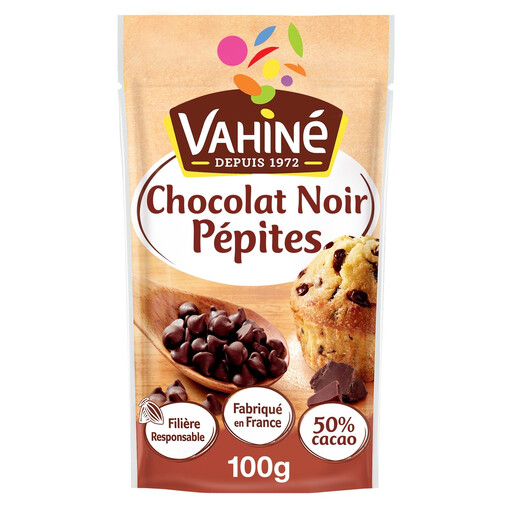 Image unavailable
The product information recommends this for cooking and desserts. Check its exact form if your recipe calls for pieces of chocolate. The information about milk, soya and nuts isn’t entirely consistent, so check the batch label before buying.
 Image unavailable
This 200 g bar is presented for baking and may suit recipes that call for chocolate in bar form. Its product information lists skimmed milk powder, so check the label if this ingredient matters to you.
No. The French Ministry of the Economy describes this levy as applying to sugary drinks, not dark chocolate bars or gift boxes.
No. The French Ministry of Agriculture says displaying it remains optional in France. If a product has one, you can consider it alongside the nutritional values and ingredients list, but don’t rely on it alone to decide whether the chocolate is right for your recipe.
On its own, it doesn’t tell you whether the chocolate is intended for baking or whether it has the flavour you’re looking for. For biscuits, also check the cocoa content, ingredients, allergens and any guidance on the bar’s intended use.
You could use some chocolates from a gift box if their ingredients suit your recipe. Check each piece you plan to bake with: a filling or inclusions may affect the result, and you’ll still need to check the allergen information.
Follow the storage instructions printed on the packaging. For its dark baking chocolate bar, Auchan recommends a cool, dry place between 18 °C and 20 °C. Don’t automatically apply this guidance to another product.