What should you look for first?
First rule out recipes that aren’t suitable for anyone with an allergy in your household. Then compare the flavour you’re looking for, the nutritional values and the format you’ll actually eat.
| Criteria | What to check | Who is it for? |
|---|
| Cocoa flavour |
Cocoa percentage, if listed, and whether the bar contains hazelnuts or another filling. |
For a quick break, I first look for a dark chocolate flavour I enjoy, with or without a crunch; around 40% of consumers put this taste first. |
| Sugar and portion size |
Sugar and energy per 100 g, then the amount for the portion you’ll eat. |
Whether I eat a whole bar or just a few squares, I want to know how much sugar that portion contains; around 30% of consumers prioritise sugar and portion size. |
| Allergens |
Allergenic ingredients and any ‘may contain’ statements on the pack you buy. |
If someone in my household has an allergy, I need to find a suitable recipe before choosing a flavour; around 20% of consumers put allergens first. |
| Snack format |
Weight per bar and, if it matters to you, the protein content listed per bar. |
For a snack on the go, I prefer to know what’s in the bar I’ve chosen; around 10% of consumers prioritise the format and contents of their snack. |
Dark chocolate and hazelnut recipes on Joybuy
These Joybuy products let you choose between bars with a stated cocoa percentage and dark chocolates with nuts. Their 100 g to 200 g sizes aren’t the same as the individual 35 g or 45 g bars mentioned above, so think about how much you’ll have for a snack.
 Image unavailable
Lindt Excellence 85% cocoa dark chocolate bar, 100 g
Worth considering if you’re looking for a clearly stated cocoa percentage. As this bar weighs 100 g, you’ll need to decide how much to have for a snack; check the ingredients and allergens on the packaging.
View on Joybuy
 Image unavailable
Poulain fine dark chocolate 70% bar, 100 g
Another 100 g bar with its cocoa percentage stated in the product name. The recipe uses maltitol, so if you’re comparing sugar levels, check the ingredients and information about polyols too. The product description warns that excessive consumption may have a laxative effect.
View on Joybuy
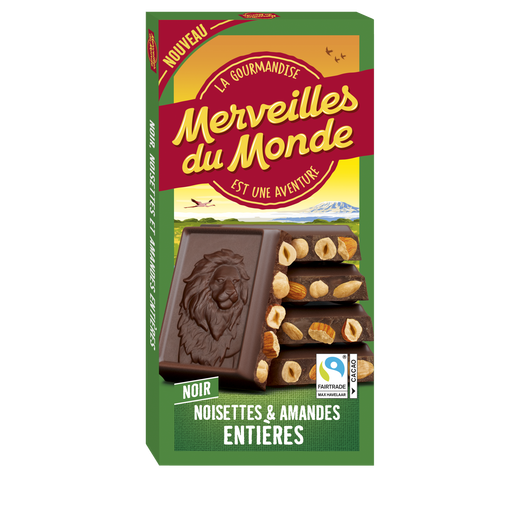 Image unavailable
Merveilles du Monde dark chocolate block with whole hazelnuts and almonds, 170 g
If you enjoy dark chocolate with nuts, this 170 g block is a different option from an individual bar. The recipe contains milk and may contain traces of other allergens, so check the packaging if anyone in your household has an allergy.
View on Joybuy
 Image unavailable
Poulain extra dark chocolate bar, 200 g
This 200 g bar is best compared by serving rather than by the whole pack. The product description gives a 20 g serving size; check the sugar content per 100 g and per serving, as well as the stated presence of milk and soya.
View on Joybuy
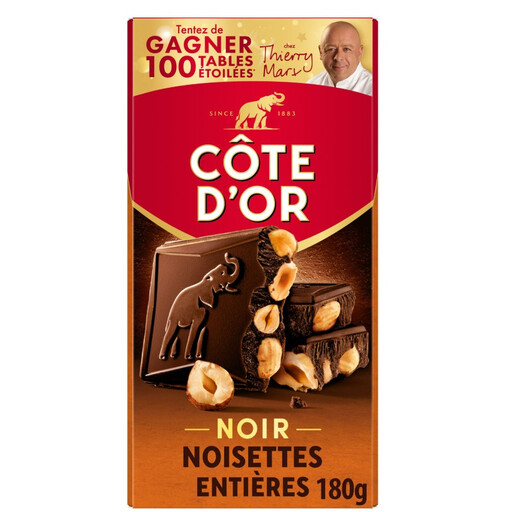 Image unavailable
Côte d'Or dark chocolate with hazelnuts, 180 g
Worth considering if hazelnuts are part of the flavour you’re looking for. This 180 g size isn’t the 45 g Côte d'Or individual bar described above. Compare the exact recipe and check the statements about hazelnuts, milk, soya and other nuts.
View on Joybuy
Frequently asked questions
Is the Nutri-Score compulsory on chocolate bars in France?
No. Santé publique France says producers display the Nutri-Score voluntarily; it is separate from the nutrition declaration required for the relevant products. If it isn’t shown, compare the nutritional values and ingredients.
How can you compare two dark chocolates if only one displays a Nutri-Score?
Use the same 100 g basis to compare sugar, energy and fat, then consider how much you’ll eat. Any logo doesn’t replace these values or the ingredients list.
Is a dark chocolate bar always free from milk, soya and nuts?
No. The Carrefour France listings for Lindt Noccio and Côte d'Or Noir & Noisettes mention these ingredients. Check the allergens and any possible traces on the packaging of the exact recipe you’re buying.
Can a dark chocolate protein bar replace a dark chocolate and hazelnut bar?
Not necessarily: they’re different recipes in different formats. If you’re interested in the protein content, the Carrefour France listing for Good Moov states that each 46 g bar contains 10 g of protein. Compare the ingredients, sugar and allergens too before choosing.
Does the ‘soda tax’ apply to solid chocolate bars?
No. The levy described in the text published by Légifrance applies to drinks and liquid preparations for drinks. It isn’t a factor when choosing a solid bar; the label gives you information about its ingredients and nutritional values.


