If you’re mainly after the taste of dark chocolate for a night in front of the TV, start by comparing bars that state their cocoa content. A dark chocolate cereal bar offers something different, as chocolate is just one of its ingredients. Before choosing a format, check the sugars and energy per 100 g, how much you plan to eat and the allergens. Nutri-Score can add to this information when it appears on the packaging, but displaying it is voluntary.
Who are these options for?
Dark chocolate fans
If the taste of dark chocolate is what matters most to you, check where it features in the recipe and look for the cocoa content if it’s stated. Hazelnuts and almonds can add a different texture, but you’ll also need to check the allergens carefully.
People comparing portion sizes
Whether you’re snacking during an episode or sharing several bars, look at the nutrition information per 100 g, the weight of each item and how much you plan to eat.
People checking for allergens
A dark chocolate recipe may contain nuts, peanuts, milk or soya, among other ingredients. Check the ingredients list and any ‘may contain’ warnings on the packaging for the specific product you choose.
What should you look for on the shelf?
Start with a recipe that suits what you’re craving, then compare like-for-like formats or use the common basis of 100 g. The DGCCRF states that the nutrition declaration for the relevant pre-packed foods is given per 100 g. Santé publique France notes that Nutri-Score is voluntary when displayed.
| What to consider |
What to check |
Who is it for? |
| Dark chocolate flavour |
The product name, ingredients and cocoa content, if stated. |
If I mainly want to taste dark chocolate, a cereal bar that contains only some chocolate may not be what I’m looking for. Around 36% of consumers put this flavour at the top of their list. |
| Sugars and portion size |
Sugars and energy per 100 g, then the weight of the portion you plan to have. |
In front of the TV, I want to compare two formats without confusing a small bar with a whole slab. Comparing sugars and portion size is the priority for around 29% of consumers. |
| Allergens |
Allergens in the ingredients and any ‘may contain’ warnings on the packaging. |
If you need to avoid certain ingredients, the range name or chocolate colour isn’t enough to help you choose. Getting a recipe that suits your needs comes first for around 21% of consumers. |
| Format and availability |
The total weight, number of bars and availability of the product at your chosen shop. |
For a night in with others, I look for a format that makes it easy to plan the number of portions. Around 14% of consumers give priority to the format and whether they can find the product they want. |
Common mix-ups to avoid
-
Assuming ‘dark chocolate’ means low in sugars
Dark chocolate may be just one ingredient in a composite bar. E.Leclerc product listings for Eco+ dark chocolate cereal bars and Grainea give sugar levels of 23 g and 24 g per 100 g respectively. The word ‘dark’ alone doesn’t tell you about their nutritional values.
Compare sugars and energy per 100 g, then factor in the portion you plan to eat. If a Nutri-Score is displayed, use it alongside this information.
-
Applying the drinks tax to a chocolate bar
The contribution described by the Bulletin officiel des finances publiques applies to non-alcoholic drinks, including those with added sugars. It isn’t a way of ranking chocolate bars.
To compare bars, check their ingredients and the sugars in the nutrition declaration.
-
Relying on the word ‘dark’ to rule out allergens
Carrefour’s listing for the Côte d’Or dark chocolate and hazelnut bar says it contains hazelnuts, milk and soya, and may contain other nuts. Other recipes may use different ingredients.
Check the ingredients list and any ‘may contain’ warnings on every pack, especially if you’re buying several products to share.
-
Confusing a multipack with an individual bar
A chocolate slab, a large bar and a multipack of small bars won’t divide up in the same way between everyone. A catalogue listing also doesn’t guarantee that a product is available at your chosen shop.
Check the total weight, number of items and available product before planning portions for the evening.
Brands and ranges to know
Côte d’Or
Carrefour describes a 45 g Côte d’Or dark chocolate and hazelnut bar. It’s a different product from the 180 g format featured below.
- The listing for this 45 g bar states that it contains 23% hazelnuts.
- It lists hazelnuts, milk and soya, and says it may contain other nuts.
KitKat
KitKat France lists dark chocolate varieties in its bar range.
- Worth exploring if you’re also after a wafer texture.
- Check the exact variety, its ingredients and availability before assuming it’s a bar focused on dark chocolate.
Mars, Snickers et Twix
These names are best known for classic bars featuring caramel, peanuts or milk chocolate.
- Mars describes Snickers as a bar combining peanuts and caramel.
- Don’t assume a particular variety is made with dark chocolate: check its name and recipe.
Carrefour
Carrefour’s range includes classic chocolate bars, dark chocolate and hazelnut products, and other snack categories.
- The product name and format help you tell a chocolate bar apart from a cereal bar.
- Check which product is available at your shop or for your chosen collection option.
E.Leclerc : Eco+ et Marque Repère
E.Leclerc listings for Eco+ and Grainea, part of the Marque Repère range, feature composite bars made with dark chocolate and nuts.
- Both listings provide ingredients and nutrition information per 100 g.
- These bars have different recipes and formats from bars made mainly of chocolate. Check local availability too.
Chocolate bars and slabs available on Joybuy
These products let you compare chocolate slabs with a stated dark chocolate cocoa content and formats with nuts for a night in front of the TV. Decide whether you’d prefer plain chocolate or a crunchy recipe, then check the weight and packaging for each format.
 Image unavailable
Lindt Excellence, 85% dark chocolate, 100 g
Worth considering if you’re looking for a slab with a stated cocoa content. It weighs 100 g, so check how much you’d like to serve and read the nutrition information on the packaging.
View on Joybuy
 Image unavailable
POULAIN Fine Dark, 70% dark chocolate, 100 g
Another stated cocoa content to compare if dark chocolate flavour is top of your list. This slab weighs 100 g; check its ingredients and nutrition information before deciding on a portion.
View on Joybuy
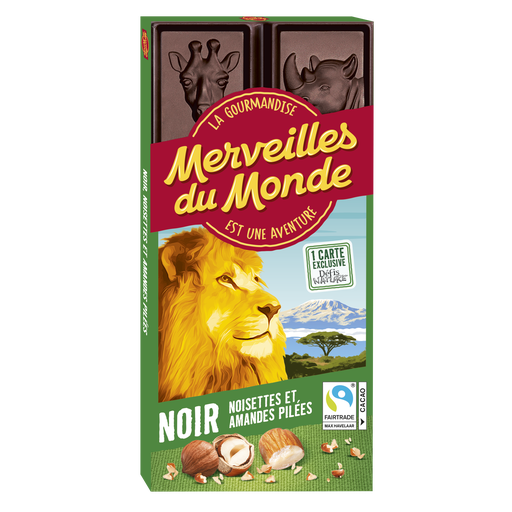 Image unavailable
MERVEILLES DU MONDE 64%, chopped almonds and hazelnuts, 100 g
For anyone who likes dark chocolate with chopped nuts. The slab states 64% cocoa and weighs 100 g. As it contains almonds and hazelnuts, check the packaging if you need to avoid these ingredients.
View on Joybuy
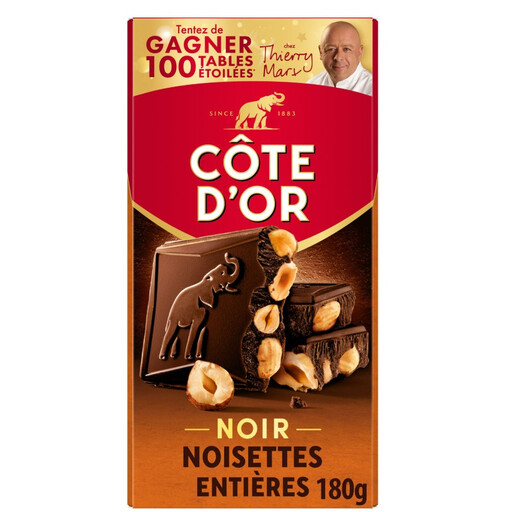 Image unavailable
Côte d’Or, dark chocolate and hazelnuts, 180 g
Worth a look if you’d like a 180 g format combining dark chocolate and hazelnuts. It’s a different weight from the 45 g Côte d’Or bar mentioned in the brand overview, so check the recipe and allergens for this specific product.
View on Joybuy
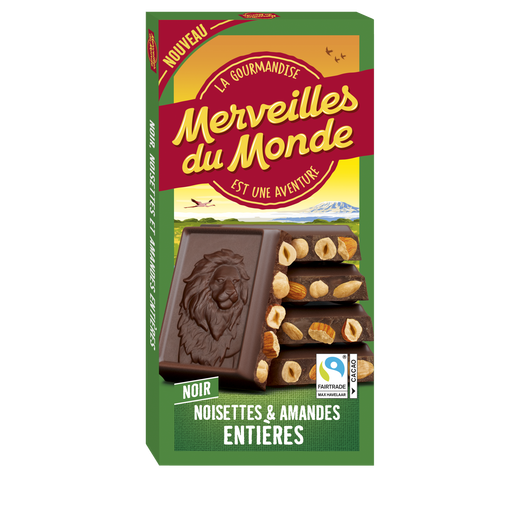 Image unavailable
MERVEILLES DU MONDE Black Block, whole hazelnuts and almonds, 170 g
This 170 g format is for anyone who’d prefer whole nuts rather than chopped ones. Check the ingredients and any other allergen information on the packaging before sharing.
View on Joybuy
Frequently asked questions
Does the French tax on sugary drinks apply to chocolate bars?
No. The contribution described by the Bulletin officiel des finances publiques applies to non-alcoholic drinks, including those with added sugars; it doesn’t apply to chocolate bars. To compare bars, check the sugars shown in their nutrition information.
Is Nutri-Score compulsory on chocolate bars in France?
No. Santé publique France states that displaying Nutri-Score is voluntary. It’s different from the nutrition declaration required for most pre-packed foods, so its absence alone doesn’t tell you what a bar contains.
How can I compare two bars that weigh different amounts?
Start by comparing their nutrition information per 100 g, the common basis highlighted by the DGCCRF. Then check the weight of each bar and how many items you plan to eat: the figures per 100 g won’t necessarily match the values for your portion.
Does dark chocolate mean I can rule out allergens?
No. A dark chocolate bar may contain nuts, milk, soya or other ingredients, depending on the recipe. Check the highlighted allergens in the ingredients list and any ‘may contain’ warnings on the packaging for the product you choose.


