Fans of intense cocoa flavours
You want to be able to check the cocoa content rather than relying on the word ‘dark’ on the packaging.


If cocoa content is your top priority, choose a product that clearly states its percentage: the words ‘dark chocolate’ alone don’t confirm that it contains 70% cocoa. For a shared office snack box, also check the number of bars, how they’re wrapped and the allergens in the exact recipe. A hazelnut bar or a sharing block won’t suit the same needs.
You want to be able to check the cocoa content rather than relying on the word ‘dark’ on the packaging.
You’re looking for convenient treats to offer at work, with packaging that lets everyone check the ingredients and allergens.
You compare sugars and fat using the nutritional information for the exact product, rather than guessing its composition from the colour of the chocolate.
To compare products, start with your main priority: a stated cocoa content, allergen management or a format that’s easy to hand out.
| Priority | What to check | Who is it for? |
|---|---|---|
| Cocoa content | The stated percentage and which part of the product it applies to: the whole bar or the chocolate coating. | If I’m looking for a strong cocoa flavour, I want a stated percentage rather than just the words ‘dark chocolate’. Around 40% of consumers are said to put verifiable cocoa content at the top of their list. |
| Allergens | The ingredients and any ‘may contain’ warnings on the packaging for the exact product. | For a snack box that colleagues can help themselves to, I need to be able to check the ingredients before offering a hazelnut bar. Allergen management is said to be the main priority for around 30% of consumers. |
| Format and serving | The number of bars, the weight of each one and whether they’re individually wrapped. | If I want to fill the box without having to break up a block, I need to know how the portions are presented. Around 30% of consumers are said to prioritise ease of serving. |
Carrefour’s product listing for Sundy states that the recipe contains 17.7% dark chocolate. That isn’t the cocoa percentage of the bar. By contrast, KITKAT DARK states that its dark chocolate contains at least 70% cocoa: this figure applies to the coating.
If a minimum cocoa content matters to you, check the stated percentage and exactly what it refers to.
A cocoa percentage doesn’t replace nutritional information. The Joybuy listing for the 45 g Côte d’Or dark chocolate and hazelnut bar states that it contains 41 g of sugars per 100 g. This figure doesn’t apply to other dark chocolate bars.
Compare the ‘of which sugars’ figure per 100 g on the packaging of the products you’re considering.
The 45 g Côte d’Or dark chocolate and hazelnut bar contains hazelnuts, milk and soya. Its product listing also warns that it may contain other nuts.
Keep the packaging and ingredient lists accessible. If you don’t know the needs of everyone who uses the box, check before adding these bars.
Santé publique France explains that displaying the Nutri-Score is voluntary. If it’s not shown, you should still check the nutritional information available for prepacked food.
If it appears on the pack, consider it alongside the ingredients list and nutritional information rather than using it as your only criterion.
KITKAT DARK combines a wafer with a dark chocolate coating stated to contain at least 70% cocoa on Carrefour’s listing for this product.
The brand states that its 70% dark chocolate bar contains at least 70% cocoa.
The 45 g dark chocolate and hazelnut bar is an individual option if hazelnuts are suitable for everyone sharing the snack box.
Sundy’s dark chocolate product focuses on a crunchy cereal texture rather than a stated cocoa percentage.
This selection includes dark chocolate blocks and bars with a stated cocoa content, as well as a hazelnut bar. For an office snack box, distinguish sharing blocks from smaller formats, and check the packaging of each product.
 Image unavailable
A block to consider if a stated cocoa percentage is your priority and you’re planning to share pieces rather than hand out individual bars.
The product title states 85% cocoa and a 100 g format. Before putting it out for everyone, check how it’s portioned and review the allergen information on the pack.
 Image unavailable
This bar may suit you if you’re looking for dark chocolate with a stated cocoa percentage. At 100 g, it’s worth considering how you’d like to serve it in the snack box.
The recipe listed for this product includes maltitol and soya lecithin. Check the ingredients and information on the exact pack.
 Image unavailable
The 35 g mini format could be a good choice if you want to offer a smaller bar with a stated cocoa content.
Check the number of bars and how they’re wrapped before adding them to the snack box. The information for this product warns that it may contain traces of nuts, milk and soya.
 Image unavailable
This multipack could help you restock the snack box several times if you’re after three bars rather than portions already divided between colleagues.
The title states that it contains three 100 g bars. Check how they’re wrapped, and compare the cocoa percentage and nutritional information on the pack if these are important to you.
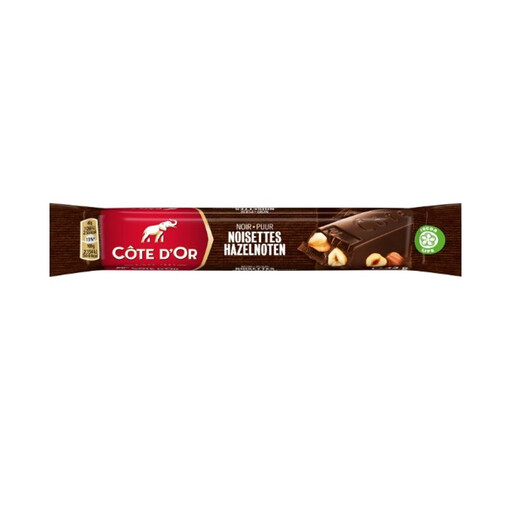 Image unavailable
This 45 g bar is better suited to shoppers looking for an individual format with hazelnuts than to those seeking a confirmed minimum cocoa content.
The product listing states that it contains 23% hazelnuts and 41 g of sugars per 100 g. It also mentions milk and soya, as well as the possibility of other nuts. Check the packaging before offering it to a group.
No. Santé publique France says that producers display the Nutri-Score voluntarily. For prepacked foods sold in the European Union, the rules set out by the EU require a nutrition declaration, subject to applicable exemptions. In particular, check the sugars and fat listed for the exact product.
Read the ‘of which sugars’ figure per 100 g on each product. The Joybuy listing for the 45 g Côte d’Or dark chocolate and hazelnut bar states that it contains 41 g of sugars per 100 g, but this figure doesn’t apply to other dark chocolate bars.
Check the ingredients list and any trace warnings on each pack. The products mentioned vary: KITKAT DARK contains wheat and milk, among other ingredients, while the 45 g Côte d’Or dark chocolate and hazelnut bar contains hazelnuts, milk and soya.
No, not under the contribution described in Article 1613 ter of the Code général des impôts, published by Légifrance. This legislation applies to drinks and liquid preparations for drinks, not solid chocolate bars. When choosing your bars, compare their ingredients and nutritional information instead.