Fans of a strong cocoa flavour
If dark chocolate is your main priority, check its proportion where this is stated, and where it appears in the ingredients list. The word ‘dark’ alone doesn’t tell you everything about the recipe.


When choosing a dark chocolate bar to pack in a school holiday lunch, start with the exact recipe. Dark chocolate can be paired with a wafer, cereal or nuts, and it doesn’t play the same role in every product. If the cocoa flavour is your priority, check the stated proportion of dark chocolate and the ingredients. For a lunch shared with others, also check the allergens, portion size and sugars.
If dark chocolate is your main priority, check its proportion where this is stated, and where it appears in the ingredients list. The word ‘dark’ alone doesn’t tell you everything about the recipe.
Before choosing a format to share during the school holidays, check the allergens for the exact product you’re buying and everyone who’ll be eating it.
The weight of a bar and its nutritional information help you compare what will be served. Packaging that says ‘dark’, or a Nutri-Score where shown, is no substitute for this information.
For a school holiday lunch, start with the factor that could genuinely affect your choice of recipe, then check the other details on the exact product packaging.
| What to consider | What to check | Who is it for? |
|---|---|---|
| How much dark chocolate it contains | Check the stated proportion of dark chocolate, if given, followed by the first ingredients listed. The proportion of dark chocolate in the bar is not the same as the cocoa percentage in that chocolate. | I’m looking for a recipe where dark chocolate has a clear role, rather than a texture dominated by other ingredients; around 40% of consumers would put this first. |
| Allergens | Read the ingredients, highlighted allergens and any ‘may contain’ warnings on the format you’re buying. | If several children are sharing lunch, I need to choose a recipe that’s suitable for everyone; this would be the main concern for around 30% of consumers. |
| Portion size and sugars | Compare the serving weight and the ‘of which sugars’ figure, per 100 g and, where shown on the packaging, per portion. | To plan what I pack for lunch, I want to know the amount being served and how much sugar it contains; around 30% of consumers would put this need first. |
The Carrefour product listings consulted state that the Eat Natural bar contains 12% dark chocolate, Sundy contains 17.7% and Kinder Bueno Dark contains 31.5%. These figures show the proportion of dark chocolate in each recipe, not the cocoa content of the whole bar.
Check the stated proportion and the ingredients, then choose the texture you’re looking for: cereal, wafer or nuts.
The dark chocolate recipes reviewed don’t all contain the same ingredients. Some include milk, wheat, soya, peanuts or hazelnuts.
If someone has an allergy, check the label on the exact product and format rather than relying on information for another version from the same brand.
According to Santé publique France, producers can choose whether to display the Nutri-Score. If it appears on the packaging, it doesn’t give details of the ingredients or allergens.
Also check the nutritional information, portion size and ingredients list.
The Carrefour listings reviewed for the classic Mars, Snickers and Twix products describe milk chocolate, not dark chocolate.
Check that the specific variety says ‘dark chocolate’ before choosing it for this purpose.
KitKat France offers dark chocolate versions of its wafer bars alongside other recipes.
The classic bar described by Carrefour combines nougat and caramel under a milk chocolate coating.
The classic version described by Carrefour combines peanuts, nougat and caramel, with a milk chocolate coating.
The version described by Carrefour combines biscuit and caramel under a milk chocolate coating.
Carrefour listings include several formats containing dark chocolate, including a crunchy bar, a wafer and a cereal bar with peanuts.
This selection includes dark chocolate bars with nuts, an individual format, as well as chocolate biscuits and sticks, which are different from a classic chocolate bar. For a lunch to share, choose the type of product first, then check the ingredients and portion size for each one.
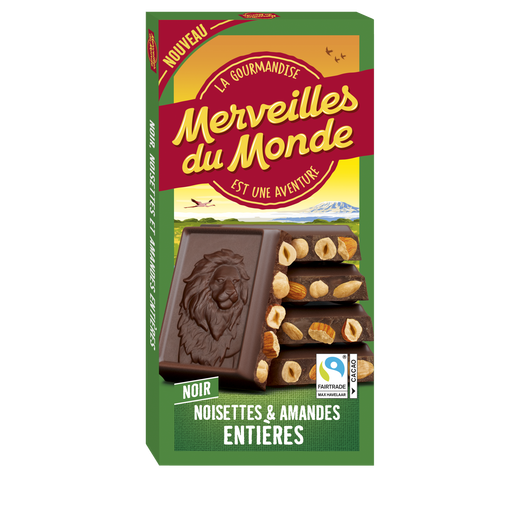 Image unavailable
A bar to consider if you’d like to share dark chocolate with whole nuts.
The description states that the chocolate contains at least 50% cocoa and 37 g of sugars per 100 g. It lists milk, hazelnuts and almonds, and warns that other allergens may also be present. Check the label before sharing at lunch.
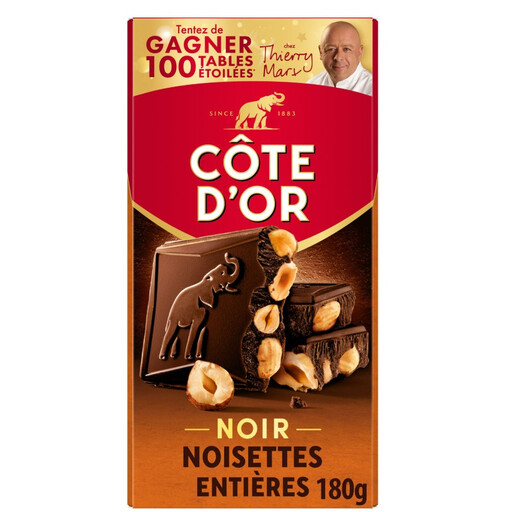 Image unavailable
This bar may suit you if you’re looking for dark chocolate with a stated proportion of hazelnuts.
The description states that the chocolate contains at least 46% cocoa, with 24% hazelnuts and 40 g of sugars per 100 g. It lists milk and soya, and warns that other nuts may also be present.
 Image unavailable
Choose these if you’d prefer a chocolate biscuit to a classic chocolate bar.
Dark chocolate makes up 45% of each biscuit and contains at least 45% cocoa. The nutritional information gives 8.9 g of sugars per 25 g reference serving. The recipe contains wheat, milk and soya.
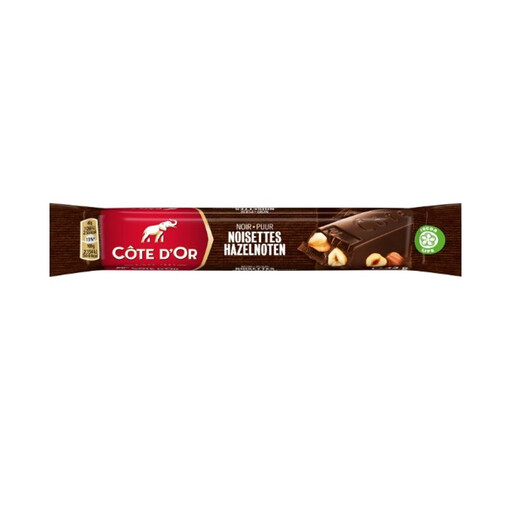 Image unavailable
The 45 g format lets you choose an individual bar rather than a sharing-size bar.
The recipe contains 23% hazelnuts and 41 g of sugars per 100 g. It contains hazelnuts, milk and soya, and may contain traces of other nuts. If the cocoa content is important to your choice, check the packaging.
 Image unavailable
These biscuit sticks are an option if you’re looking for something to share rather than a chocolate bar.
The description says the sticks are individually wrapped, with an approximate portion of 7.5 g per stick and 2.4 g of sugars per stick. The product contains wheat, milk and soya; it may also contain traces of nuts. If the proportion of dark chocolate matters to you, check the packaging.
No. The contribution set out in Article 1613 ter of the French General Tax Code, published by Légifrance, applies to drinks and liquid preparations for drinks, not solid chocolate bars.
No. Santé publique France says that producers can choose whether to display the Nutri-Score. For prepacked food, check the ingredients list, allergens and nutritional information, in line with the labelling rules set out by the European Union.
Read the ingredients list and the highlighted allergens on the packaging for the exact product, along with any ‘may contain’ warnings. Another flavour or format from the same brand may have a different recipe.
The words ‘dark chocolate’ aren’t enough to compare the sugar content of two recipes. Check the ‘of which sugars’ figure in the nutritional information, per 100 g and, if shown, per portion you plan to serve.