Fans of bold cocoa flavours
You’re looking for a pronounced cocoa flavour for the festive season and want to distinguish a stated cocoa content from the proportion of dark chocolate in a recipe made with other ingredients.


If a strong cocoa flavour is your priority when doing your Christmas shopping, choose a product that clearly states its cocoa percentage rather than relying on the word ‘dark’ alone. A bar of dark chocolate, a crunchy bar and a chocolate-coated biscuit may not contain the same proportion of chocolate. Compare their ingredients, then check the sugars and energy per 100 g, as well as the allergens if you’re buying for several people.
You’re looking for a pronounced cocoa flavour for the festive season and want to distinguish a stated cocoa content from the proportion of dark chocolate in a recipe made with other ingredients.
You want to compare sugar, energy and portion sizes without confusing the values given for a bar with those shown per 100 g.
You’re choosing several products for Christmas and need to check the ingredients and any allergen warnings for the people who’ll be sharing them.
Start by identifying the type of product and how much dark chocolate it contains. Then compare the nutritional information and allergen details for each product.
| Criteria | What to check | Who is it for? |
|---|---|---|
| Cocoa content | The stated cocoa percentage and, where given, the proportion of dark chocolate in the whole product. | If cocoa is meant to take centre stage, I’d distinguish a dark chocolate bar from a crunchy, chocolate-coated recipe. Around 42% of consumers prioritise cocoa content. |
| Nutritional information | Sugars and energy per 100 g, followed by the amount you plan to serve. | When comparing different formats for my Christmas shopping, I want to be able to read the values on a like-for-like basis. Around 33% of consumers prioritise nutritional comparisons. |
| Allergens and sharing | The ingredients and any ‘may contain’ warnings on the packaging of the product you buy. | If several people will be sharing the selection, I need to be able to identify which products are suitable for each person. For around 25% of consumers, checking allergens is the top priority. |
A bar made with several ingredients can contain dark chocolate without being made mostly of chocolate. Carrefour’s product information for Sundy Dark bars states that dark chocolate makes up 17.7% of the product.
If you’re after a bold cocoa flavour, check what the stated percentage refers to: the cocoa content of the chocolate, or the proportion of chocolate in the whole bar.
This percentage describes the chocolate; it doesn’t tell you the sugar or energy content of the finished product.
Compare the nutritional information per 100 g, then take into account the portion you’ll actually serve.
The DGCCRF describes Nutri-Score as a voluntary label. If it’s missing, you should still check the nutritional declaration required for most pre-packed foods.
If it is displayed, use it alongside the nutrition table and ingredients list. Don’t assume on its own that a product is right for you.
Recipes and allergens vary between products. Carrefour’s Snickers product information lists peanuts and milk chocolate, while its Côte d’Or Dark Hazelnut product lists hazelnuts.
If anyone in your group has an allergy, check the packaging of each product you buy and set aside the options that are suitable for them.
Carrefour’s product information lets you compare different recipes, including a Sundy Dark bar and a Côte d’Or Dark Hazelnut bar.
A brand worth looking at if you’re interested in a wafer format, but be sure to distinguish carefully between the different varieties.
The Snickers product described by Carrefour is a caramel-and-peanut combination, rather than an option for those looking for dark chocolate.
These options suit different tastes for your Christmas shopping: dark chocolate with a stated cocoa percentage on one hand, and biscuits and wafers made with dark chocolate on the other. Choose your preferred format before comparing the labels.
 Image unavailable
Worth considering if you’d like a small bar of dark chocolate with a stated cocoa content. The title gives the cocoa content as 70% and the weight as 35 g. If you’re sharing with anyone who has an allergy, check the ingredients and any ‘may contain traces’ warnings on the packaging.
 Image unavailable
Worth considering if you want to serve dark chocolate with a stated cocoa content in a 100 g format. Before sharing it with a group, check the ingredients list, particularly for maltitol and soya, as well as the consumption guidance on the packaging.
 Image unavailable
Consider this if you’d prefer a dark chocolate biscuit to a chocolate bar. The pack is listed as 150 g; check the ingredients and allergens before adding it to a selection for several people.
 Image unavailable
Worth a look if you’d rather have the crunch of a wafer than a bar made mostly of chocolate. The listed pack size is 120 g. If cocoa content is important to you, look for it on the packaging and check the allergen information.
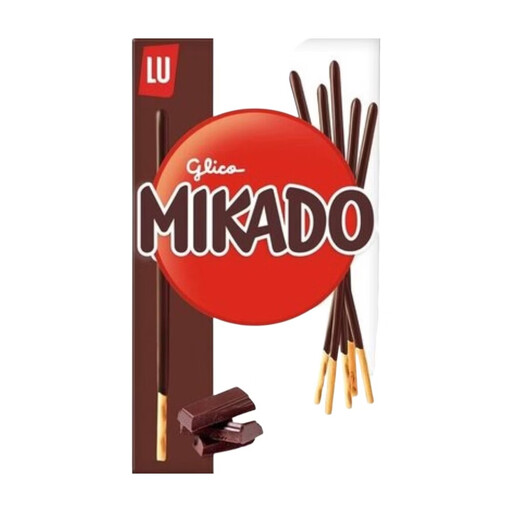 Image unavailable
Worth considering if you’d like to serve biscuit sticks coated in dark chocolate rather than a chocolate bar. The pack is listed as 75 g; check the cocoa content if it matters to you, along with the ingredients and allergen warnings.
No. The DGCCRF says Nutri-Score is voluntary. A nutritional declaration, on the other hand, is required for most pre-packed foods, subject to applicable exemptions. If the logo isn’t shown, compare the nutritional values and ingredients instead.
No, not to solid bars. Article 1613 ter of the General Tax Code, published on Légifrance, covers drinks and liquid preparations for drinks. The Official Bulletin of Public Finances sets out the levy on drinks containing added sugars. When choosing a bar, it’s better to check its ingredients and sugar content.
Compare the ‘of which sugars’ value per 100 g, the basis for presenting nutritional declarations as outlined by the DGCCRF. Then check the weight of the portion you plan to serve: packs of different sizes don’t necessarily represent the same amount being eaten.
No. Depending on the recipe, a dark chocolate product may contain allergenic ingredients or carry warnings about their possible presence. Check the ingredients list and warnings on the packaging of the product you buy. Don’t assume allergens are absent based on the colour of the chocolate.