Fans of intense dark chocolate
If flavour intensity is your priority, look for the minimum cocoa content and check which part of the product it refers to. France’s DGCCRF explains that cocoa content affects the intensity of the chocolate flavour.


For a pronounced dark chocolate flavour, choose a bar that states its cocoa content and check whether the figure applies to the chocolate or the whole bar. If you’re stocking up to share in student accommodation, the ingredients list, allergens and nutritional information per 100 g matter too. A single bar, a large block and a cereal bar are suited to different occasions.
If flavour intensity is your priority, look for the minimum cocoa content and check which part of the product it refers to. France’s DGCCRF explains that cocoa content affects the intensity of the chocolate flavour.
If you’re buying snacks to share, check the label on each recipe: depending on the bar, it may contain milk, wheat, soya, peanuts or tree nuts. The French Ministry for the Economy reminds shoppers that allergenic ingredients must be clearly highlighted on the label.
If you’d like to keep several portions in a cupboard, compare the number of bars and their weight. A cereal bar with dark chocolate chips is a different product from a dark chocolate bar.
For student accommodation, start by deciding whether you’re mainly looking for a distinct dark chocolate flavour, ingredients you can check carefully, or several portions to keep in stock.
| What to consider | What to check | Who is it for? |
|---|---|---|
| Dark chocolate intensity | The minimum cocoa content and which part of the product it refers to. | If you want a bar with a pronounced dark chocolate flavour, you’ll want to understand what the stated percentage means rather than rely on the word “dark” alone; around 42% of consumers rank this as their top priority. |
| Sugars and allergens | Sugars per 100 g, followed by the ingredients and highlighted allergens. | When you’re buying bars to share, you’ll need to choose a recipe that suits everyone concerned; for around 33% of consumers, ingredients are the main priority. |
| Storage-friendly format | The number of portions, their weight and the type of product: dark chocolate or cereal bar. | If you’re keeping snacks in your accommodation, the pack should suit your usual breaks; around 25% of consumers prioritise the format. |
On its own, the word doesn’t tell you what proportion of the bar is dark chocolate. Carrefour’s KITKAT Dark listing states a minimum of 70% cocoa in the dark chocolate, while E.Leclerc’s listing for an ECO+ cereal bar states that it contains 12% dark chocolate chips. These figures measure different things.
Check what each percentage refers to before comparing ingredients.
In France, displaying the Nutri-Score is voluntary, according to the Ministry for the Economy. Whether or not it appears on the pack, it doesn’t replace checking the nutritional information.
In particular, compare the sugars per 100 g in the products’ nutrition declarations.
The recipes covered here contain different ingredients. Depending on the product, these may include milk, wheat, soya, hazelnuts or peanuts.
If you’re buying to share, check the label on the exact variant, including any warnings that other allergens may be present.
Article 1613 ter of the French General Tax Code, published by Légifrance, applies to drinks and liquid preparations for drinks, not solid chocolate bars.
Check the sugar content as part of your nutritional comparison, but don’t treat this levy as a factor when buying a bar.
Carrefour describes its Dark option as a wafer covered in dark chocolate. The listing states a minimum of 70% cocoa in the dark chocolate.
The 45 g dark chocolate and hazelnut bar described by Carrefour is an individual snack combining dark chocolate and tree nuts.
E.Leclerc describes a pack of six peanut and dark chocolate chip cereal bars, weighing 126 g in total.
This selection includes plain dark chocolate bars and options with tree nuts. To choose snacks that suit your accommodation, compare smaller bars with larger ones and check the ingredients for each variant.
 Image unavailable
Worth considering if you’re looking for a dark chocolate bar with a stated cocoa content. The title specifies 70% and a 100 g format. Check the packaging to see what the percentage refers to, and look for allergen information if you plan to share it.
 Image unavailable
At 35 g, this is a small bar with 70% stated in its name. If you’re choosing it based on sugar content, check the ingredients too: the listing mentions maltitol and warns that excessive consumption may have a laxative effect.
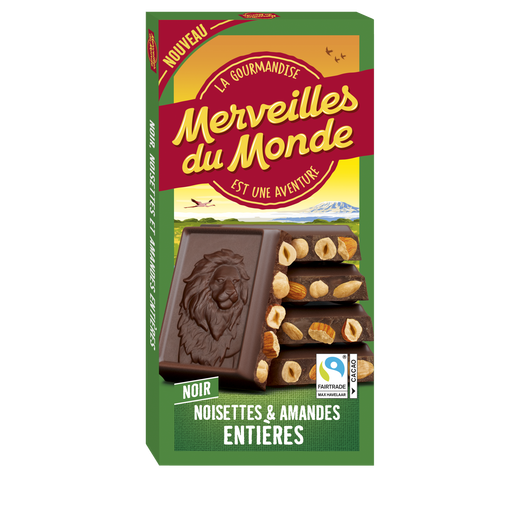 Image unavailable
This 170 g bar is suited to anyone looking for dark chocolate with whole hazelnuts and almonds in a size that can be divided into several portions. It also contains milk, so check the other allergen information before buying it to share.
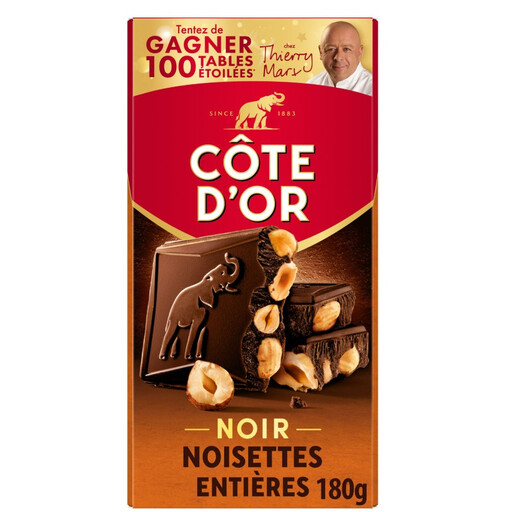 Image unavailable
The 180 g size and dark chocolate and hazelnut recipe may suit you if you’d rather keep a large bar than buy individual portions. To compare its intensity with another product, check what the cocoa content on the packaging refers to; the recipe also contains milk and soya.
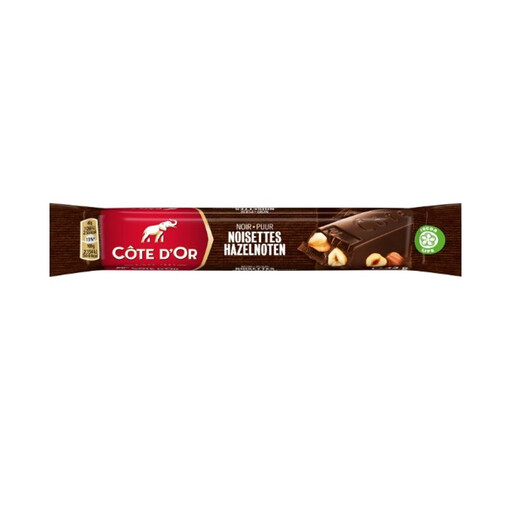 Image unavailable
This 45 g individual bar combines dark chocolate and hazelnuts. If minimum cocoa content is your main priority, check the packaging; the recipe also contains milk and soya, and may contain other tree nuts.
No, not to solid chocolate bars. Article 1613 ter of the French General Tax Code, published by Légifrance, applies to drinks and liquid preparations for drinks. The sugar content of a bar is something to check in its nutritional information.
No. According to the French Ministry for the Economy, displaying it is voluntary. The nutrition declaration generally applies to the relevant prepacked foods and lets you check, among other things, sugars and fat per 100 g.
Check the ingredients, highlighted allergens and any warnings about possible traces on the packaging of the variant you choose. The dark chocolate, dark chocolate with hazelnuts and cereal bar recipes featured here have different ingredients.
Keep them in their packaging and follow the storage instructions for each product. Also check the date on the product you buy before stocking up.