Fans of a pronounced cocoa flavour
If the word ‘dark’ isn’t enough for you, look for a cocoa percentage stated for the exact product. A block you can break into pieces may suit you if you’re happy to prepare your portion before your break.


For a coffee break on the go, choose an individually wrapped bar if convenience is your priority. If you’re mainly looking for a stated cocoa percentage, a block you can portion out may suit you too. Either way, check the cocoa percentage for the exact product, then compare sugars per 100 g, ingredients, allergens and the portion you plan to eat. The words ‘dark chocolate’ alone don’t confirm a high cocoa content.
If the word ‘dark’ isn’t enough for you, look for a cocoa percentage stated for the exact product. A block you can break into pieces may suit you if you’re happy to prepare your portion before your break.
Compare sugars on the same basis, particularly per 100 g, then check the ingredients and how much you’ll eat. The cocoa percentage alone doesn’t tell you how much sugar a product contains.
An individually wrapped bar means you won’t have to break off a piece of a block during your break. Before choosing this format, check that it also meets your cocoa preferences and read the allergen information.
First decide whether cocoa flavour, ingredients, format or allergen requirements matter most to you. Then check the information for the exact product you’re considering.
| Priority | What to check | Who is this for? |
|---|---|---|
| Cocoa content | Cocoa percentage stated for the exact product; individually wrapped bar or block to break into pieces. | I’m looking for a pronounced cocoa flavour with my coffee and want to know what ‘dark chocolate’ means on the packaging. Around 36% of shoppers put a stated cocoa percentage first. |
| Sugars and ingredients | Sugars per 100 g and the ingredients list; the amount you’ll actually eat. | To compare two products for the same break, I need to check their sugars on a like-for-like basis, rather than assume what they contain from the cocoa percentage alone. This is the main priority for around 29% of shoppers. |
| Break-time format | Weight of the individual format or whether the block can be broken into pieces; the role of dark chocolate in a snack recipe. | When I take my coffee break on the go, I prefer a portion that’s easy to carry, whether that means choosing a ready-to-eat bar or preparing a piece of a block in advance. Around 21% of shoppers put format first. |
| Allergens and recipe | Allergens listed in the ingredients and any ‘may contain’ warnings on the packaging you buy. | If there are ingredients I need to avoid, I check the recipe for the exact product before considering its cocoa content or format. For around 14% of shoppers, checking the recipe comes first. |
KitKat France offers a dark chocolate version, but its range page doesn’t state a cocoa percentage. So the product name alone can’t confirm the cocoa content you’re looking for.
Check the packaging or product page for the exact variant before choosing a bar based on its cocoa percentage.
A cereal bar containing dark chocolate is a different recipe from a dark chocolate bar. Having chocolate in its name doesn’t tell you how much chocolate the finished product contains.
If cocoa is your main consideration, read the ingredients list and check the stated percentage for the whole product or its chocolate component.
According to Santé publique France, displaying the Nutri-Score is voluntary. It doesn’t tell you the cocoa percentage or the allergens in a particular product.
When it appears on comparable products, use it alongside the nutritional information, ingredients and portion you plan to eat.
These examples show different formats: a dark chocolate bar and blocks you can portion out. The details below apply to the specific products mentioned, not to each brand’s entire range.
KitKat France offers a dark chocolate version of its bars, worth considering if a bar format suits your break.
Carrefour France lists a 200 g Carrefour Bio block with 70% cocoa. It’s a block to portion out, not an individually wrapped bar.
E.Leclerc lists Equador dark chocolate blocks with cocoa percentages including 72%, 85% and 99%.
This selection of dark chocolate includes a small format to take with you and 100 g blocks to portion out. Choose the format you prefer, then check the cocoa information and packaging for each product.
 Image unavailable
If a stated cocoa percentage matters more to you than an individual format, this product is easy to portion in advance.
This is a 100 g format. Check the packaging for nutritional information and the amount that corresponds to the portion you choose.
 Image unavailable
This individual format may suit you if you take your coffee break on the go and want a stated cocoa percentage.
Compare sugars per 100 g with other products before using that figure to work out what’s in your portion. Also check the allergen information on the packaging you buy.
 Image unavailable
This product gives you a stated cocoa percentage to start with, so you can compare its recipe with those of other dark chocolates.
The product information lists maltitol as a sweetener, so bear this in mind when checking the sugars and ingredients. It comes in a 100 g format, which you can portion out to suit you.
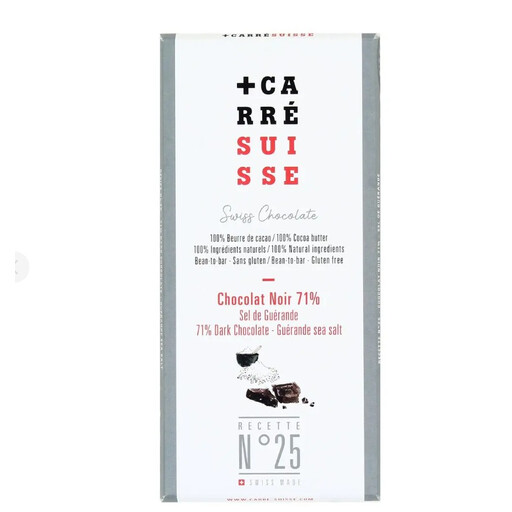 Image unavailable
If you’re considering salted dark chocolate to enjoy with your coffee, check the recipe rather than relying on the words ‘dark chocolate’ alone.
The listed format is 100 g. The cocoa percentage in the product information applies to its chocolate component; don’t interpret it as the percentage for the whole product. Also check the allergen information.
No. The levy described by Légifrance applies to drinks and liquid preparations for drinks, subject to the conditions set out in the legislation, not to solid chocolate bars. To compare bars, check their sugar content in the nutritional information rather than linking it to this levy.
No. Santé publique France states that displaying it is voluntary. If it appears, use it as an additional guide and also read the ingredients and nutrition declaration on the prepacked product.
No. The Nutri-Score doesn’t give the cocoa percentage. Manger Bouger recommends using it to compare products in the same aisle. For your coffee break, check the stated cocoa content, portion and sugars separately.
Read the ingredients list, any allergens highlighted and any ‘may contain’ warnings on the packaging of the product you buy. As the French ministry responsible for consumer affairs explains in its guidance on prepacked food labelling, allergenic ingredients must be indicated. Don’t assume that another variant in the range has the same recipe.