For a solo break on the go
You want to slip a portion into your bag and eat it while you’re out, without breaking off a piece from a large bar. The 35 g Lindt EXCELLENCE Dark 70% mini bar is an example of an individually sized format.


For a solo break at the Christmas market, check the weight and packaging first. A 35 g mini bar sold individually means you won’t need to open and rewrap a large bar. Then choose a recipe that suits you by checking the ingredients, allergens and sugars per 100 g. A hazelnut bar and plain dark chocolate won’t meet the same requirements.
You want to slip a portion into your bag and eat it while you’re out, without breaking off a piece from a large bar. The 35 g Lindt EXCELLENCE Dark 70% mini bar is an example of an individually sized format.
You check the recipe and allergen information before considering the format. Plain dark chocolate, a hazelnut bar and cooking chocolate can have different ingredients and warnings.
If you can break the bar into portions and store the rest, a 90–205 g format may suit a different purpose. Côte d’Or Bio, Auchan Bio and Carrefour Bio bars, along with Nestlé Dessert cooking chocolate, aren’t ready-to-go solo portions.
For a break at the Christmas market, start by checking the format you’ll actually carry, then look at the recipe and nutritional information for the product you’ve chosen. Each consumer group below is defined by its main concern.
| What to consider | What to check | Who is it for? |
|---|---|---|
| Individual format | Net weight, number of units and whether it says individually wrapped. | I want to eat a portion while I’m out without having to protect the rest of an opened bar. Around 42% of consumers put a ready-to-go format first. |
| Ingredients and allergens | The ingredients list and any ‘contains’ or ‘may contain’ warnings for the exact variant. | If I need to avoid certain ingredients, hazelnuts or possible traces matter more than the cocoa percentage alone. This is the main concern for around 33% of consumers. |
| Cocoa and sugars | Cocoa percentage, the ‘of which sugars’ figure per 100 g and the amount you’ll eat. | I want to compare recipes without confusing their cocoa content with their sugar content. Around 25% of consumers prioritise this comparison. |
Nutri-Score can be a useful addition when it appears on the packaging. Santé publique France explains that displaying it is voluntary, so its absence is no substitute for comparing nutritional information or reading the ingredients list.
A 90, 100 or 200 g bar needs to be broken into portions, with the rest stored away. The Nestlé Dessert cooking chocolate mentioned here comes in 205 g bars, including in packs of three.
For a solo break, check the net weight and whether it’s a single bar or mini bar before comparing other features.
The Lindt EXCELLENCE Dark 70% mini bar carries a possible traces warning, while the Côte d’Or dark chocolate and hazelnut bar contains hazelnuts, milk and soya.
Check the ingredients and warnings on the packaging of the exact variant, even if you already know the brand.
According to Santé publique France, producers display Nutri-Score on a voluntary basis. You can also check the sugars per 100 g and the portion weight on the label.
Use the logo if it’s there, but don’t treat it as a substitute for the ingredients list or allergen information.
The 45 g Côte d’Or dark chocolate and hazelnut bar contains 23% hazelnuts. Its flavour and ingredients are therefore different from those of a plain dark chocolate mini bar.
Choose this recipe if you want hazelnuts and its ingredients suit your needs. Otherwise, check that it’s plain dark chocolate.
The EXCELLENCE range includes a 35 g Dark 70% mini bar, close to the format you might want for a solo break.
The 90 g Bio Dark 70% bar and the 45 g dark chocolate and hazelnut bar are two different recipes for two different occasions.
The product featured here is dark cooking chocolate in 205 g bars, also available in packs of three.
The 200 g Bio Dark 70% chocolate bar is designed to be broken into portions or shared.
The 100 g Dark 70% bar differs from a mini bar in both weight and presentation.
These two products suit different tastes for a short break: a single-serve plain dark chocolate mini bar, and a dark chocolate and hazelnut bar whose packaging is worth checking.
 Image unavailable
For a solo break without opening a large bar: the Joybuy product information lists this 35 g bar as a single, individually wrapped unit.
Lindt France states that it contains at least 70% cocoa and may contain traces of milk, nuts and soya. Check the packaging of the variant you buy if these ingredients are important to your choice.
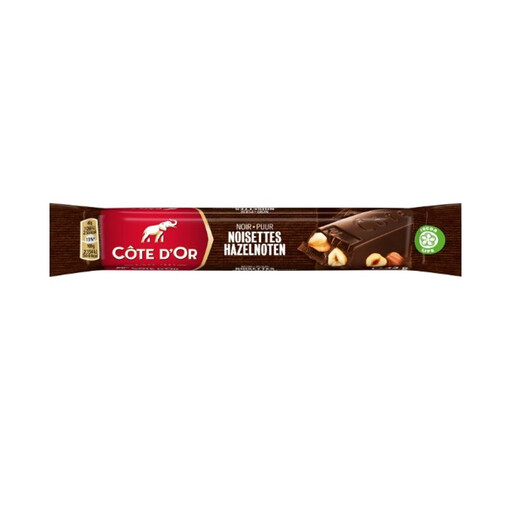 Image unavailable
Worth considering if you’re looking for a small bar with hazelnuts rather than plain dark chocolate. Check the packaging if you want an individually wrapped portion.
The Joybuy product information states that it contains 23% hazelnuts, as well as milk and soya. This recipe isn’t suitable if you need to avoid these ingredients.
No. The levy mentioned by the French Ministry of the Economy and Finance applies to non-alcoholic drinks, not solid chocolate bars. This doesn’t tell you anything about other tax rules that may apply to the product.
No. Santé publique France says producers can display Nutri-Score on a voluntary basis. To compare two bars, also check their nutritional information per 100 g, ingredients and weight.
No. The Lindt EXCELLENCE Dark 70% mini bar carries warnings that it may contain traces of these ingredients, while the Côte d’Or dark chocolate and hazelnut bar contains hazelnuts, milk and soya. Check the information on the packaging of the exact product.
If you choose a large bar, plan to protect the uneaten portion and follow the storage instructions on the packaging. To avoid having to break it up at the Christmas market, a single-serve bar is a more straightforward choice for a solo break.