For a break at work, start by choosing a cocoa percentage you enjoy the taste of. A 70% bar is a good way to explore dark chocolate, while 85% or more is better suited to those who like a pronounced bitterness. Next, compare the sugars and saturated fats per 100 g, check the allergens and consider the format. The cocoa percentage doesn’t replace these checks. Nutri-Score can be another useful point of comparison where it appears, but as the DGCCRF points out, displaying it is voluntary in France.
Who is this guide for?
Fans of intense dark chocolate
If bitterness is part of what you enjoy about your break, compare cocoa percentages, particularly 70% and 85%. However, the cocoa percentage alone won’t tell you how much sugar a bar contains or whether it includes allergens.
Label-conscious shoppers
To compare two recipes, check the nutritional values per 100 g, especially the sugars and saturated fats. Nutri-Score is an additional guide only if it appears on the products you’re comparing.
Teams sharing a break
If you’re passing a bar around the office, check its size and allergen information before bringing it in. Don’t assume a dark chocolate recipe will suit everyone’s dietary requirements.
What should you look at first?
For dark chocolate to enjoy at work, start with the flavour you’re after, then compare recipes on the same 100 g basis. Check that the format suits either an individual break or sharing.
| What to consider |
What to check |
Who is it for? |
| Cocoa intensity |
Compare the cocoa percentages and choose one with a level of bitterness you enjoy. |
For a regular break, I mainly want a pronounced dark chocolate flavour without choosing a bar that’s too bitter for me; around 25% of consumers would prioritise this intensity. |
| Nutritional information |
Compare sugars and saturated fats per 100 g; check the ingredients list if the recipe contains sweeteners. |
When comparing several bars for my breaks, I want to understand what each one contains rather than rely on the cocoa percentage alone; this would be the main concern for around 42% of consumers. |
| Format and sharing |
Check the size of the bar, declared allergens and any ‘may contain’ warnings. |
When I bring chocolate in to share, I look for a practical format and a label everyone can check before taking a piece; around 33% of consumers would prioritise these factors. |
Mistakes to avoid
-
Assuming the cocoa percentage tells you everything about the ingredients
An 85% cocoa content doesn’t, by itself, tell you how much sugar or fat a recipe contains, or reveal all its ingredients.
To compare two bars, check the ‘of which sugars’ and ‘of which saturated fats’ figures per 100 g, as well as the ingredients list.
-
Thinking every bar must display Nutri-Score
In France, the DGCCRF distinguishes between the mandatory nutrition declaration for prepacked foods and the voluntary display of Nutri-Score. The absence of the logo doesn’t tell you anything about a bar’s nutritional quality.
If the logo isn’t there, compare the nutritional information per 100 g and the ingredients of the products you’re considering.
-
Overlooking the warning on a recipe with sweeteners
The Auchan product page for a 70% dark chocolate bar containing maltitol and lactitol warns that excessive consumption may have a laxative effect. This warning applies to that recipe and is worth reading before buying it to share.
Check the sweeteners, warning and allergens on the packaging of the product you’ve chosen.
-
Assuming any dark chocolate is safe to share without checking
Depending on the recipe, the label may mention milk or traces of other allergens. The DGCCRF reminds shoppers that allergenic ingredients must be highlighted in the ingredients list.
Leave the packaging where colleagues can check it, and read the details for the exact product, even if you already know the brand.
Brands to compare
Lindt
The Excellence range offers several cocoa percentages, making it easier to compare different levels of intensity.
- Lindt France offers Excellence bars with cocoa contents of 70% and 85%, among others.
- The nutritional information and trace warnings for Excellence Noir 70 % Corsé don’t necessarily apply to other recipes in the range.
Côte d’Or
The Côte d’Or Bio Noir 70% bar is one example of a recipe you can compare with other dark chocolate bars with the same cocoa content.
- Carrefour France’s product page states that this bar contains at least 70% cocoa.
- Check the ingredients list and trace warnings on the bar you buy; don’t assume the information for this product applies to the whole brand.
Nestlé
A Carrefour Traiteur product page features Nestlé 70% dark chocolate squares. This format may suit a team where everyone wants to help themselves.
- The product page describes a pack of 27 squares.
- As the product page dates from September 2022, check the current packaging for details and allergens before sharing.
Carrefour
The Carrefour Bio 70% bar in a 200 g format offers a useful comparison for buying chocolate to enjoy over several breaks.
- Carrefour France’s product page lists the ingredients and nutritional information for this product.
- A larger format doesn’t determine how much you’ll have at each break; check for trace warnings before sharing, too.
E.Leclerc
E.Leclerc’s own-brand range includes several types of dark chocolate, including Equador 85% and Bio Village 70% bars.
- These cocoa percentages make it easier to find an intensity that suits your taste.
- Compare the nutritional values and allergens for each recipe: the cocoa content doesn’t tell you everything on the label.
Auchan
Auchan lists a 70% organic bar and a 70% recipe with sweeteners. They don’t have the same ingredients, despite having the same cocoa percentage.
- Their ingredients lists help you choose the recipe you want, beyond the shared cocoa percentage.
- The recipe with maltitol and lactitol carries a warning about excessive consumption; check its allergens before sharing it, too.
Chocolate bars available on Joybuy
These bars offer a range of options for a break at work: 70% or 85% cocoa, smaller formats, flavoured recipes and dark chocolate with salt. Choose one to suit your taste, then check the label on the specific product before eating or sharing it.
 Image unavailable
Lindt Excellence 85% dark chocolate, 100 g
Worth considering if you already enjoy a pronounced bitterness during your breaks. This 100 g bar contains 85% cocoa; check the packaging to compare the nutritional values and allergens of the product you buy.
View on Joybuy
 Image unavailable
Lindt Excellence 70% dark chocolate mini bar, 35 g
The 35 g format may suit you if you prefer to take a smaller bar with you for an individual break. Check the allergens on the packaging before offering it to a colleague.
View on Joybuy
 Image unavailable
CARRE SUISSE organic dark chocolate, lemon and green pepper, 100 g
This recipe is for anyone looking to mix up the flavours at break time rather than choose plain dark chocolate. The 100 g bar combines dark chocolate with lemon zest and green pepper; read the ingredients and trace warnings before sharing it.
View on Joybuy
 Image unavailable
Poulain Fine 70% dark chocolate, 100 g
This 100 g bar is one to include when comparing 70% recipes for the office. Its description mentions maltitol and a warning about excessive consumption. Before sharing it, read the warning and check the nutritional values and allergens on the packaging.
View on Joybuy
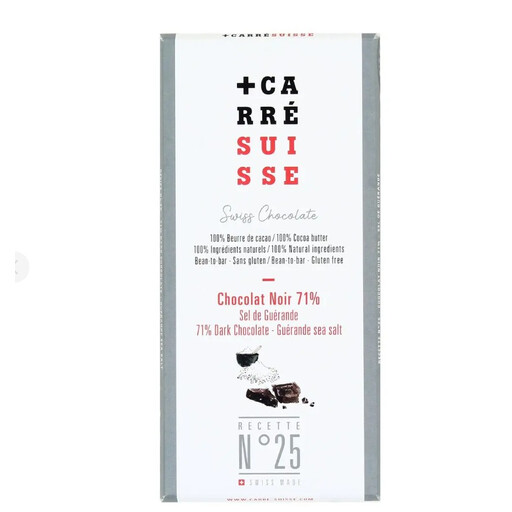 Image unavailable
CARRE dark chocolate with Guérande salt, 100 g
Consider this if you’re after a salty note rather than plain dark chocolate. This product contains at least 60% cocoa, so it won’t suit you if you’re looking for 70% or more. Check the allergens before sharing it, too.
View on Joybuy
Frequently asked questions
Is dark chocolate subject to the ‘soda tax’ in France?
No. According to the French Ministry of the Economy, the so-called ‘soda tax’ applies to sweetened drinks, not dark chocolate bars. Sugar content is still worth checking when comparing bars, but it isn’t relevant to this tax.
Is Nutri-Score required on a dark chocolate bar?
No. In France, the DGCCRF says that nutrition declarations on prepacked foods are mandatory, while displaying Nutri-Score is voluntary. If it’s not shown, use the nutritional information per 100 g to compare products.
What should you check before leaving a bar out to share at work?
First, check the ingredients list for allergens and any ‘may contain’ warnings, then leave the packaging where people can read it. To compare recipes, also check the sugars and saturated fats per 100 g; the DGCCRF reminds shoppers that allergenic ingredients must be highlighted.
Is a bar with sweeteners suitable for every break?
Don’t choose one based on the sugar information alone. The Auchan product page for a 70% dark chocolate bar lists maltitol and lactitol, along with a warning about the possible effects of excessive consumption. Before offering it to others, read the ingredients, warning and allergen information for that specific bar.


