Dark chocolate fans
You want a clear product name and to know whether the stated percentage refers to the chocolate in the biscuit or the cocoa in the chocolate.


To put together a calendar for dark chocolate fans, start with a product whose name clearly says ‘dark chocolate’, then choose a format that fits the compartments. Check the proportion of chocolate in the biscuit separately from the cocoa content of the chocolate, if stated: these percentages measure different things. Before filling the compartments, also compare sugars per 100 g, allergens and storage instructions.
You want a clear product name and to know whether the stated percentage refers to the chocolate in the biscuit or the cocoa in the chocolate.
You need to divide biscuits between the compartments, perhaps vary the textures, and follow the storage instructions for each product.
You compare sugars, ingredients and allergens. Nutri-Score can also help when it appears on the product; Santé publique France says that displaying it is voluntary.
Start by checking the chocolate description and biscuit format, then check the details for each product before filling the compartments.
| Criteria | What to check | Who it's for |
|---|---|---|
| Dark chocolate and cocoa | The description ‘dark chocolate’, followed by the cocoa content of the chocolate, if stated. The proportion of chocolate in the biscuit is a separate measure. | If cocoa flavour is guiding my selection, I want to tell the difference between a dark chocolate biscuit and one simply described as ‘chocolate’. Around 40% of consumers prioritise this criterion. |
| Size for the compartments | The size of each biscuit, whether it is individually wrapped, and the storage instructions for the product. | To fill the compartments without damaging the biscuits, I prefer pieces that are easy to distribute and store. This is the top priority for around 30% of consumers. |
| Label and allergens | Sugars per 100 g, ingredients and allergens; check Nutri-Score only if it is displayed. | When sharing a calendar, I need to be able to check each recipe and compare its nutritional information. Around 30% of consumers put these checks first. |
In France, Article 1613 ter of the General Tax Code, published by Légifrance, applies to drinks and liquid preparations for drinks that meet the conditions set out in the legislation—not to biscuits.
To compare biscuits, check the ‘of which sugars’ figure per 100 g instead, and take into account the portion placed in each compartment.
A percentage showing the amount of dark chocolate in the recipe tells you how much of that ingredient is in the biscuit. It does not, on its own, tell you the cocoa content of the chocolate used.
If cocoa content is important to your choice, look for it on the packaging of the exact product rather than ranking biscuits by their chocolate content alone.
According to Santé publique France, producers display Nutri-Score on a voluntary basis. Its absence therefore tells you nothing, in itself, about the biscuit’s ingredients.
If it is shown, use it alongside the nutritional information, ingredients list and allergen details.
Biscuits that look similar may list different allergens or possible traces. The words ‘dark chocolate’ do not tell you what the biscuit as a whole contains.
Check the packaging of every product you plan to put in the calendar, and keep the information until the biscuits are eaten—especially if the selection is being shared.
Carrefour France describes Delichoc as a biscuit topped with a slab of dark chocolate.
Carrefour France offers dark chocolate biscuits under the Carrefour Classic’ and Carrefour Bio ranges.
E.Leclerc offers a biscuit topped with dark chocolate under its ECO+ brand.
Auchan offers a Bjorg product: organic biscuits filled with dark chocolate. These details apply to this product, not to all the biscuits sold by the retailer.
These products offer a few different ways to put together a calendar: dark chocolate sticks, biscuits with dark chocolate, a matcha option and biscuits with a dark chocolate flavour. For each one, check the exact product description and packaging before deciding whether it meets your cocoa requirements.
 Image unavailable
These dark chocolate-coated sticks are easy to divide into small portions, and the product information says they are individually wrapped. If cocoa content matters to you, check it on the packaging, along with the allergens and sugars.
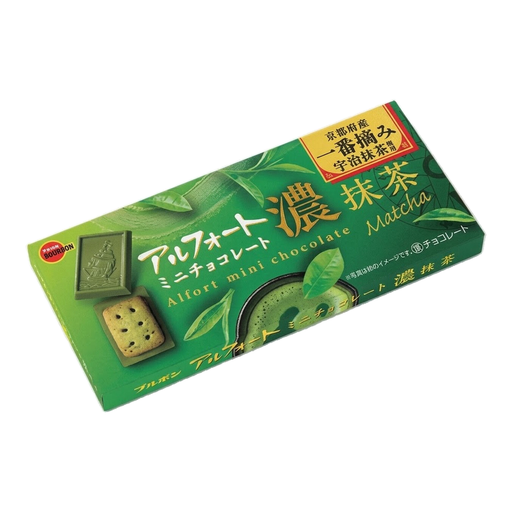 Image unavailable
This variety combines biscuit, dark chocolate and matcha to add variety to your selection. The 12 pieces are listed as individually wrapped. Matcha does not tell you the cocoa content of the chocolate, so check the allergens for the exact product too.
 Image unavailable
This biscuit topped with a slab of dark chocolate is a good fit if you’re looking for that specific description and format. Before adding it to your calendar, check the size of the pieces, the packaging, allergens and the cocoa content stated on the exact product’s packaging.
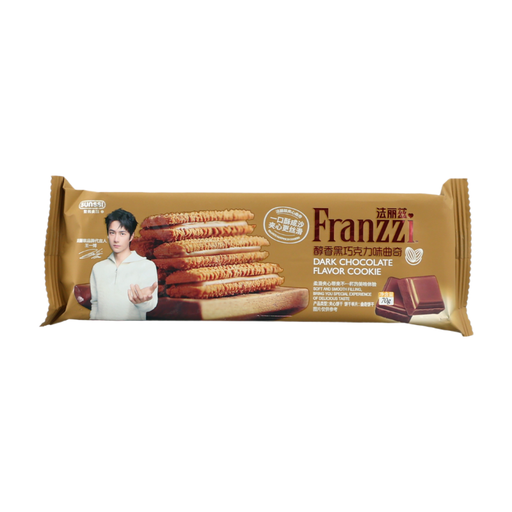 Image unavailable
These biscuits may appeal if you prefer individually wrapped pieces for filling the compartments. The product name describes a dark chocolate flavour: check the description and ingredients on the packaging before assuming they are coated in dark chocolate. Also check the sugars and allergens.
No. Article 1613 ter of the General Tax Code, published by Légifrance, covers drinks and liquid preparations for drinks that meet its composition and packaging requirements; biscuits are outside its scope. To compare the sugars in biscuits, use the nutritional information for each product.
No. Santé publique France says that producers in France can display Nutri-Score on a voluntary basis. If it appears, use it alongside the nutritional information and ingredients list; its absence alone is not enough to judge a product.
Read the label for each exact product before dividing up the biscuits, and keep the packaging somewhere accessible. The Carrefour France and Auchan France listings cited for these biscuits show that ingredients and possible traces vary between recipes. Neither the brand nor the words ‘dark chocolate’ replace this check.
Not necessarily: the proportion of chocolate in the biscuit and the cocoa content of that chocolate are two different things. The Carrefour France, E.Leclerc and Auchan France listings give the chocolate content for certain products, but not enough information to rank their cocoa intensity. If this is important to your purchase, look for the cocoa content on the exact product’s packaging.