Fans of intense cocoa on the go
If you’re looking for a dark chocolate bar to enjoy during a journey, compare the cocoa content, sugars per 100 g and pack weight. A high cocoa content doesn’t necessarily mean a low sugar content.


For a break while travelling, start by choosing what matters most to you: a bar with 70% cocoa or more if you’re looking for a high cocoa content; a recipe labelled low in sugars if that’s your priority; or an organic bar if certification matters to you. Cocoa percentage and organic labelling don’t, by themselves, tell you about sugar or allergens. Check the ingredients, warnings and format for taking it with you, too.
If you’re looking for a dark chocolate bar to enjoy during a journey, compare the cocoa content, sugars per 100 g and pack weight. A high cocoa content doesn’t necessarily mean a low sugar content.
If the amount of sugar guides your choice, check the nutrition declaration rather than relying on the cocoa percentage alone. If the recipe contains sweeteners, check the ingredients and warnings as well.
If allergens, possible traces or organic certification matter to you, check the exact product you plan to take with you. The DGCCRF sets out the labelling rules for prepacked foods, including requirements for ingredients and allergens.
| Criteria | What to check | Who it matters to |
|---|---|---|
| Cocoa content | The stated cocoa percentage and sugars per 100 g. | For a break where the taste of dark chocolate comes first, some people look for a high cocoa content without making sugar their main consideration. This would be a priority for around 31% of consumers. |
| Sugars and sweeteners | The ‘of which sugars’ line per 100 g, sweeteners and warnings. | If limiting declared sugars is the priority while travelling, whether or not you’re happy with a recipe containing sweeteners can make all the difference. This would be the priority for around 23% of consumers. |
| Ingredients and allergens | Allergens, ‘may contain’ statements and, if it matters to you, organic certification. | If you’re sharing a bar or eating it away from home, knowing exactly what it contains may matter more than its taste or format. Around 31% of consumers would prioritise this information. |
| Format for taking with you | Net weight, any portioning guidance and how you plan to use the bar. | If you want to make your break easy to organise while travelling, the format and whether you can set aside a portion become the main considerations. This would apply to around 15% of consumers. |
The product details for Lindt EXCELLENCE Dark 70% and Côte d’Or Dark 70% list 30 g and 28 g of sugars per 100 g respectively. The cocoa percentage is no substitute for checking the nutrition declaration.
Compare the ‘of which sugars’ line on the same 100 g basis, then check whether a recipe with less sugar uses sweeteners.
Ingredients vary by product. The details for the Côte d’Or Dark 70% bar list concentrated butter, soya lecithins and possible traces of nuts, among other ingredients.
If you have an allergy, read the ingredients and trace warnings on the pack you’re buying, even if you’re already familiar with the brand.
Auchan warns that excessive consumption of its low-sugar 70% dark chocolate bar may have a laxative effect.
Before taking it with you, check which sweeteners it contains and follow the warning for this specific product.
The 170 g Nestlé Dessert 70% bar is marketed as cooking chocolate. It’s intended for a different use from a small bar chosen for a quick break.
Check the stated use and pack weight. If you’re taking a large bar with you, plan how you’ll portion it.
The EXCELLENCE range includes a 100 g Noir 70% bar designed for tasting.
The products reviewed include a 100 g Noir 70% bar and a 90 g organic 70% variant.
Nestlé Dessert 70% is a 170 g bar listed as cooking chocolate on Carrefour’s product page.
Auchan’s product details feature a 100 g Organic 70% bar and another 70% bar labelled low in sugars.
To get ready for a break while travelling, this selection brings together a small format, bars with 70% or 85% cocoa and flavoured recipes. Choose according to the ingredients you’re looking for and the format you want to take with you.
 Image unavailable
The mini format is a good choice if you want to take just one small bar with you for a break.
The product title states 70% cocoa and a weight of 35 g. If sugars or allergens are important to you, check the information on the packaging.
 Image unavailable
This bar is for anyone looking for a stated cocoa content of 85%.
It weighs 100 g, so decide how you’d like to portion it for a break while travelling. The cocoa percentage doesn’t mean you can skip checking the sugars and ingredients.
 Image unavailable
If you’re comparing declared sugars in 70% bars, check the nutrition declaration and ingredients list for this product.
The recipe contains maltitol and carries a warning about excessive consumption. At 100 g, you’ll also need to plan a portion for your journey.
 Image unavailable
This bar combines an organic recipe with lemon and green pepper. It’s a good choice if you fancy these flavours rather than plain dark chocolate.
The pack weighs 100 g. If possible traces matter to you, check the ingredients and trace statements on the packaging. Organic labelling doesn’t replace this information.
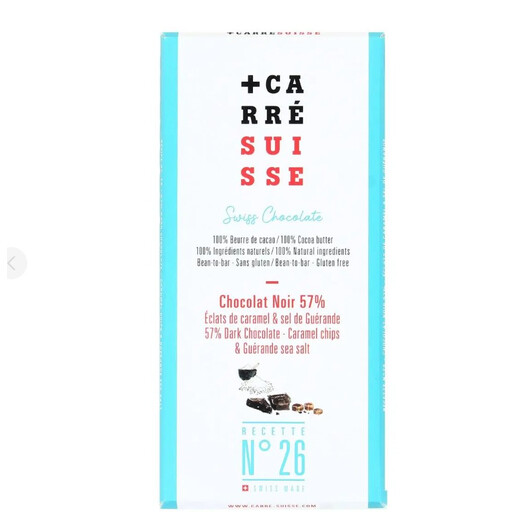 Image unavailable
This caramel and Guérande sea salt recipe is a different choice from a plain dark chocolate bar with a high cocoa content.
The pack weighs 100 g. Before taking it with you, compare its cocoa content and declared sugars with those of the other recipes you’re considering.
No. According to Santé publique France and the DGCCRF, Nutri-Score is a voluntary label, separate from the nutrition information and ingredients list required for prepacked foods. If it appears on the pack, you can use it alongside this information, but don’t rely on it alone to decide whether the bar meets your criteria.
The so-called ‘sugar tax’ applies to sweetened drinks, according to the French Ministry of the Economy, so it isn’t a factor to consider when choosing a dark chocolate bar. To compare bars, check the sugars listed in their nutrition information instead.
No. The product details for Lindt EXCELLENCE Dark 70% and Côte d’Or Dark 70% list 30 g and 28 g of sugars per 100 g respectively. By comparison, Auchan lists 1.2 g per 100 g for its low-sugar 70% recipe with sweeteners. Compare the ‘of which sugars’ line and ingredients for each product.
Read the allergens listed in the ingredients and check the packaging for any possible trace warnings. For example, Auchan’s product details for Côte d’Or Dark 70% list concentrated butter, soya lecithins and possible traces of nuts. Don’t assume the same information applies to a different recipe.