What should you check before choosing?
Start by checking the ventilation and possible causes of damp. If an additional appliance still seems appropriate, compare its features in the conditions of your room. Les Numériques highlights extraction rate, noise, energy consumption, tank capacity and laundry mode as key factors to consider.
| Priority | What to check | What I need |
|---|
| Cause of damp |
Check the air vents and make sure the ventilation system is working. If damp patches persist, or you suspect a leak or water ingress, find the cause before buying an appliance. ADEME distinguishes between checking the ventilation and using a dehumidifier as a possible additional measure. |
I want to manage moisture in the air without masking a problem with the property. If the ventilation is faulty, getting it repaired comes before choosing an appliance. |
| Room and extraction rate |
Compare the litres per day with the temperature and relative humidity used for the measurement, then consider the room where you plan to use it. For example, De’Longhi states that the DEX210SF extracts 10 L/24 h at 30 °C and 80% relative humidity. This figure does not guarantee the same result in a cooler room. |
For an occupied room or laundry-drying area, I want a capacity suited to the conditions in which the appliance will operate, not simply the highest figure. |
| Laundry and temperature |
Check whether it has a laundry mode and what operating temperature it is designed for. In a cool room, look at the technology and the specifications for the exact model. Meaco presents its desiccant DD8L Pro for environments below 10 °C. |
If I dry laundry in a cold room, I need to check that the appliance is suitable for that temperature, without assuming that a laundry mode guarantees a particular drying time. |
| Noise and drainage |
Check the noise level for the mode you plan to use, the tank capacity and the installation requirements for continuous drainage. Check whether a hose is supplied and whether the water needs to be pumped along its route. |
In a bedroom or living room, noise matters just as much as water management. If I plan to use it for long periods near laundry, I want to know in advance where the condensate will drain. |
| Settings and length of use |
Check the available humidity settings, operating modes and power rating in watts. How long you run the appliance and the conditions in the room also affect energy use; the power rating alone does not tell you how much it will cost to run. |
I want to set a target humidity level and choose a mode that suits how long I plan to use the appliance, rather than leaving it running without a setting. |
A few brands to know
These examples highlight features to look for in specific models. Their inclusion here does not mean that every appliance they make is suitable for every room.
De’Longhi
The range includes compact compressor models and appliances with a pump.
- According to De’Longhi, the DEX210SF has a laundry mode and continuous drainage. Its stated extraction rate of 10 L/24 h is measured at 30 °C and 80% relative humidity.
- The DD230P is rated at 30 L/24 h under the same conditions and comes with a pump and a 5 m hose. Consider its stated noise level and power rating in light of the room and how you plan to use it.
Ariston
The Deos range includes portable dehumidifiers with a choice of settings.
- Ariston states that the Deos 12 has three humidity settings—40%, 50% and 60%—and a capacity of 12 L/day.
- Before choosing this model for an occupied room, check the documentation for the noise level of the mode you plan to use, the tank capacity and the drainage options.
Meaco
Meaco’s range includes the DD8L Pro, a desiccant model designed for rooms with little heating.
- According to Meaco, the DD8L Pro is designed to operate below 10 °C and has a laundry mode with an adjustable louvre that directs air towards the laundry.
- These features do not guarantee a particular drying time or energy use in your room. Check the model’s other operating conditions.
Dehumidifiers available on Joybuy
These appliances are options for managing damp air in a room or helping to dry laundry, once you have checked the ventilation. They are not a solution to faulty ventilation or water ingress.
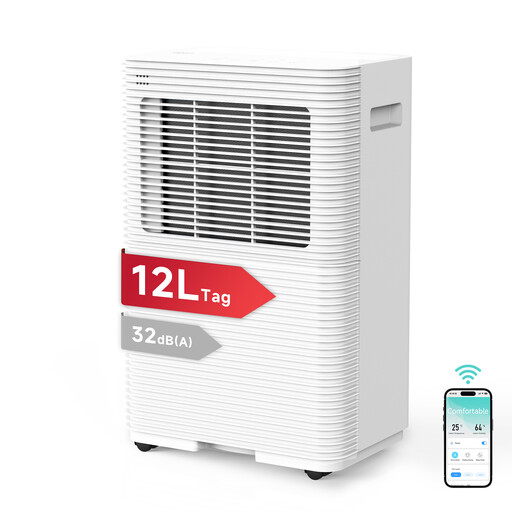 Image unavailable
VINO 12L Smart WiFi, 1.8 L tank
For a room where laundry is dried indoors, once you have checked the ventilation. The product listing states that it has Auto, Dry and Sleep modes, WiFi control and a 1.8 L tank. If you plan to use it in an occupied room, check the noise level and which mode it applies to before choosing.
View on Joybuy
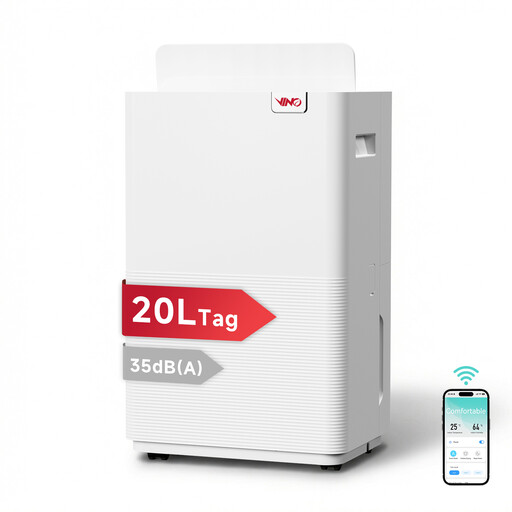 Image unavailable
VINO 20L Smart WiFi, 2.5 L tank
Another option for a ventilated room where damp or laundry drying makes an additional appliance worthwhile. The model is listed with Auto, Dry and Sleep modes, WiFi control and a 2.5 L tank. Check the noise level of the mode you plan to use.
View on Joybuy
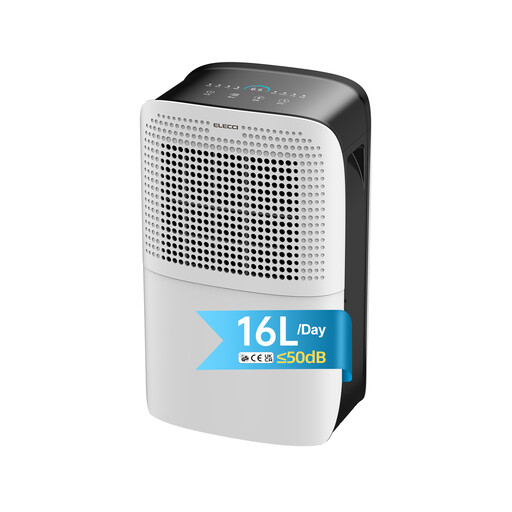 Image unavailable
ELECCI 16L/D, 3.1 L tank and hose
The drainage hose may be useful if you plan to use the appliance for long periods near your laundry. The model is listed with a 3.1 L tank and four modes. Before choosing it, check the room size specified for the exact model and the noise level of the mode you plan to use.
View on Joybuy
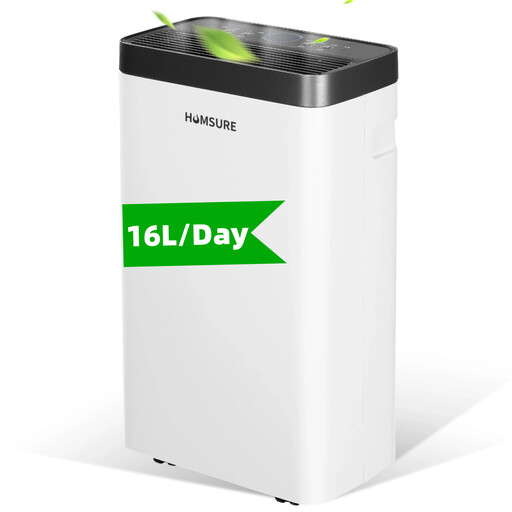 Image unavailable
HUMSURE 16L/Day, 1.4 L tank
Worth considering for a ventilated room where you want to use a dehumidifier as an additional measure, particularly while drying laundry. The title states that it is for a 25 m² room and has a 1.4 L tank and three modes. Check whether the tank capacity or a drainage setup suits how long you plan to use it.
View on Joybuy
 Image unavailable
TRULIVA 25L/Day, 2.8 L tank and hose
This model combines a laundry-drying function with a 2.8 L tank and a continuous drainage hose. If the room is cool, check its operating temperature before choosing it: a high extraction requirement alone does not mean it is suitable for a cold room.
View on Joybuy
Frequently asked questions
Can a dehumidifier replace faulty ventilation?
No. It removes moisture from the air in a room, but it does not restore air circulation. ADEME recommends checking the air vents and ventilation system if a home remains too damp. If they are not working properly, have the problem looked at before considering a dehumidifier as an additional measure.
When should you investigate the cause of damp in your home?
Persistent damp patches or mould, a suspected leak or signs of water ingress are reasons to investigate the cause rather than rely on a dehumidifier alone. Qualitel also lists poor ventilation and inadequate insulation among the possible causes of damp.
What does a capacity stated in litres per day mean?
It is a figure to read alongside its measurement conditions, not a guaranteed amount for every room. For example, De’Longhi states that the DEX210SF extracts 10 L/24 h at 30 °C and 80% relative humidity. Check the conditions stated for other models before comparing their figures.
Tank or continuous drainage when drying laundry?
A tank is suitable if you can empty it during the time you plan to use the appliance. For longer or more frequent sessions, check whether continuous drainage can be set up according to the instructions, whether a hose is supplied and whether the water needs to be pumped along its route.
What should I do if I rent a persistently damp home?
Document the signs of damp and report any problem that seems related to the ventilation or the property to your landlord. ANIL notes that rented accommodation must, among other things, allow for sufficient ventilation. Buying a dehumidifier does not replace investigating the cause.


