If air inlets are blocked or your mechanical ventilation system is not working properly, check the ventilation first. According to ADEME, it removes moisture continuously, which a standalone appliance cannot replace. For a small, localised problem, you could consider a refillable moisture absorber. If damp keeps returning in a regularly used room or utility room, compare electric dehumidifiers by their stated capacity, noise level and water drainage options.
Who are these options for?
A living room or utility room that’s often damp
If damp keeps returning despite airing the room and checking the vents, look at the stated capacity, noise levels in an occupied room, and how the water is emptied or drained. The stated room size alone isn’t enough to choose an appliance.
A small-scale need, with no plug required
A passive moisture absorber could be an option for a localised area. Check the stated room size for the specific model and make sure its refills are compatible. Don’t treat it as a replacement for faulty ventilation.
A rented home where there may be a ventilation problem
If an air inlet or vent is blocked, or the mechanical ventilation system seems faulty, investigate the cause first. You can document the problem and report it to your landlord rather than relying on an appliance alone.
What should you check before choosing?
Start by checking that the ventilation is working, then consider how much moisture there is and how often the problem occurs. For an electric appliance, compare the exact model’s specifications with your room and where you can drain the water.
Check the ventilation and find the cause
Check this first: if vents are blocked, the mechanical ventilation system doesn’t seem to be extracting air, or damp persists without an obvious lifestyle-related cause.
What to bear in mind: an inspection or repair may be needed, but a dehumidifier cannot replace the continuous removal of moisture described by ADEME.
Passive moisture absorber
Consider this: for a small, localised problem when you want a solution that doesn’t need electricity.
What to bear in mind: you’ll need to replace compatible refills and collect the liquid. The room sizes stated by Rubson for AERO 360° vary by model.
Electric dehumidifier
Consider this: if damp keeps returning in a regularly used room or somewhere you dry laundry, once you’ve checked the ventilation.
What to bear in mind: you’ll need a power supply and will need to consider operating noise, emptying the tank or installing a drain hose.
| Priority | What to check | What I need |
|---|
| Ventilation |
Check that the air inlets and vents aren’t blocked and that the mechanical ventilation system is working. ADEME suggests checking the extraction at a vent with a sheet of toilet paper, for example. |
If damp persists despite airing the room, I want to rule out a ventilation problem before buying an appliance. |
| Capacity and room |
Compare the stated capacity in L/day and the room size given for the exact model. These figures don’t diagnose the cause of the damp or guarantee the same output in every room. |
For a room that’s often damp or a utility room, I’m looking for a model whose specifications suit my space and how I’ll use it. |
| Water collection |
Check the tank capacity, how easy it is to empty, and whether continuous drainage can be set up. If the drain point is higher than the appliance, check whether the model has a suitable pump. |
I’d prefer to empty the tank less often if the appliance needs to run frequently, provided I can connect a hose in the room. |
| Noise and placement |
Check the noise level for the mode you’ll use and the clearance needed around the appliance. Duux says the Bora’s night mode dims the indicator lights and silences the beeps, but doesn’t change its actual noise level. |
If it’s near somewhere I rest, the noise while it’s running matters more to me than the stated capacity alone. |
| Ongoing upkeep |
For a moisture absorber, check which refills are compatible. For an electric appliance, check the maintenance instructions, tank emptying and hose installation. |
I want a solution whose regular upkeep suits the place where I’ll use it. |
What mistakes should you avoid?
-
Buying without checking the ventilation
According to ADEME, mechanical ventilation continuously removes moisture. If it’s switched off or its openings are blocked, an appliance in the room won’t fix the problem.
Check the air inlets, vents and extraction from the mechanical ventilation system. If you’re renting, keep any relevant evidence so you can report a fault to your landlord.
-
Choosing based only on litres per day
The specifications for the Wood’s MDX20P, H.Koenig DSH520 and Duux Bora 20L DXDH20 each state 20 L/day, but Les Numériques notes that tank capacities and drainage options vary by model.
Also compare the tank, drainage options and noise level in the mode you plan to use, especially if the appliance will run frequently.
-
Assuming a moisture absorber works like an electric appliance
Rubson AERO 360° absorbers work without electricity, and the room sizes stated by the brand vary by product. These figures aren’t comparable with the daily extraction capacity in L/day stated for electric models.
Choose this option for a small-scale need, and check the exact model and compatible refills.
You’ll need to replace the refills as you use them.
-
Forgetting about emptying the tank and disposal
You’ll need to empty the tank if you haven’t installed a drain hose. At the end of its life, an electric dehumidifier should be taken to a separate collection point for electrical equipment, according to the French ministry responsible for the ecological transition.
Before buying, check that the tank is easy to access and where a drain hose could go. Find out about local take-back or collection options for when the appliance reaches the end of its life.
Which models are useful points of reference?
These specifications apply to the models mentioned, not to every product from each brand. They’re mainly useful for comparing stated capacity with noise levels and water collection options.
Wood’s
The MDX20P is a useful comparison for a utility room or a room where draining water is a key consideration.
- Wood’s states a capacity of up to 20 L/day, a noise level of 41 dB and a 6 L tank. Les Numériques also notes its built-in pump and continuous drainage.
- Check its size, the noise level where you plan to place it, and whether the pump or hose will work with your drainage set-up.
Duux
The Bora 20L DXDH20 is a connected model with continuous drainage that’s worth considering.
- Les Numériques gives this model a capacity of 20 L/day, a stated room size of 40 m² and a 4 L tank.
- Duux says its night mode dims the indicator lights and silences the beeps, but doesn’t reduce the appliance’s actual noise level.
Comfee
The Aqua Dry 12 is a useful reference when looking at a compact appliance for smaller spaces.
- Les Numériques gives it a capacity of 12 L/day, a stated room size of 35 m², a 2.5 L tank and continuous drainage.
- If you plan to use it frequently without a hose, factor in emptying the tank.
H.Koenig
The DSH520 is worth considering if you’re looking for connected controls and a 5 L tank.
- Les Numériques gives this model a capacity of 20 L/day, a stated room size of 25 m² and continuous drainage.
- Check that the stated room size and drainage options suit the room where you plan to install it.
De’Longhi
The AriaDry Multi DEXD216RF lets you compare a model with a laundry function but no connected controls.
- Les Numériques gives it a capacity of 16 L/day, a stated room size of 30 m² and continuous drainage.
- Its 2.1 L tank makes emptying an important consideration if you don’t use a hose.
Rubson
The AERO 360° range represents the passive option here, with no need for an electrical connection.
- Rubson states that selected models are suitable for rooms of up to 20 m² or 40 m², depending on the model.
- Check the stated room size for the exact model and make sure you have compatible refills. These figures don’t make a moisture absorber equivalent to an electric dehumidifier.
Which electric dehumidifiers should you look at on Joybuy?
These electric dehumidifiers offer a way to compare performance in a damp room, water management and, depending on the model, laundry drying. Before choosing, check your home’s ventilation and the installation requirements for your room.
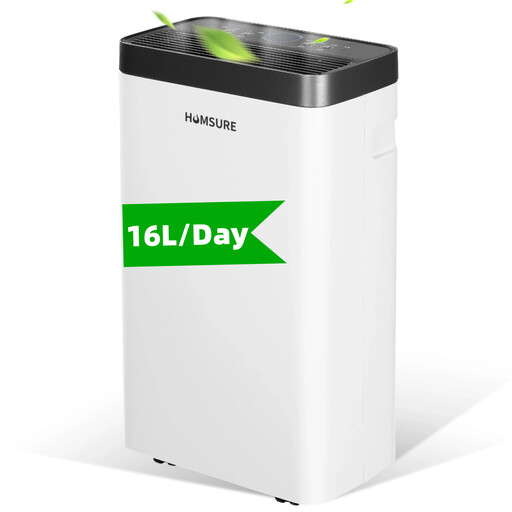 Image unavailable
HUMSURE, 16 L/day, 1.4 L tank
A model to compare if you’re looking for an electric appliance for a room that’s often damp: the title states 16 L/day, a room size of 25 m², a 1.4 L tank and a 24-hour timer. Check the noise level in the mode you plan to use and how often you’ll need to empty the tank for your needs.
View on Joybuy
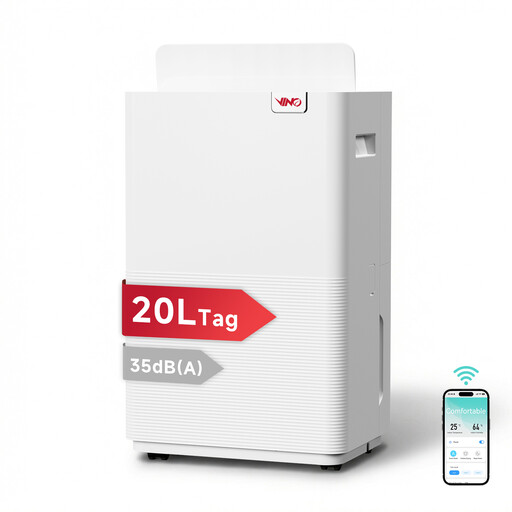 Image unavailable
VINO 20L Smart WiFi, 2.5 L tank
Worth considering if you want Wi-Fi controls or a laundry-drying mode. The title states 20 L/day, a 2.5 L tank and a room size of 40 m²; the 20 L/day output is stated at 30 °C and 80% relative humidity. If it’ll be used in an occupied room, check the noise level in the mode you plan to use: the stated 35 dB in sleep mode differs from the 40 dB(A) in the specifications.
View on Joybuy
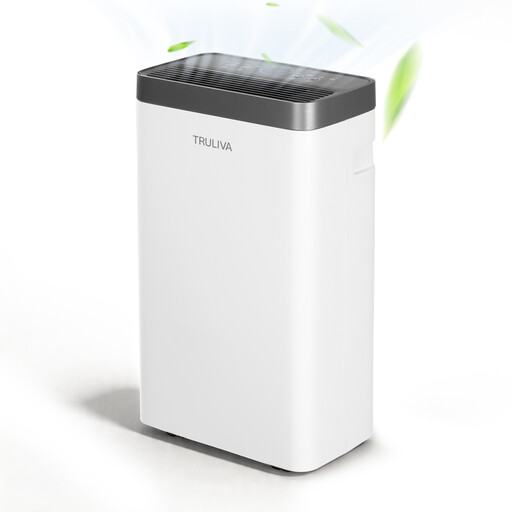 Image unavailable
TRULIVA AP10-2012EE, approx. 32 m²
This model is worth considering if laundry drying and continuous drainage suit your set-up. The title mentions a room size of approximately 32 m², a 24-hour timer and automatic defrost. Check where you could position the hose and how noisy it is if the appliance will be used near somewhere you rest.
View on Joybuy
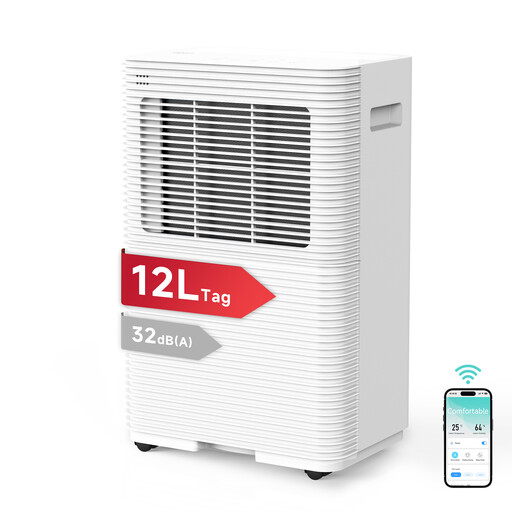 Image unavailable
VINO 12L Smart WiFi, 1.8 L tank
Compare this stated capacity with other models for a damp room: the title gives 12 L/day, a room size of 24 m², a 1.8 L tank, Wi-Fi controls and a laundry-drying mode. If noise matters, check which figure applies to the mode you’ll use: 32 dB is stated for sleep mode, compared with 38 dB(A) in the specifications.
View on Joybuy
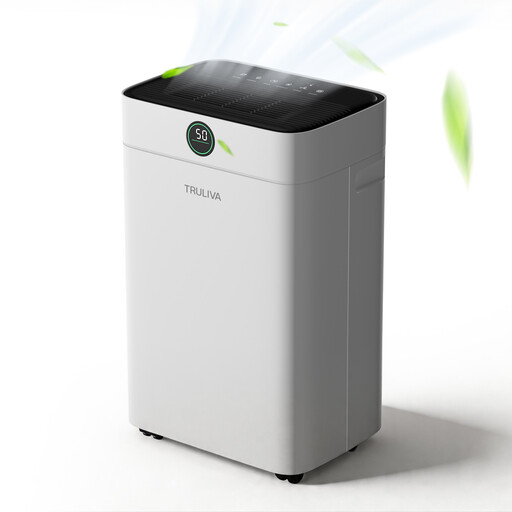 Image unavailable
TRULIVA 25 L/day, 2.8 L tank and hose
Worth considering for regular use if the laundry mode and drain hose suit your room. The title states a 2.8 L tank and up to 25 L/day. This capacity is stated at 95 °F and 90% relative humidity, so it isn’t a guaranteed output in other conditions. Check that the room size suits your space and the noise level in the mode you plan to use.
View on Joybuy
Frequently asked questions
Can a dehumidifier replace mechanical ventilation or airing?
No. According to ADEME, mechanical ventilation removes moisture continuously. Before buying an appliance, check that the air inlets and vents aren’t blocked and that the system is working.
When should you investigate the home before buying?
If the ventilation seems faulty or damp persists without an obvious lifestyle-related cause, investigate the source of the problem first. If you’re renting, document what you’ve noticed so you can report a possible fault to your landlord.
What should you compare between two electric dehumidifiers?
Compare the stated capacity and room size for each exact model, then check the noise level in the mode you plan to use, the tank capacity and the drainage options. If the drain point is higher than the appliance, also check whether it has a suitable pump. Litres per day alone don’t tell you everything about how an appliance will work in your home.
Does night mode always make an appliance quieter?
No, it depends on the model. Duux says the Bora’s night mode dims the indicator lights and silences the beeps, but doesn’t change the appliance’s actual noise level. Check what the night mode does on the model you’re considering.
What should you do with an electric dehumidifier at the end of its life?
Take it to a separate collection point for electrical equipment rather than putting it in general waste, following the guidance from the French ministry responsible for the ecological transition. Check for take-back options or collection points near you.


