What should you check before choosing?
Take measurements to see when and where humidity rises. Check the ventilation and look into any persistent damp patches before choosing an appliance for extra support.
Hygrometer
Worth considering: if you want to compare different rooms or track changes after showering, cooking or drying laundry.
Limit: it measures relative humidity, but doesn’t remove water from the air or identify what’s causing marks on the walls.
Dehumidifier
Worth considering: as extra support in a room where activities regularly create moisture, without stopping the room from being aired or ventilated.
Things to consider: you’ll need to plan where to put it, how to empty or drain the water, and how to maintain it according to the instructions.
Check the ventilation and building
Best to prioritise: when condensation, odours or damp patches persist. France Rénov’ recommends finding out what’s causing the damp patches.
What to plan for: any ventilation checks or potential upgrades should be suited to your home. It’s not simply a matter of choosing a portable appliance.
| Priority | What to check | What I need |
|---|
| Cause of the damp |
Note which rooms are affected and when humidity rises. If damp patches persist, have their cause investigated, as France Rénov’ recommends. An air reading alone can’t diagnose problems with the building. |
I want to understand whether the problem occurs after a particular activity or whether the walls stay damp regardless. |
| Air circulation |
Check the air inlets, extractor vents and existing ventilation. ADEME recommends keeping these openings clear and not switching off the VMC. |
Condensation returns after showering, cooking or drying laundry, so I also need to check how damp air is being removed. |
| Suitability for the room |
For a dehumidifier, compare the stated floor area or volume for the exact model, the conditions associated with its capacity in L/jour and the operating temperature given in the instructions. |
I’m looking for extra support in a specific room, without assuming that a capacity figure guarantees the same results everywhere. |
| Everyday use |
Check the stated noise level, tank capacity, whether it switches off when full, whether it can drain continuously and how easy it is to access the filter. Make sure your planned set-up follows the instructions. |
If the appliance will be used regularly, emptying it, finding a place for it and maintaining it need to be manageable in my home. |
Brands worth knowing
These brands and models give you examples of features to compare on specific products. They may not be among the products featured below.
Rowenta
The range includes the Extrême Dry Compact+ DH5260F0 dehumidifier.
- Rowenta states that this model has a capacity of 16 L/jour and is suitable for areas up to 40 m² or 100 m³.
- These figures for the DH5260F0 don’t show that it can tackle the cause of persistent damp in the building.
Beurer
The brand offers a range of humidity monitors and dehumidifiers.
- The HM 16 thermo-hygrometer displays minimum and maximum readings. Beurer states an accuracy of ±5 % HR between 40 and 80 % HR.
- A humidity reading alone can’t identify what’s causing marks on the walls.
De’Longhi
The Tasciugo AriaDry range includes several dehumidifier models.
- De’Longhi provides documentation to help you check the features of some variants.
- According to De’Longhi support, the DDSX220WF and DDSX220WFA use different connectivity systems. Check the full model reference before choosing a feature.
Appliances for measuring humidity or dehumidifying
This Joybuy selection includes a hygrometer for tracking indoor humidity and dehumidifiers designed to provide extra support in one room. Choosing one of these appliances doesn’t replace checking the ventilation or investigating the cause of persistent damp patches.
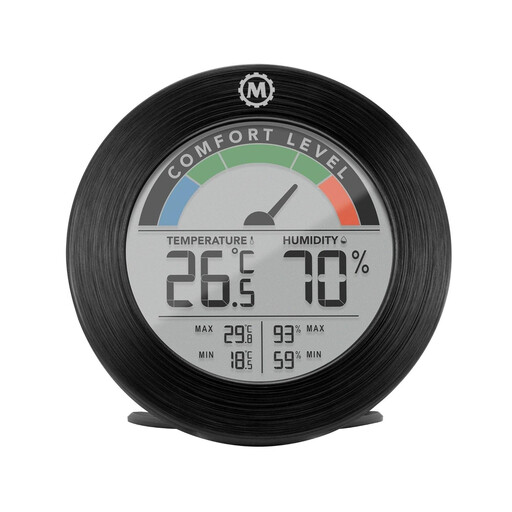 Image unavailable
Marathon Austin wireless indoor thermometer and hygrometer
Track changes in a room before deciding what to do. The product name indicates that it measures temperature and humidity, includes a comfort indicator and records daily minimum and maximum readings. It doesn’t remove moisture or diagnose the cause of persistent damp patches. Check the stated accuracy if you want to compare readings in detail.
View on Joybuy
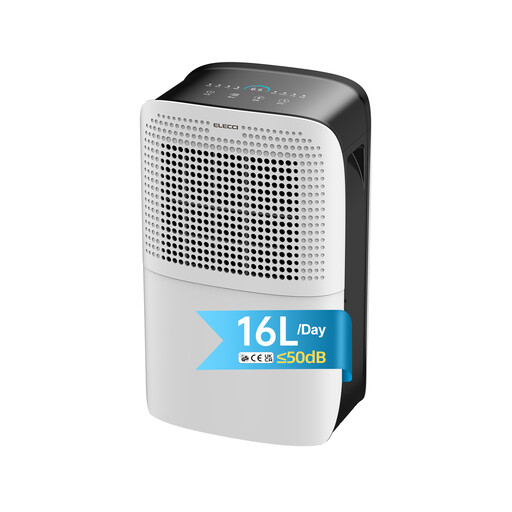 Image unavailable
ELECCI dehumidifier, 16 L/jour, 3,1 L tank
An option to consider for extra support if you can manage the water collected in the tank or through the drainage hose mentioned in the product name. It’s listed as having four modes, automatic defrost, a 24 h timer and R290 refrigerant. Stated capacity depends on the conditions of use, so also check the noise level and safety instructions for the exact model.
View on Joybuy
 Image unavailable
VINO dehumidifier, 20 L/jour, Wi-Fi, 2,5 L tank
For extra support in a room where a laundry-drying mode or Wi-Fi control would be useful. The product name lists three modes — Auto, Dry and Sleep — as well as R290 refrigerant. Check the noise level for this model before using it near a bedroom, as the available information is contradictory. Keep the room ventilated.
View on Joybuy
 Image unavailable
Comfee MDDN-10DEN7 dehumidifier, 10 L/24 h
Consider it for removing moisture from the air in a room, alongside proper ventilation. The product name mentions an LED display and R290 refrigerant. Check the recommended floor area or volume for the exact model before choosing it, as the available coverage information doesn’t match.
View on Joybuy
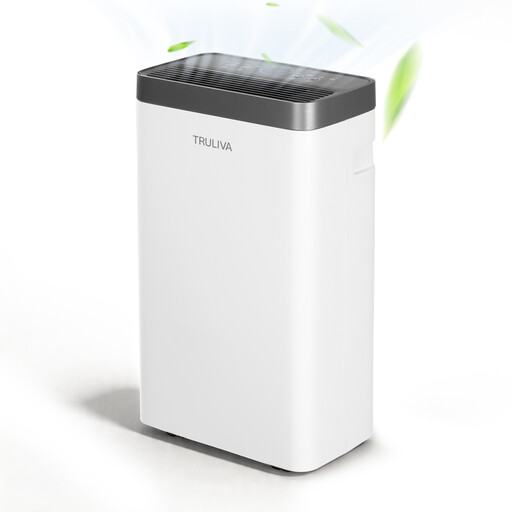 Image unavailable
TRULIVA AP10-2012EE dehumidifier with laundry mode
The laundry-drying mode may suit households that regularly dry laundry indoors, in a room that’s also ventilated or fitted with an extractor. The product name lists a 24 h timer, automatic defrost and continuous drainage. Check the instructions for the recommended room and the requirements for connecting the drainage hose.
View on Joybuy
Frequently asked questions
Can a dehumidifier replace a VMC or airing?
No. It removes water from the air in the room it’s running in, while ventilation refreshes the air. ADEME recommends leaving the VMC on and keeping air inlets and extractor vents clear.
What should I do if damp patches or mould persist?
Find out what’s causing them rather than relying on a dehumidifier alone. France Rénov’ recommends having damp patches assessed. Ventilation and elements of the building may also need to be checked.
Where should I dry laundry indoors?
If you need to dry laundry indoors, choose a large, well-ventilated room or one with a VMC extractor vent, as ADEME advises. A dehumidifier can complement this set-up, but it won’t replace the removal of damp air.
What should I compare when choosing a dehumidifier?
Check the recommended room size or volume for the exact model, the conditions behind its capacity in L/jour, the noise level, tank, water drainage and filter access. A stated capacity alone doesn’t tell you whether the appliance will suit your home.
How should I plan for filter and tank maintenance?
Follow the instructions for your model when emptying the tank and cleaning the appliance. For the models covered by its FAQ, De’Longhi recommends vacuuming dust from the filter and, if it’s very dirty, rinsing it at a temperature no higher than 40 °C. Don’t use this method on another model without checking its instructions.


