If laundry is piling up and you want to clear the airer, a heat pump tumble dryer is probably the better choice. If you plan to keep using the airer and mainly want to reduce the humidity in the room, consider a dehumidifier with a laundry mode, while ensuring the room is well ventilated. In either case, check the space available, noise levels, water management and maintenance requirements. No appliance on its own can resolve persistent damp throughout your home.
Who are these solutions for?
Households with frequent laundry loads
If several loads, sheets or towels regularly fill your airer and you have space for a permanent appliance, a heat pump tumble dryer lets you dry laundry in a drum. Choose a capacity that suits your loads, and check the model’s dimensions, noise levels and maintenance requirements.
People who plan to keep using an airer
If you leave laundry hanging in a room where condensation is a problem, a dehumidifier with a laundry mode meets a different need: reducing moisture in the air. You’ll need to empty the tank or set up a compatible drain, and keep the room well ventilated, as recommended by ANSES for drying laundry indoors.
Households with little laundry or delicate fabrics
For small loads or clothes whose care labels advise against tumble drying, compare the programmes that are genuinely suitable for drying laundry on an airer in a well-ventilated room. A programme described as suitable for delicate fabrics doesn’t override the care label.
How do the options compare?
Start with your main need: drying laundry loads, managing humidity around an airer, or finding an appliance that suits your room and fabrics.
| Factor |
What to check |
Who it matters to |
| Amount of laundry |
Choose a tumble dryer capacity that suits your usual loads, and measure the space you need, including with the door open. |
When laundry loads keep coming, I want to clear the airer rather than leave several loads hanging up. Around 30% of consumers prioritise the amount of laundry they need to dry. |
| Humidity around the airer |
For a dehumidifier, check for a laundry mode, the tank or drainage options, and the conditions used to measure its capacity in L/24 h. |
If I keep drying laundry on an airer, my main concern is moisture building up in the room. This is the priority for around 40% of consumers. |
| Installation and fabrics |
Check the appliance’s dimensions, noise levels and maintenance requirements, and read clothing care labels before choosing a programme. |
In a small room, or when drying delicate clothes, I first need to be able to fit the appliance and use a suitable drying programme. This compatibility comes first for around 30% of consumers. |
Common misconceptions to avoid
-
Assuming “condenser” means a tumble dryer without a heat pump
Condensation describes how water is collected: a heat pump tumble dryer can also be a condenser dryer. The European Commission says that, for household tumble dryers placed on the EU market since 1 July 2025, permitted models use a heat pump.
If a listing only mentions “condenser”, check the technology and exact model reference before choosing.
-
Taking the L/24 h figure as a guarantee of drying performance
The stated extraction rate varies with air temperature and humidity. For example, De’Longhi gives the DDSX220 a rate of 20 L/24 h at 30 °C and 80% relative humidity. This figure doesn’t predict how much water it will collect in a cooler room.
Compare figures measured under the same conditions, then look at the laundry mode, noise levels and water management.
-
Neglecting the filter and condenser
Maintenance requirements vary by model, even when an automatic cleaning function is advertised. Electrolux says to clean the filter at the end of every cycle and check the condenser if it’s accessible.
Before buying, read the manual and make sure you can reach the parts that need maintenance.
According to Electrolux, a blocked condenser can increase energy consumption and damage the appliance.
-
Expecting an appliance to fix persistent damp
A dehumidifier removes moisture from the room’s air, but it doesn’t replace ventilation or identify the cause of ongoing condensation. ANSES advises drying laundry outside if possible, or in a well-ventilated room.
Keep air inlets and ventilation working properly. If condensation or mould persists, address the problem separately from your choice of appliance.
Brands to compare
Bosch
The range includes heat pump tumble dryers with AutoDry and, on some models, Auto Clean.
- Bosch describes Auto Clean as an automatic lint collection system. On applicable models, its container needs emptying around every 20 cycles.
- Check the maintenance instructions for your chosen model: this feature isn’t available across the whole range.
Electrolux
The range includes heat pump tumble dryers, including DelicateCare models that the brand says are designed for certain delicate fabrics.
- Electrolux’s product details for the EW7HI395BN list a 9 kg capacity and a noise level of 63 dB.
- Whether a garment is suitable depends on its care label and the programme available on the exact model. The filter and, where accessible, the condenser need regular maintenance.
Miele
Miele offers 8 kg and 9 kg heat pump tumble dryers, with programmes and features that vary by model.
- Features such as WoolDry or SteamCare may be useful points of comparison for specific needs.
- Check the capacity and make sure the model you’re considering has the programme you want, rather than assuming it’s available across the whole range.
De’Longhi
The Tasciugo range includes dehumidifiers with a laundry function and, depending on the model, continuous drainage.
- De’Longhi lists a laundry mode for the DDSX220 and an extraction rate of 20 L/24 h at 30 °C and 80% relative humidity.
- This capacity depends on the measurement conditions. Also check the tank, drainage options and noise levels of the model you choose.
Models to consider on Joybuy
These models suit two different needs: keeping an airer while managing moisture in the room, or drying laundry loads directly in a heat pump tumble dryer. Compare installation requirements and day-to-day considerations before choosing.
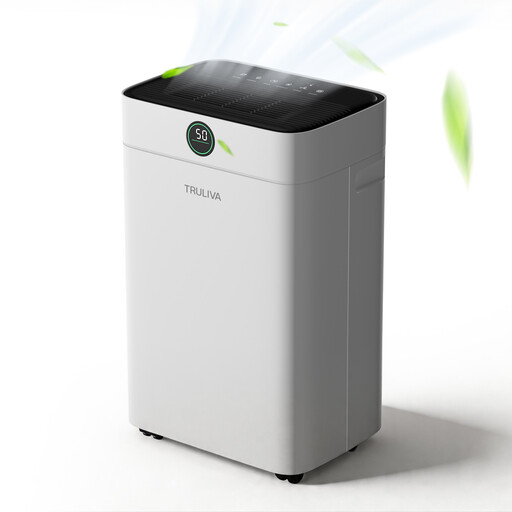 Image unavailable
TRULIVA dehumidifier, 25 L/day, with laundry function
Worth considering if you plan to keep using an airer and want to manage the humidity in the room. The product name lists a 2.8 L tank and a continuous drainage hose. Check the noise level for your room, and don’t assume the advertised capacity of 25 L/day is guaranteed in your home.
View on Joybuy
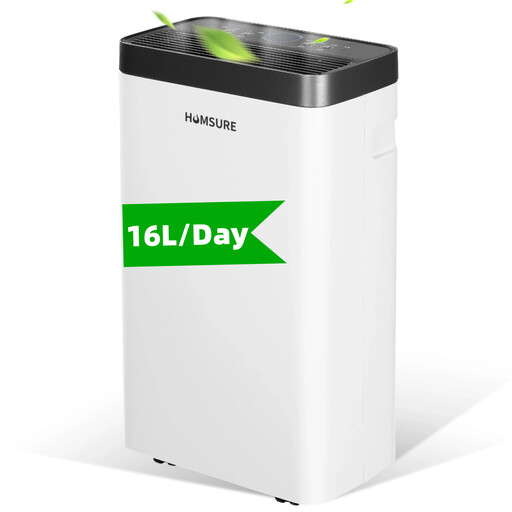 Image unavailable
HUMSURE dehumidifier, 16 L/day, 1.4 L tank
Consider this for drying laundry on an airer if you also want to remove moisture from the air. The product name lists a 1.4 L tank and a 24-hour timer. Check that it has a laundry mode and that its noise level suits the way you plan to use it.
View on Joybuy
 Image unavailable
Hotpoint CHD84MWBSEE 8 kg heat pump tumble dryer
This model is for households that want to dry laundry loads directly in a drum. It has a stated capacity of 8 kg and an energy rating of C. Measure the available space and check the water connection requirements and any accessories you’ll need.
View on Joybuy
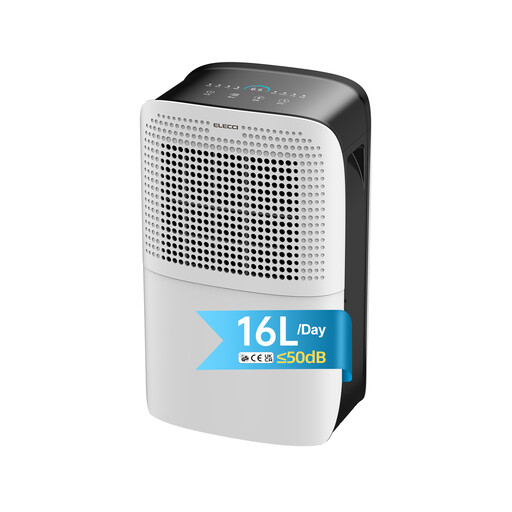 Image unavailable
ELECCI dehumidifier, 16 L/day, 3.1 L tank
Compare this model if you’ll keep drying laundry on an airer and emptying the water is an important consideration. The product name lists a 3.1 L tank and continuous drainage. Check its dimensions and noise level for the room where you plan to use it.
View on Joybuy
 Image unavailable
Comfee CD08EHP05W-HR 8 kg heat pump tumble dryer
This model is for drying laundry loads directly, rather than dehumidifying a room with an airer. The product name lists an 8 kg capacity and an energy rating of D. Check its dimensions, noise levels, condensate management and maintenance instructions before installation.
View on Joybuy
Frequently asked questions
Does a “condenser” tumble dryer always come without a heat pump?
No. Condensation describes how water is collected, and a heat pump model can also be a condenser dryer. For household tumble dryers placed on the EU market since 1 July 2025, the European Commission says a heat pump is required. Check the model’s technology rather than relying on the wording in the listing.
Should I ventilate the room when using a dehumidifier near laundry?
Yes. Removing water from the air doesn’t replace ventilation. ANSES recommends drying laundry outside if possible, or in a well-ventilated room. Make sure your home’s ventilation system is also working properly.
How can I compare the capacity of two dehumidifiers?
Compare the L/24 h figures at the same measurement temperature and humidity. For example, De’Longhi gives the DDSX220 a rate of 20 L/24 h at 30 °C and 80% relative humidity. This figure doesn’t guarantee the same extraction rate in a cooler room. Also check the tank, noise levels and drainage options.
What maintenance does a tumble dryer need?
Follow the manual for your model to clean the filter and condenser. Electrolux says to clean the filter after every cycle and check the condenser at least once a month if it’s accessible. Check these requirements before installing the appliance in a confined space.
Is a dehumidifier enough if condensation persists?
No. It can reduce moisture in the air, but it won’t identify or fix the cause of a persistent problem in your home. If condensation or mould persists, keep your ventilation working properly and have the situation looked at separately from your choice of drying appliance.


