What should you check before choosing?
First, work out whether the humidity is consistently high or has risen temporarily. Then choose a format and operating requirements that are genuinely suitable for your room.
| Priority |
What to check |
What I need |
| Measure the humidity |
Use a hygrometer to check the relative humidity in the room concerned at different times. Qualitel generally puts the reference range at 40 to 60%. Bear in mind that showers, cooking and laundry can all affect the readings. |
I want to know whether humidity remains high or only rises during certain activities before buying an appliance. |
| Choose an appliance that suits the room |
Compare the stated area or room volume with the space you have in mind. For an electric model, check its capacity in L/24 h and the conditions under which it was measured. Look for a laundry mode if you need one. For a passive absorber, check the area specified by the manufacturer. |
I dry laundry in my living space, or I need a solution that doesn’t require a socket for a smaller area. These uses don’t necessarily call for the same format. |
| Manage how it operates |
Check the noise level in the mode you plan to use, the power in W, the tank capacity and whether a drainage hose can genuinely be used. If you’ll be moving the appliance, check its weight and castors too. |
In a bedroom, noise may determine when I can use the appliance. If I can’t install a drainage hose, I’ll need to empty the tank regularly. |
| Address the cause |
Check that air inlets and vents aren’t blocked. If there are signs of a leak or persistent mould, keep a record of the situation and report it to your landlord. ADIL can advise you on the appropriate steps to take. |
I can use an appliance as a supplementary measure, but I don’t want to leave inadequate ventilation or a leak unaddressed. |
Some brands to know
These examples illustrate different formats. The specifications mentioned apply to the models listed, not to every product from each brand.
Rowenta
Rowenta describes its Extrême Dry Compact+ DH5260F0 electric dehumidifier as suitable for rooms up to 40 m² or 100 m³, and for drying laundry.
- According to Rowenta, this model extracts 16 L/day, operates at less than 40.5 dB(A), has a 3 L tank and comes with a 1 m hose for continuous drainage.
- Consider the conditions behind the stated capacity and noise level, and how they compare with your needs in the room.
De’Longhi
The Tasciugo AriaDry Multi DDSX225 is one example of an electric dehumidifier with continuous drainage.
- According to De’Longhi, its stated capacity is 25 L/24 h at 30 °C and 80% relative humidity. The specifications also list 490 W and a noise level of 42 to 47 dB(A).
- These test conditions don’t indicate how much water it will collect in a cooler or less humid room. Also take the stated noise level and power into account.
Rubson
The Aero 360° is a passive absorber with replaceable refills. Rubson says it’s suitable for rooms up to 20 m² and works without electricity.
- Rubson says a refill can last for up to three months, depending on humidity and room temperature.
- You’ll need to replace the refill and empty the collected water. This format won’t address the cause of a leak or inadequate ventilation.
Electric dehumidifiers on Joybuy
These portable models are options if you’re looking for an electric dehumidifier as a supplementary measure, particularly for a room in use or for drying laundry. Compare their specifications with your room and your requirements for noise, emptying and installation. They won’t fix an underlying problem with the property.
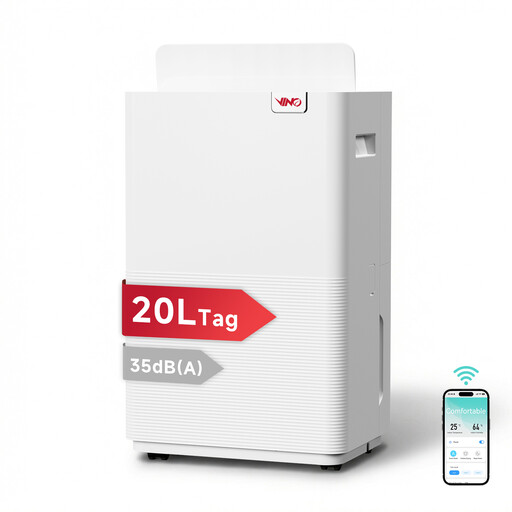 Image unavailable
VINO 20 L/day Wi-Fi, 2.5 L tank
Worth considering for a room where you dry laundry: the title states 20 L/day, three modes and coverage of 40 m². It also lists a 2.5 L tank and Wi-Fi control. Check the conditions used to measure the capacity and the noise level of the mode you plan to use.
View on Joybuy
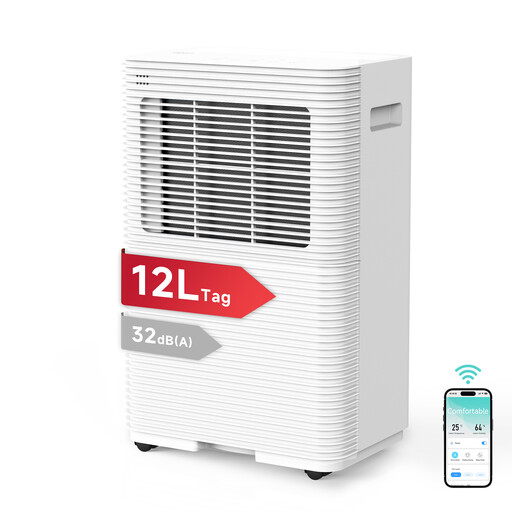 Image unavailable
VINO 12 L/day Wi-Fi, 1.8 L tank
If you’re comparing a model stated to cover 24 m², the title lists 12 L/day, three modes, Wi-Fi control and a 1.8 L tank. If you plan to use it in a bedroom, check the noise level of the mode you’ll use and the conditions behind the stated capacity.
View on Joybuy
 Image unavailable
TRULIVA 25 L/day, 2.8 L tank and hose
The title pairs a stated capacity of 25 L/day with a laundry-drying function, a 2.8 L tank and a hose for continuous drainage. Before choosing this model for a particular room, check the recommended area, the conditions behind the stated capacity and the noise level of the mode you want to use.
View on Joybuy
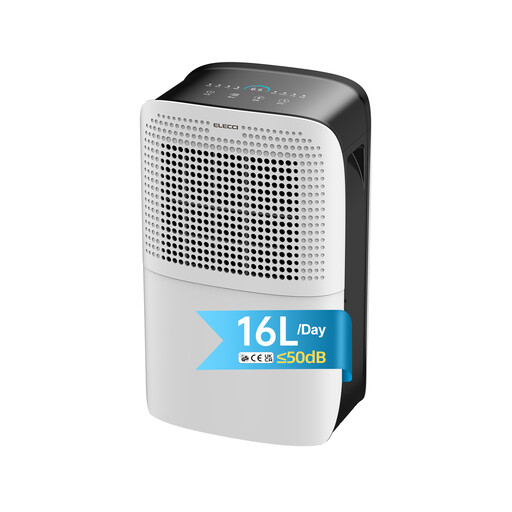 Image unavailable
ELECCI 16 L/day, 3.1 L tank and hose
The title states coverage of 32 m², four modes, a 3.1 L tank and continuous drainage. If you plan to use it in a room you spend time in, check the noise level of the mode you intend to use, as well as the conditions behind the stated 16 L/day capacity.
View on Joybuy
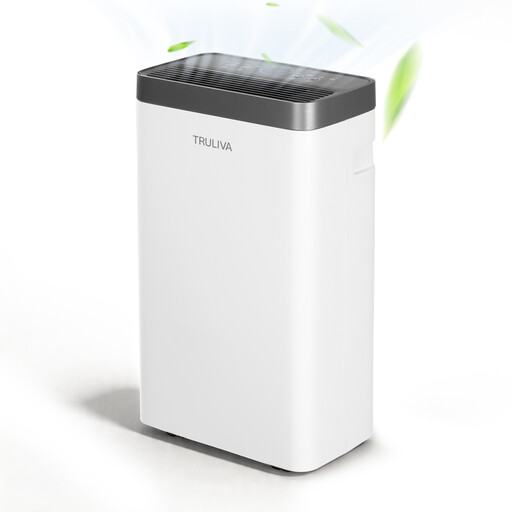 Image unavailable
TRULIVA AP10-2012EE, continuous drainage
The title describes this model as suitable for an area of around 32 m² and lists a laundry-drying function, a 24-hour timer and continuous drainage. Check the noise level of the mode you plan to use and whether you can install the drainage hose in your room.
View on Joybuy
Frequently asked questions
Can a portable dehumidifier fix a leak or inadequate ventilation?
No. It can help as a supplementary measure to reduce airborne moisture, but it won’t repair a leak or fix inadequate ventilation. ADEME highlights the role of ventilation in continuously removing moisture, while INRS recommends tackling the causes of mould growth.
What humidity level should I check before buying an appliance?
Qualitel generally puts the relative humidity in a home at 40 to 60%, and notes an increased risk of condensation and damage above 70%. Take readings in the room concerned at different times: showers, cooking and laundry can all cause temporary changes.
What should I look for in an electric dehumidifier for a flat?
Compare the stated area and capacity, along with the conditions used to measure it. Then check the noise level of the mode you’ll use, the tank and the drainage options. If you’ll be moving the appliance or using it regularly, also check its weight, castors, power rating and maintenance instructions.
Does a passive moisture absorber need maintenance?
Yes. You’ll need to empty the collected water and replace the refill according to the model’s instructions. For the Aero 360°, Rubson says the stated refill life varies with the room’s humidity and temperature.
What should I do if damp persists in a rented home?
Keep a record of your readings and any visible signs of damp, check that vents aren’t blocked and report the problem to your landlord. In France, ANIL says ADIL can help you assess the property yourself and advise you on the appropriate steps if it appears to be in a poor state or unfit for habitation.


