If damp is caused by how a room is used, a passive moisture absorber may meet a limited need. Choose an electric dehumidifier based on the room, the conditions behind its stated capacity, its noise level and how it drains. Continuous drainage means fewer trips to empty the tank only if the appliance and connection allow for it. If the damp persists, mould appears, or you suspect a leak or poor ventilation, investigate the cause rather than relying on the appliance alone.
Who is this choice for?
Households dealing with persistent damp
If marks keep returning, you suspect a leak or the ventilation seems inadequate, identifying the cause should come first. Anses and ANIL describe these as issues to investigate in the home, not simply as factors when choosing an appliance.
Anyone dealing with occasional damp in a room
After showering, cooking or drying clothes, start by ventilating the room appropriately, as ADEME advises. If you’re considering an appliance for occasional use, compare its stated capacity and recommended floor area or room volume with the space in question.
Anyone mindful of noise and emptying the tank
If the appliance will be near a bedroom or in a room you spend a lot of time in, check the model’s noise level and which mode it applies to. If emptying the tank would be inconvenient, also check its capacity and the installation requirements for continuous drainage, if available.
Which criteria should you check first?
First rule out a cause related to the property. Then choose between a limited need and active electric extraction, and check the practical requirements of the model you’re considering.
Passive moisture absorber
Consider it: for a limited need, particularly if silence or not needing a socket matters.
Bear in mind: you’ll need to replace the refills, and there’s no setting or active extraction comparable to an electric appliance.
Electric dehumidifier
Consider it: for a room where moisture builds up regularly, after checking that there’s no underlying issue with the property to address.
Bear in mind: operating noise, electricity use and emptying the tank, unless a compatible drainage connection is available.
| What matters |
What to check |
What consumers are looking for |
| Cause of the damp |
Check whether the signs persist or return; look for visible leaks and make sure the ventilation is working. |
When marks return despite ventilation, I want to know what’s causing the damp before buying an appliance. Around 31% of consumers prioritise finding the cause. |
| Capacity and room size |
Compare the model’s recommended floor area or room volume and its capacity in L/24 h, taking into account the temperature and relative humidity used for the stated figure. |
If I dry clothes in the room, I want a capacity suited to the extra moisture, without assuming the catalogue figure will match results in my home. This is the main concern for around 31% of consumers. |
| Operating noise |
Check the stated noise level in dB(A) for the exact model and, if possible, for the mode you plan to use. |
If I work or sleep near the appliance, noise during active cycles can determine my choice. Around 23% of consumers put quiet operation first. |
| Drainage and maintenance |
Check the tank capacity and the requirements for connecting a hose. Also consider how long the appliance can run or how often refills need replacing. |
If I can’t empty a tank often, I’d prioritise a practical drainage set-up. With a moisture absorber, I’d need to plan for replacement refills instead. Manageable maintenance is the priority for around 15% of consumers. |
Capacity figures can’t be compared without taking their test conditions into account: the specifications for the De’Longhi DEX210SF and DEXD214RF state their figures at 30 °C and 80% relative humidity. So a stated capacity alone won’t tell you how much water the appliance will collect in a cooler or less humid room. Continuous drainage, meanwhile, is an option on some electric appliances, not a third method that addresses the cause of damp.
Mistakes to avoid before buying
-
Relying on an appliance to fix a leak
An appliance can remove moisture from the air, but it won’t fix a leak or poor ventilation. Anses and ANIL urge homeowners to take persistent problems with their property seriously.
If marks keep returning or water is getting into the room, record what you’ve noticed and get the source investigated. If you rent your home, report it to your landlord.
Using the appliance alone could delay finding the cause of the problem.
-
Comparing litres per day alone
A stated capacity depends on the temperature and relative humidity used for testing. Figures measured in different conditions aren’t a direct comparison for your room.
Note the test conditions alongside each capacity figure, then check the recommended room size for each model.
-
Planning for continuous drainage without a route for the hose
This feature avoids the need to empty the tank only if the model supports the connection and the water can drain to a suitable outlet.
Before choosing where to put the appliance, check the instructions for details about the hose, how it should be routed and any drainage requirements.
You may need a compatible hose or a different set-up for the appliance.
-
Forgetting about running time or replacement refills
According to Rowenta, electricity use is calculated from the appliance’s power and running time. A passive moisture absorber, such as the AERO 360° model featured by Rubson, works without electricity but uses replacement refills.
To compare the upkeep of the two options, estimate how many hours you’ll use the electric appliance or how often you’ll need to replace the refills.
Brands to know
These ranges offer useful reference points when checking specifications, but features vary by model.
De’Longhi
The Tasciugo AriaDry home range includes compressor-based electric dehumidifiers.
- De’Longhi’s specifications for the DEX210SF and DEXD214RF include details of their capacity test conditions and model-specific drainage options.
- Their capacity figures and noise levels don’t represent every model in the range or how they’ll perform in every home.
Rowenta
The brand’s range includes the Extrême Dry Compact+, an electric dehumidifier with a stated recommended room size.
- For this model, Rowenta states a capacity of 16 L/day, coverage of up to 40 m² or 100 m³, a 3 L tank and continuous drainage.
- These figures apply to this model only. Check the test conditions and whether it can be installed in your room.
Trotec
Trotec’s range includes portable appliances as well as equipment designed for use on building sites.
- This variety gives you different appliance categories to consider if your needs go beyond occasional, light use.
- A building-site range doesn’t mean that an appliance is suitable for an occupied room. Check the specifications of the model you’re considering.
Rubson
Rubson offers passive moisture absorbers with replaceable refills, including the AERO 360°.
- According to Rubson, the AERO 360° works without electricity and is recommended for rooms up to 20 m².
- You’ll need to replace the refills. This passive method doesn’t replace investigating a leak or a ventilation problem.
Electric dehumidifiers on Joybuy
These electric models are worth considering if you want active moisture extraction in a room. They feature continuous drainage. Before choosing this set-up, make sure the model suits your room and check the connection requirements in the instructions.
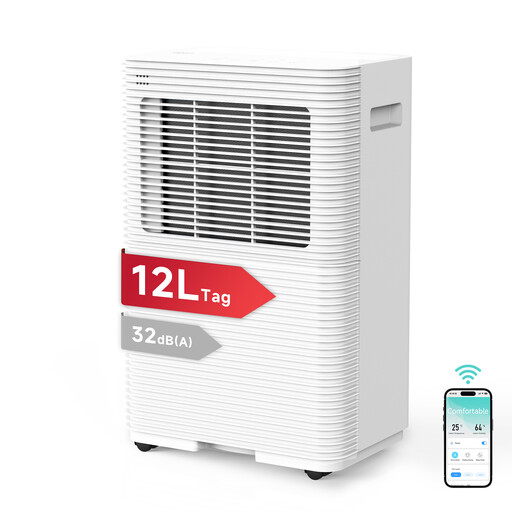 Image unavailable
VINO 12L Smart, 1.8 L tank
Worth considering for a room that matches the stated coverage of 24 m². The title lists a capacity of 12 L/day, a 1.8 L tank and Auto, Dry and Sleep modes. Compare the capacity test conditions and check the noise level of the mode you’ll use.
If you’re planning to use continuous drainage, confirm which hose you’ll need and how it should be routed before installation.
View on Joybuy
 Image unavailable
VINO 20L Smart, 2.5 L tank
Consider this model if the stated room coverage of up to 40 m² suits your needs. The title lists a capacity of 20 L/day, a 2.5 L tank and Auto, Dry and Sleep modes. The stated capacity won’t guarantee the same extraction in your room’s conditions.
If you’ll use it near a bedroom or with continuous drainage, check the noise level for your chosen mode and the hose requirements respectively.
View on Joybuy
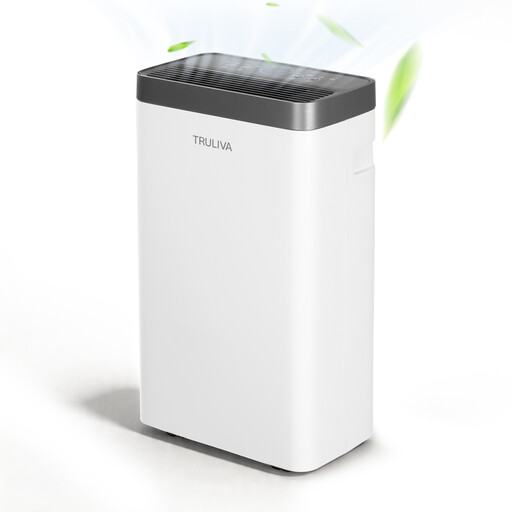 Image unavailable
TRULIVA AP10-2012EE, around 32 m²
The stated coverage of around 32 m² can help you decide whether this model suits your room. The title lists a 24-hour timer, a laundry-drying mode and continuous drainage. If the room will be occupied, check the noise level of the mode you’ll use.
Before planning to drain the tank through a hose, check the installation requirements and the space needed in the instructions.
View on Joybuy
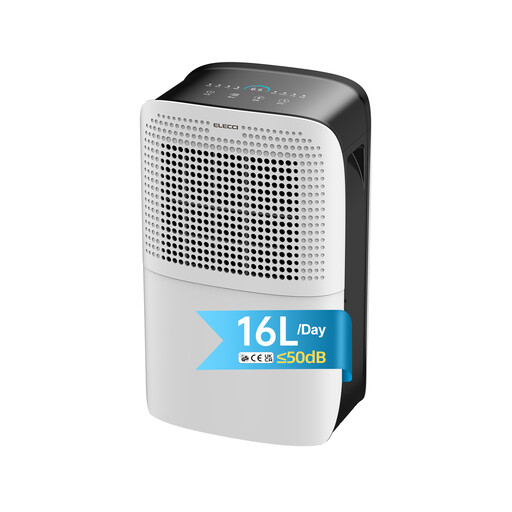 Image unavailable
ELECCI 16L/D, 3.1 L tank
Check how it compares with a room close to the stated coverage of 32 m². The title lists a capacity of 16 L/day, a 3.1 L tank and a drainage hose. Check the conditions behind the capacity figure before comparing it with another model.
If noise or running time is particularly important, check the relevant specifications for the model and the hose drainage requirements.
View on Joybuy
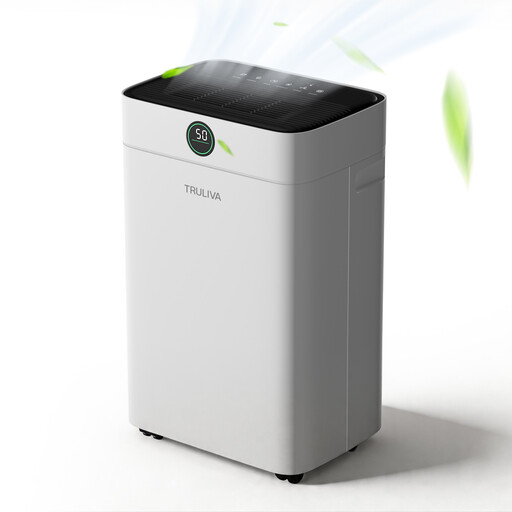 Image unavailable
TRULIVA 25L/Day, 2.8 L tank
Worth considering if you’re looking for an electric appliance with a laundry mode and continuous drainage. The title states a capacity of 25 L/day and a 2.8 L tank. Compare the capacity with its test conditions and check whether the model suits the size of your room.
If it’ll be near a bedroom, check the noise level for the mode you plan to use rather than assuming it’ll be quiet based on the stated capacity alone.
View on Joybuy
Frequently asked questions
When should you investigate the property instead of relying on a dehumidifier?
If the damp persists, mould appears, or you suspect a leak or inadequate ventilation, investigate the cause. Anses and ANIL describe these signs as issues with the property to look into. An appliance for occasional use won’t fix a leak or resolve ventilation problems.
Can you compare two capacity figures in litres per day directly?
Only if the test conditions are comparable. De’Longhi states capacity figures at 30 °C and 80% relative humidity for its DEX210SF and DEXD214RF models. These figures don’t guarantee the same amount of water collected in a room with different conditions. Also check the recommended room size for each model.
Does continuous drainage mean you never have to empty the tank?
It can save you from repeated emptying if the model supports this feature and a compatible hose can drain to a suitable outlet. The specifications for some Rowenta and De’Longhi models list this option. Check the instructions for your chosen model to find out what’s needed for installation.
Is a passive moisture absorber enough if the damp persists?
Don’t rely on a passive moisture absorber alone if the signs persist; investigate the cause first. For a limited need, Rubson states that its AERO 360° works without electricity in rooms up to 20 m². However, this doesn’t mean it will fix a leak or a ventilation problem.


