
Livraison le jour même ou le lendemain

Qualité garantie

Débloquez vos offres de bienvenue: Livraison GRATUITE | Jusqu'à -80 % | 30 jours d'essai gratuits à JoyPlus
Téléchargez l'application
By the Joybuy Team, our Product ExpertsPublished: August 27, 2026
Personalising your home with frames, mirrors, or wall decor is the finishing touch that turns a house into a home. Yet, the mere thought of taking out a drill, making holes in a pristine wall, and dealing with the dust is often enough to deter even the most motivated decorators. For renters, the dilemma is even simpler: damaging walls is strictly forbidden. It's in this context that damage-free picture hanging has emerged as the go-to solution.
A word of caution, however: the market is flooded with broken promises. Before entrusting your most precious items to a simple adhesive, it's crucial to know the pitfalls to avoid, so you don't find your frames in pieces and your walls disfigured.
The 3 Pitfalls to Avoid When Choosing Your Wall Mounting Solution:
To hang a frame without making a hole with complete peace of mind, don't just grab the first adhesive picture hook you see. Your choice should be based on three essential technical criteria.
The first question to ask isn't "how much does my picture weigh?" but "what type of wall will I hang it on?". The performance of a drill-free wall mount is directly linked to the chemistry between the adhesive and the surface.
The real innovation lies not just in the ability to stick, but in the art of clean removal. Technologies have evolved:
The choice isn't just about the adhesive. The shape of the fastener itself must be suited to your object.
We have scrutinised several solutions based on their design, use case, and ability to overcome the pitfalls we've just described.
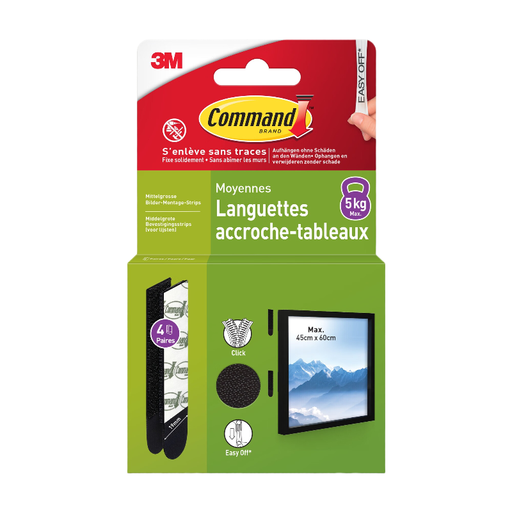
Why it's the right choice: Perfect for those who love to change their wall arrangements with the seasons or as inspiration strikes. The design allows you to swap out a frame without making a new hole or damaging the wall. Invaluable peace of mind for renters and the perpetually undecided.
Its stretch-release adhesive technology was designed for a flawless removal, which directly neutralises pitfall #1 (adhesive that strips paint). Its weight capacity (up to 5 kg for 4 pairs) is clearly specified for use on painted walls.
The ability to hang, remove, and reposition frames endlessly, with no tools or damage. The Velcro-inspired system ensures a firm hold while remaining removable.
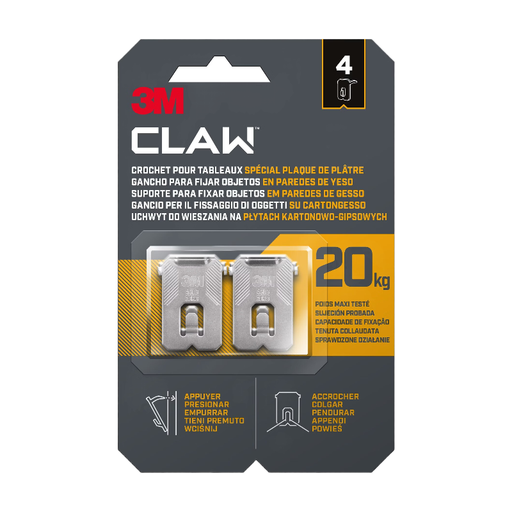
Why it's the right choice: The solution for those who want to hang a heavy mirror, a large canvas, or a glass-fronted frame without relying on an adhesive. This system offers the reliability of a mechanical fastener on the most common material in modern homes: drywall.
It bypasses pitfall #2 (the unrealistic weight capacity of adhesives) by relying on a mechanical grip. Its hardened steel claws lock into the drywall for a foolproof hold, offering a real and reliable weight capacity of up to 20 kg.
An installation with no tools required—just a push of the thumb. Upon removal, the holes left behind are tiny and much easier to patch than a traditional anchor hole.
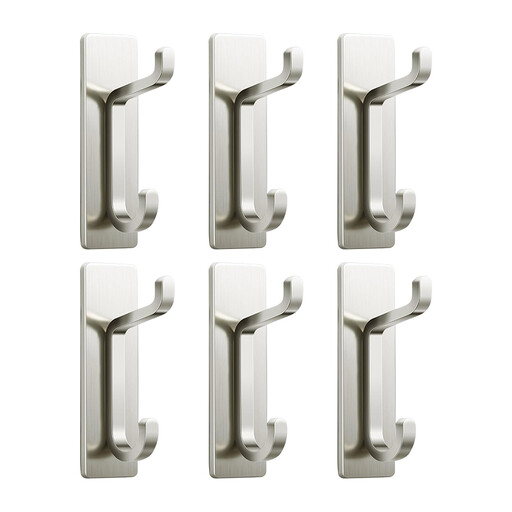
Why it's the right choice: Ideal for everyday needs: hanging a lightweight frame, a calendar, keys, or kitchen utensils. This six-pack of hooks is a simple and cost-effective solution for organising multiple areas of the home without breaking the bank.
This product beats pitfall #3 (surface incompatibility) by clearly stating its specialty: smooth, non-porous surfaces like tile, glass, or stainless steel. By following this golden rule, the user ensures a reliable hold for lightweight objects.
Excellent value for money for adding multiple hanging points in utility rooms (kitchen, bathroom). Its stainless steel design is both discreet and durable.
Most manufacturers, especially for stretch-release strips, recommend waiting at least one hour after applying the strip to the wall. This time is crucial for the adhesive to cure and build its full bonding strength before it bears any weight. Always refer to the product instructions, as this setting time can vary.
As a general rule, it's a very bad idea. The weight of the object is likely to pull the wallpaper away from the wall, and the adhesive will almost certainly tear the surface upon removal. For this type of surface, it's better to opt for specialty needle-point hooks designed for wallpaper, which leave only nearly invisible pinholes.
It all depends on the system. A traditional adhesive hook is single-use: once removed, it will no longer stick. Conversely, systems like Command Strips are designed to be reused. The plastic hook (on the wall or frame side) is permanent; you just need to replace the adhesive strip with a new refill to use it again. This is a much more sustainable and cost-effective approach in the long run.