Anyone avoiding dairy
Whether you’re having it with a bowl of cereal or using it in a recipe, check the ingredients and allergens in the drink you choose. The word “plant-based” alone doesn’t confirm that it meets all your dietary requirements.


For a meal for one, choose an oat drink based on how you plan to use it — for drinking, cooking or adding to coffee — and check the ingredients and allergens on the exact product. If sugar content matters to you, compare the nutritional information per 100 ml rather than relying on the front-of-pack claim alone. Also check that you can use the carton within the stated period after opening.
Whether you’re having it with a bowl of cereal or using it in a recipe, check the ingredients and allergens in the drink you choose. The word “plant-based” alone doesn’t confirm that it meets all your dietary requirements.
If you’re looking for a less sweet-tasting drink for a single serving, distinguish between the claim “no added sugars” and the amount of sugar listed per 100 ml.
If you’re mainly using the drink to make coffee or a cappuccino, a barista version may suit the use recommended by the manufacturer. Still, compare its ingredients with those of a more general-purpose version.
If dairy-free is essential, start by checking the ingredients. Then compare the intended use, sugar content and instructions for use after opening. If you’re cooking for one, you may need several uses to get through a 1 L carton.
| What to consider | What to check | Who this matters to |
|---|---|---|
| Dairy and allergens | The ingredients list and allergens highlighted on the exact product. | If I avoid dairy, I want to check the ingredients before pouring the drink into my meal. Around 36% of consumers rank this as their top priority. |
| Taste and sugar | The exact claim on the carton and the “of which sugars” line per 100 ml. | If I want a less sweet-tasting drink or recipe, I don’t want to confuse no added sugars with no sugars. This is the top priority for around 29% of consumers. |
| Cooking or adding to coffee | The uses recommended by the manufacturer and the ingredients in the version you choose. | Whether I’m making a sauce, a bowl or a coffee, I want a drink suited to what I’m preparing most often, rather than a label that seems to cover everything. Around 21% of consumers prioritise finding a drink that suits its intended use. |
| Pack size and storage | The pack size, as well as refrigeration instructions and how soon to use it after opening. | If I only use a small amount with each meal, I want to finish the carton within the period stated on the packaging. This is the main concern for around 14% of consumers. |
A drink with no added sugars may still contain naturally occurring sugars. So the claim on the front of the pack doesn’t tell you the sugar content on its own.
Compare the “of which sugars” line per 100 ml across the products you’re considering.
Instructions vary by product: the Auchan Bio product listing says to keep it refrigerated at no more than +6 °C and use it within five days of opening.
Before you buy, check the time limit on the carton and consider whether you’ll use it with your next few meals.
Otherwise, you may not use all the drink within the recommended period.
Oatly describes its Barista Edition as being suitable for uses such as frothing and mixing into coffee. That doesn’t necessarily make it the best choice if you’d prefer a short ingredients list for a recipe.
If you cook more often than you make coffee, compare the ingredients in a standard version too.
This term doesn’t tell you everything about the ingredients or allergens. In France, the DGCCRF reminds consumers that allergens must be highlighted in the ingredients list of prepacked foods.
If you need to avoid certain foods strictly, read the label on the product you buy.
The brand’s range includes Original, No Sugars and Barista Edition oat drinks.
Carrefour France listings include Alpro oat drinks, including a version designed for coffee.
Carrefour France’s listing for a 1 L organic oat drink gives its ingredients as water, 11% organic oats, sunflower oil and sea salt.
E.Leclerc offers a 1 L Bio Village organic oat drink with no added sugars.
Auchan France offers a 1 L organic oat drink with no added sugars, suitable for use cold, hot or in cooking.
These products suit different uses: coffee, flavoured drinks or everyday recipes. To choose between them for a meal for one, consider the ingredients in the exact product and how many cartons you’ll be able to use.
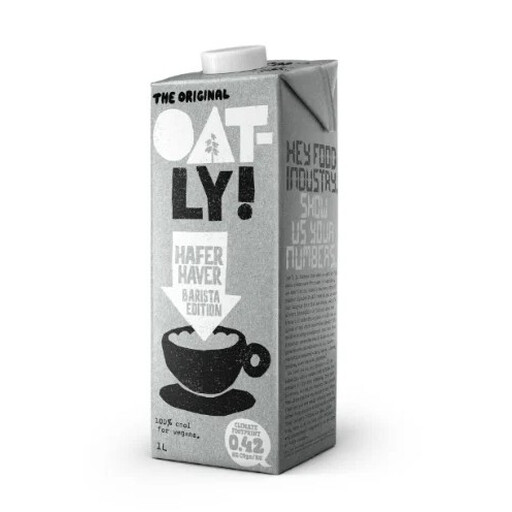 Image unavailable
Worth considering if you mainly make coffee for one and are looking for a barista version. According to Oatly, this version is designed to froth and mix into coffee; check the ingredients and instructions for use after opening on the carton.
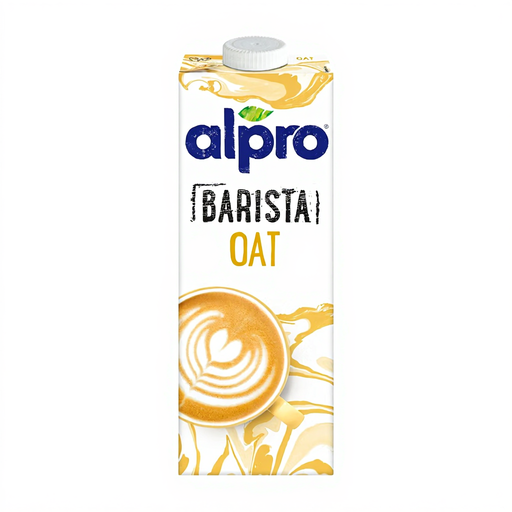 Image unavailable
Another 1 L barista version to consider if you mainly use oat drink in coffee. Before frothing, check the recommended temperature; once opened, plan to use it within the period stated on the packaging.
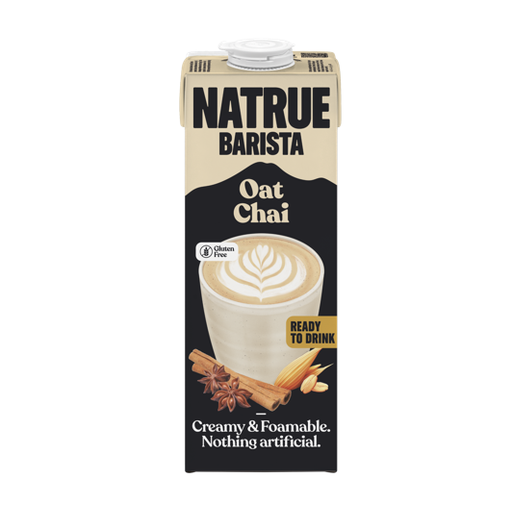 Image unavailable
This chai drink is better suited to a flavoured drink than to anyone looking for a neutral oat base for cooking. Before choosing a 1 L carton, check the ingredients, sugars per 100 ml and storage instructions.
 Image unavailable
This multipack may suit you if you regularly use oat drink in beverages and recipes. It contains three 1 L cartons. If you live alone, check the storage instructions and plan how you’ll use each carton after opening.
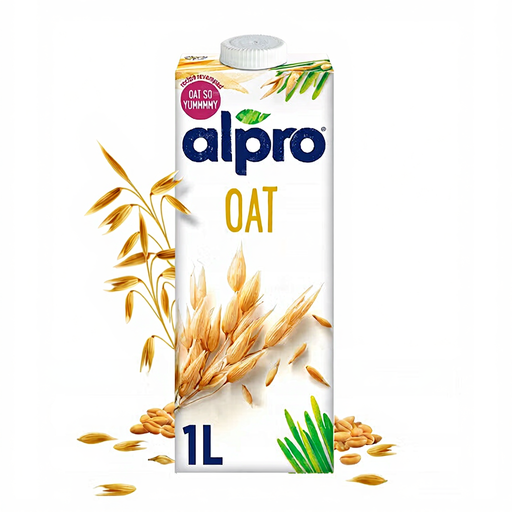 Image unavailable
Worth considering if you’re looking for a 1 L oat drink to enjoy on its own or use in a recipe. If you want a version with no added sugars, check the claim on this product and compare its “of which sugars” line per 100 ml. The packaging also gives instructions for use after opening.
Read the ingredients list and check the allergens highlighted on the exact product, rather than relying on the word “plant-based” alone. For prepacked foods in France, the DGCCRF reminds consumers that allergenic ingredients must be highlighted.
No. A drink with no added sugars may still contain naturally occurring sugars. Check the “of which sugars” line per 100 ml. Carrefour France’s listing for its organic oat drink also distinguishes this claim from being completely sugar-free.
Follow the instructions for the product you’ve bought and plan to use it more than once if the carton contains more than you need for a single meal. As a product-specific example, the Auchan Bio listing says to keep the drink at no more than +6 °C after opening and use it within five days.
Start by comparing drinks per 100 ml so you’re using the same basis. The DGCCRF states that nutritional information is given per 100 g or 100 ml to make comparisons easier. You can then take into account how much you pour into your meal.