For a dairy-free snack, start by checking the ingredients and allergen information on the carton, then compare the sugars, fortification and storage instructions. If a child is following an elimination diet because of a known allergy or intolerance, the word ‘plant-based’ is not enough: the product and how it is used at nursery must meet the medical guidance and, where one is in place, the child’s Individualised Welcome Plan (PAI).
Who is this for?
Parents following dietary exclusion guidance
If your child has dietary restrictions, first check the recipe and snack arrangements with the nursery. The French Health Insurance Authority explains that a PAI can, among other things, record dietary restrictions.
Families choosing a plant-based drink for snack time
If your choice is not part of a medical protocol, compare the ingredients, sugars, nutrients listed and storage instructions after opening. These can vary from one recipe to another.
Families comparing organic recipes and everyday purchases
A short ingredient list or an organic label can help guide your choice, but neither tells you on its own whether the drink is fortified with calcium and vitamins. Also check that the pack size suits your snack-time routine.
What should you check?
Start with your child’s specific dietary restrictions and the nursery’s requirements. You can then use the other criteria to compare recipes that are suitable for this use.
| Criteria |
What to check |
Who is this for? |
| Dietary restrictions |
Ingredients and allergens on the carton; medical guidance, any PAI and the arrangements accepted by the nursery. |
If my child is following an elimination diet, I need to make sure the drink they are given meets their specific guidance. Around 36% of consumers would put this first. |
| Sugars and ingredients |
Sugars per 100 ml, the exact sugar claim and the ingredients list. |
For an everyday snack, I want to understand what the recipe contains rather than rely on the word ‘oat’ alone. Around 29% of consumers would make this their priority. |
| Fortification |
Calcium and vitamins listed on the packaging, distinguishing fortified recipes from those that are not. |
If I want to compare the declared nutrients in different drinks, I check each nutrition table. Around 21% of consumers would make fortification their main criterion. |
| Storage and planning |
Carton size, instructions after opening, and options for storage and serving at nursery. |
When I’m preparing several snacks, the opened carton needs to be stored and served according to the instructions. This would be the main concern for around 14% of consumers. |
Mistakes to avoid
-
Assuming ‘plant-based’ or ‘lactose-free’ means it is suitable for every allergy
These claims alone cannot tell you whether a drink is suitable for a child’s dietary restrictions. Anses, the French Agency for Food, Environmental and Occupational Health & Safety, stresses the importance of checking the ingredients list if you have an allergy or intolerance.
If your child is following a medically supervised elimination diet, check the label on the carton you buy and follow the doctor’s advice and any PAI.
-
Assuming all oat drinks have the same ingredients
The recipes mentioned here differ in their ingredients and fortification. Oatly says, for example, that its organic drink is not fortified, unlike its classic recipe, which contains calcium and vitamins.
Compare the nutrition information per 100 ml and the ingredients list for the specific products you are interested in.
-
Forgetting the instructions for after opening
A large carton may be impractical if you cannot use it within the stated time. For the Auchan oat drink mentioned here, Auchan recommends storing it between 0 °C and +6 °C after opening and using it within 5 days.
Choose the number of cartons to suit your snack-time routine and follow the instructions on the product you buy.
Oat drink brands to know
Alpro
Worth comparing if you’re looking for an oat recipe with added nutrients.
- The Carrefour product page for the Oat No Sugars version lists 9.9% oats, calcium and vitamins B2, D2 and B12.
- These details do not necessarily apply to other Alpro drinks, so check the specific product and label you choose.
Oatly
The range includes a fortified classic drink and an organic version.
- Oatly says its classic drink contains calcium, iodine and vitamins D, B2 and B12.
- According to Oatly, its organic version is not fortified. Check the specific recipe if these nutrients matter to your comparison.
Bio Village (E.Leclerc)
An organic oat drink whose product page lists a short ingredient list.
- For the product mentioned, E.Leclerc lists water, 11% organic oats, sunflower oil and salt.
- The same product page lists 5.0 g of sugars per 100 ml: ‘no added sugars’ does not mean ‘sugar-free’.
Auchan
An oat-based drink that’s also worth considering in terms of storage.
- The product page for the version mentioned lists 10% oats sourced from France.
- After opening, Auchan recommends storing it between 0 °C and +6 °C and using it within 5 days.
Carrefour
The retailer offers product pages for a range of oat drinks, including Alpro.
- The Alpro Oat No Sugars product page details the ingredients and several added nutrients.
- Comparing product pages is no substitute for checking the carton you actually buy when following an elimination diet.
Vemondo (Lidl)
Lidl has featured Vemondo organic oat drink in a pack of 8 × 1 L cartons.
- A multipack may suit families planning several snacks.
- Before choosing a multipack, check the ingredients of the product on offer and the storage instructions for each carton.
Oat drinks on Joybuy
This selection includes classic oat drinks and two Barista varieties. For snack time at nursery, compare the recipe and pack size, then check with the nursery about what it can accept and how it should be stored.
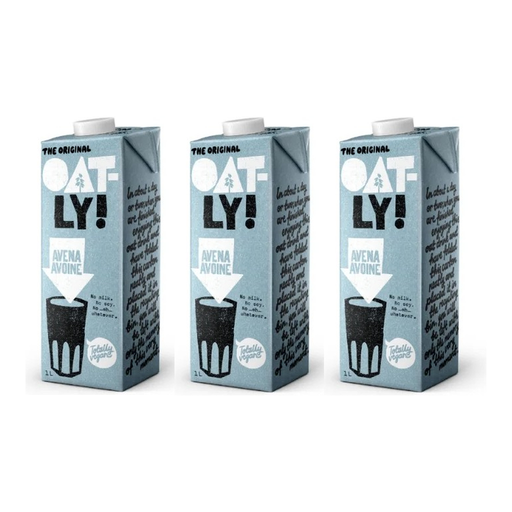 Image unavailable
Oatly Oat Drink, pack of 3 × 1 L
This multipack may be handy for preparing several snacks, provided each carton can be stored according to its instructions.
The product page for this version lists 3.5 g of sugars per 100 ml, as well as added calcium, iodine and vitamins D, B2 and B12. It says to refrigerate after opening.
If your child is following an elimination diet, check the label on each carton and the guidance that applies to them before sending it to nursery.
View on Joybuy
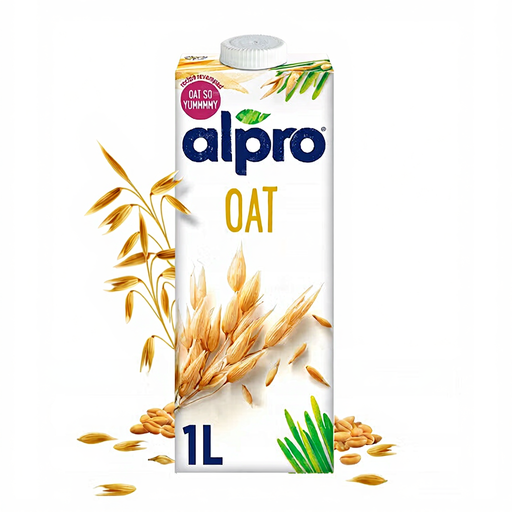 Image unavailable
Alpro Oat Drink, 1 L
This oat drink is worth comparing if you’re looking for a fortified recipe for a dairy-free snack.
The product page for this version lists 10% oats, 3.3 g of sugars per 100 ml, calcium and vitamins B2, B12 and D2. It also lists peas, chicory fibre and oats containing gluten.
Check the ingredients and allergen information on the carton you buy, as well as the instructions for after opening.
View on Joybuy
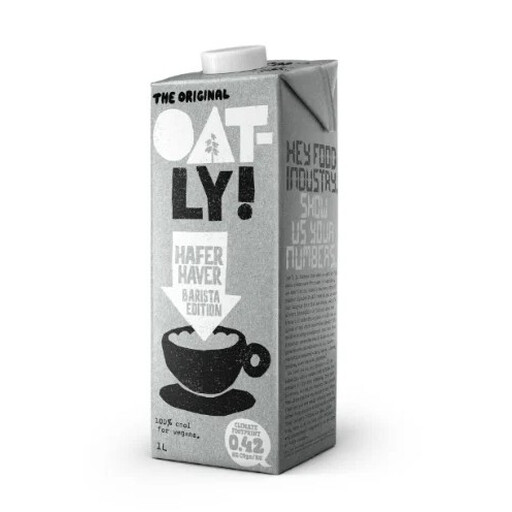 Image unavailable
Oatly Barista Oat Drink, 1 L
This variety is designed for coffee, so check that the Barista recipe is suitable for the snack you have in mind.
The product page lists 10% oats, 3.4 g of sugars per 100 ml, calcium, iodine and vitamins D2, B2 and B12. It mentions gluten from oats and says to refrigerate after opening.
The claim that it contains no milk does not mean you can skip checking your child’s other dietary restrictions.
View on Joybuy
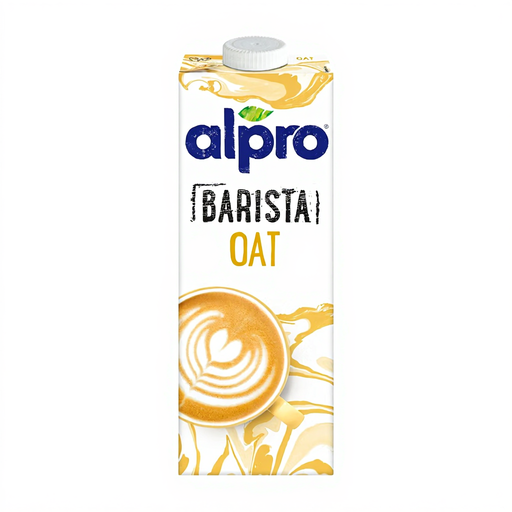 Image unavailable
Alpro Oat Barista, 1 L
Also made with coffee drinks in mind, this variety needs checking to make sure its recipe is right for the snack you’re planning.
The product page lists 10% oats, 3.3 g of sugars per 100 ml and no added sugars, as well as calcium and vitamins D and B12. It mentions gluten from oats and says to refrigerate after opening.
If your child has dietary restrictions, check the label on this variety rather than relying on details for another Alpro drink.
View on Joybuy
 Image unavailable
NATRUE Oat Drink 0 %, 1 L
This product lets you compare a short ingredients list with other oat recipes.
The product page lists 12% oats, 0 g of sugars per 100 ml and a recipe made with water, oats, sunflower oil and salt. It mentions gluten from oats and possible traces of soya or nuts.
The absence of milk from this ingredients list does not mean the drink is suitable for every elimination diet. Check the information on the carton and your child’s guidance.
View on Joybuy
Frequently asked questions
Is a plant-based oat drink automatically suitable for a milk allergy?
No. Being plant-based does not, by itself, mean a drink is suitable for a particular allergy. Check the ingredients and allergen information on the product you buy, then follow the medical guidance specific to your child. The French Directorate-General for Competition Policy, Consumer Affairs and Fraud Control (DGCCRF) says allergenic ingredients must be highlighted on the label.
Do you need a PAI to take a dairy-free drink to nursery?
Not necessarily for a simple food preference. If your child needs adjustments for health reasons, ask the nursery what guidance applies. The French Ministry of National Education and the French Health Insurance Authority say a PAI can help organise a child’s care and specify dietary restrictions in relevant cases.
Does ‘no added sugars’ mean ‘sugar-free’?
No. The two claims do not mean the same thing. The E.Leclerc product page for Bio Village oat drink with no added sugars lists 5.0 g of sugars per 100 ml. Compare the ‘sugars’ line in the nutrition information for each product.
How long can you keep an opened oat drink?
Follow the storage time and temperature on the carton in question. For the Auchan drink mentioned here, the retailer recommends storing it between 0 °C and +6 °C and using it within 5 days of opening.
Does an organic oat drink always contain added calcium?
No. An organic label does not mean a drink is fortified. Oatly says its organic version is not fortified, so check the ingredients and nutrition information for the specific product you’re considering.


