Porridge and cereal fans
You pour oat drink over cereal or use it in pancakes and smoothies. In that case, the ingredients in the product are more important to you than how well it froths.


For cereal, porridge or breakfast recipes, start by comparing plain oat drinks and their ingredient lists. If you’re looking for added nutrients, check whether the specific product is fortified. For a cappuccino or latte, a barista formula is worth considering if a good foam is your priority. In every case, a ‘lactose-free’ claim doesn’t guarantee that a product contains no dairy ingredients, so check the ingredients and allergen information.
You pour oat drink over cereal or use it in pancakes and smoothies. In that case, the ingredients in the product are more important to you than how well it froths.
You mainly make lattes or cappuccinos at the weekend and want a drink designed to froth. Oatly, for example, presents its Barista Edition for this purpose; check the details of the product you choose.
You want to avoid dairy, may be looking for a fortified product, or need to check for a ‘gluten-free’ claim. Check the ingredients, allergens and nutrition information on the specific product.
For a weekend breakfast, start with how you’ll use it most — in a bowl, a hot drink or to get added nutrients — then check any dietary exclusions before choosing a product.
Worth considering: if you mainly use the drink with cereal, in porridge or in recipes, and prefer a short ingredient list.
Check: a simple recipe isn’t necessarily fortified with calcium or vitamins.
Worth considering: if added calcium or vitamins are among your comparison criteria.
Check: added nutrients and ingredients vary by product, and the label alone doesn’t tell you everything about your overall diet.
Worth considering: if you mainly make coffee drinks that you want to froth.
Check: this specialist formula may contain different ingredients from a simple, plain recipe.
| What to consider | What to check | Who is it for? |
|---|---|---|
| For bowls and recipes | Compare the ingredients and the sugars per 100 ml; ‘no added sugars’ doesn’t mean ‘sugar-free’. | If I mainly have cereal or porridge, I want to choose based on the ingredients rather than how well it froths. This would be the top priority for around 31% of the consumers concerned. |
| Coffee and hot drinks | Look for a product designed for barista use and check its ingredient list. | For my weekend lattes, I’m mainly looking for a drink designed to froth. Around 31% of consumers would put this need first. |
| Added nutrients | Check the product’s nutrition information and ingredients to identify added calcium and vitamins. | When I regularly choose an oat drink, I want to know whether it contains added nutrients. This would be a priority for around 23% of consumers. |
| Dietary exclusions and age | Check the ingredients and allergens to avoid dairy, and look for a ‘gluten-free’ claim if needed. Oat drink isn’t a substitute for breast milk or infant formula for babies under 1 year old. | If I need to follow a strict dietary exclusion or choose a drink for a young child, suitability is more important than how it performs in coffee or cereal. This would be the main criterion for around 15% of consumers. |
A drink with no added sugars may still contain naturally occurring sugars. So the wording on the front of the pack alone isn’t enough to compare its sugar content with another carton.
Check the ‘of which sugars’ line in the nutrition information and compare products on the same basis, such as per 100 ml.
A barista product is primarily designed to create foam in coffee drinks. If you only use it in a bowl, this feature may not be the deciding factor for you.
Decide how you’ll use it most, then compare the ingredients in a barista formula with those in a plain formula.
The name of the grain doesn’t guarantee a ‘gluten-free’ claim. For babies under 1 year old, Anses warns of the risks of replacing breast milk or infant formula with drinks that aren’t designed for this purpose.
If you need to avoid gluten completely, look for an appropriate claim on the exact product. For feeding a baby, don’t substitute oat drink for breast milk or infant formula.
These examples relate to specific products: two oat drinks from the same brand may differ in their ingredients, fortification and recommended use.
An oat drink presented for cereal and recipes, with added nutrients listed on the product page reviewed.
The brand distinguishes between a fortified oat drink and a Barista Edition designed for coffee drinks.
An organic oat drink whose Carrefour product page lists a short list of ingredients.
An organic oat drink with no added sugars, presented as suitable for drinking hot or cold.
An E.Leclerc brand offering, among other products, a 1 L carton of organic oat drink with no added sugars.
These products suit two weekend breakfast uses: coffee drinks with the barista versions, and bowls or recipes with the other oat drinks. First choose based on how you’ll use it, then check the ingredients and allergens for the variant you’ve selected.
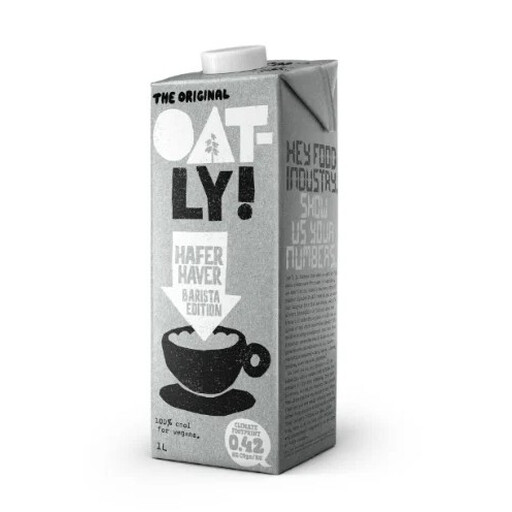 Image unavailable
Worth considering if you mainly make coffee drinks at the weekend.
Size: 1 L. If you need to avoid dairy or gluten completely, check the ingredients and allergens for this product.
 Image unavailable
Worth a look if you use oat drink in cereal or breakfast recipes.
Pack of 3 x 1 L cartons: check that this format suits your consumption. Check the ingredients and allergens if you have a strict dietary exclusion.
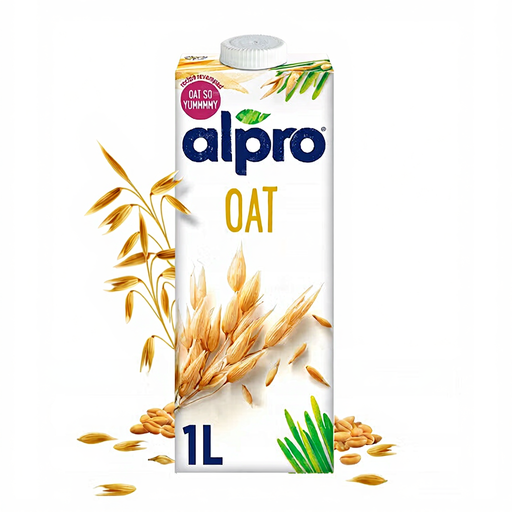 Image unavailable
An option to compare for a bowl of cereal or breakfast recipes.
Size: 1 L. If sugar content or fortification is part of your decision, read the nutrition information and ingredients for this product.
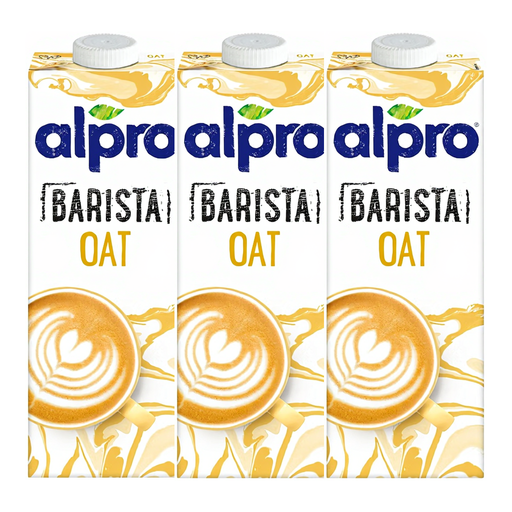 Image unavailable
A barista version worth considering if coffee drinks are your main use.
Pack of 3 x 1 L cartons: consider this format before choosing. Check the ingredients, allergens and preparation instructions on the carton.
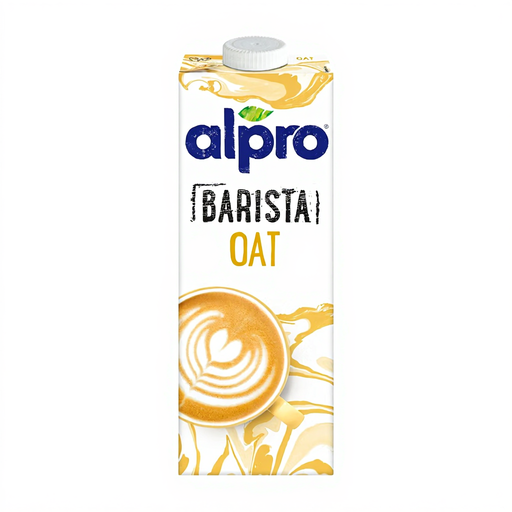 Image unavailable
A barista version worth looking at for weekend lattes and cappuccinos.
Size: one 1 L carton. If you’re comparing this product with the Alpro Oat Barista multipack, check the format and the details for each product.
Don’t assume so from the product name or a ‘lactose-free’ claim alone. If you need to avoid dairy completely, check the ingredients and allergens for the exact product. Oatly explicitly states that its Barista Edition contains no dairy, but this claim doesn’t apply to all oat drinks.
Choose based on what you make most often: compare plain formulas for bowls and recipes, and barista formulas if you want a drink designed to froth in coffee. You don’t need a barista version to use oat drink with cereal; also check the ingredients of the products you’re considering.
Yes, if fortification is one of your criteria, compare the nutrition information for the specific products. Alpro and Oatly product pages describe oat drinks with added nutrients, but their presence doesn’t remove the need to consider your diet as a whole.
No. If you need to avoid gluten completely, look for a ‘gluten-free’ claim on the exact product rather than relying on the word ‘oat’. In the European Union, Regulation 828/2014 governs this claim and the conditions that apply to products containing oats.
No. It shouldn’t replace breast milk or infant formula for a baby under 1 year old. Anses warns against replacing these with drinks that aren’t designed for infant feeding; the Auchan Bio drink’s product page carries the same warning.