People avoiding dairy
Whether it’s for cereal, a recipe or a hot drink, check the ingredients and allergens on the carton you choose. The DGCCRF reminds consumers that allergens must be highlighted on the label.


Choose an oat drink based on how you’ll mainly use it: a short-ingredient recipe for cereal or cooking, a product with the calcium and vitamin levels you’re looking for, or a Barista version if you mostly make frothy coffees. Dairy-free doesn’t necessarily mean gluten-free or sugar-free, so check the label of the specific product you choose.
Whether it’s for cereal, a recipe or a hot drink, check the ingredients and allergens on the carton you choose. The DGCCRF reminds consumers that allergens must be highlighted on the label.
‘No added sugars’ doesn’t replace the ‘of which sugars’ line in the nutritional information. Compare the values per 100 ml, then take into account how much you pour.
If you want to froth your drink for a latte or cappuccino, look for a product explicitly intended for this use. Oatly, for example, describes its Barista Edition as a blend designed for frothy hot drinks.
Start with how you plan to use it, then compare the ingredients, allergens and nutritional information of the products that suit you. A coffee blend and a short-ingredient recipe won’t necessarily meet the same needs.
| Criterion | What to check | Who it matters to |
|---|---|---|
| Dairy and allergens | Read the ingredients list and check which allergens are highlighted. If you need a gluten-free drink, look for a specific claim: being dairy-free isn’t enough. | I want to avoid dairy without assuming a plant-based drink also meets my other dietary requirements; around 31% of consumers make this their top priority. |
| Sugars | Compare ‘of which sugars’ per 100 ml, even when a carton says ‘no added sugars’. | At breakfast, I mainly want to know how much sugar is in the drink I pour; this is the top criterion for around 25% of consumers. |
| Use in coffee or cooking | For frothy coffee, check that it’s labelled Barista. For recipes, look at the suggested uses for the product. | If I mainly use this drink to make coffee or cook, its intended use matters most to me; around 25% of consumers prioritise this. |
| Ingredients and storage | Compare the ingredients, pack size and storage instructions. Check the stated calcium or vitamin content separately if you’re looking for these nutrients. | I prefer ingredients that suit me and a pack size I can use according to the storage instructions; this is the priority for around 19% of consumers. |
A dairy-free drink may contain oats. So, being dairy-free doesn’t tell you whether it’s suitable for a gluten-free diet.
If this is important to you, look for a ‘gluten-free’ claim on the specific product and check its allergens again.
These claims don’t mean the same thing: according to E.Leclerc, Bio Village’s no-added-sugar drink contains 5,0 g of sugars per 100 ml.
Compare the ‘of which sugars’ figure per 100 ml with the amount you actually use.
Oatly markets its Barista Edition for making frothy hot drinks. That doesn’t mean it’ll be better for cereal or cooking.
If you mainly plan to cook with it or pour it over cereal, compare the ingredients and nutritional information too.
How long a drink keeps depends on the product. Auchan says its organic oat drink should be kept in the fridge and used within five days of opening.
Choose a pack size that suits how much you drink and follow the temperature and time limits printed on the carton.
A 1 L carton that you don’t finish within the stated time may go to waste.
The brand’s range includes a No Sugars Oat Drink in a 1 L carton.
Oatly’s oat drinks include Original, No Sugars and Barista Edition, each with a different recipe and suggested use.
Carrefour Bio offers an organic oat drink in a 1 L carton.
The Bio Village range includes a no-added-sugar organic oat drink in a 1 L carton.
Auchan Bio offers a no-added-sugar organic oat drink, suitable for cold and hot drinks as well as cooking.
This selection mainly includes oat drinks for coffee, as well as a plain oat drink to consider for other uses. First choose based on the recipe and how you plan to use it, then check the information on the carton.
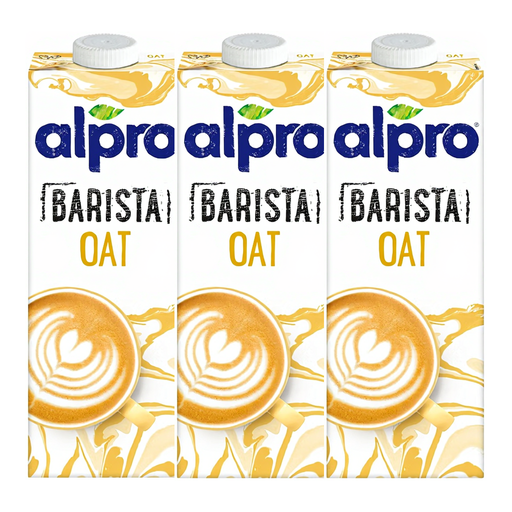 Image unavailable
Worth considering if you make coffee drinks and regularly use several cartons.
Check the allergens and storage instructions on each carton before use.
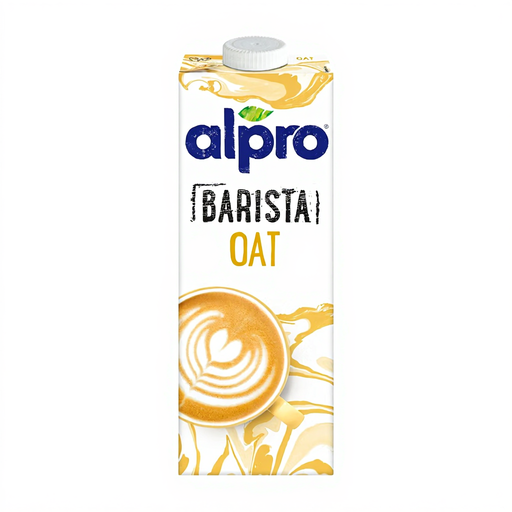 Image unavailable
The single carton is a good option if you’d like to try an oat drink designed for coffee before choosing a multipack.
To compare sugars with another drink, check the ‘of which sugars’ figure per 100 ml for the product on sale.
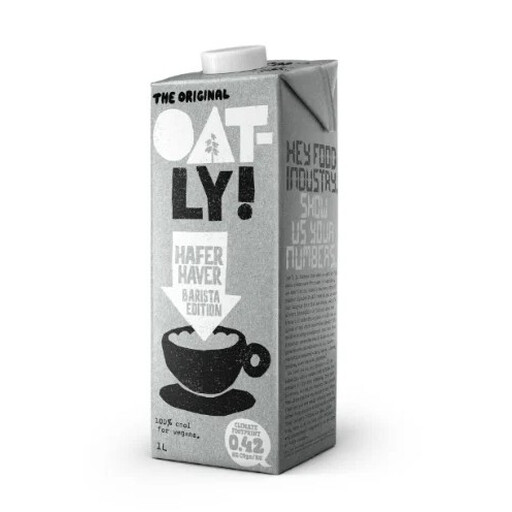 Image unavailable
Consider this if frothy coffees are your main use: Oatly recommends its Barista blend for this purpose.
Compare its ingredients and nutritional information with those of the other oat drinks you’re interested in.
 Image unavailable
This plain oat drink is worth considering for cereal or cooking if you’re not looking for added flavour.
If you need to avoid gluten, check the claim and allergens on the exact carton before choosing it.
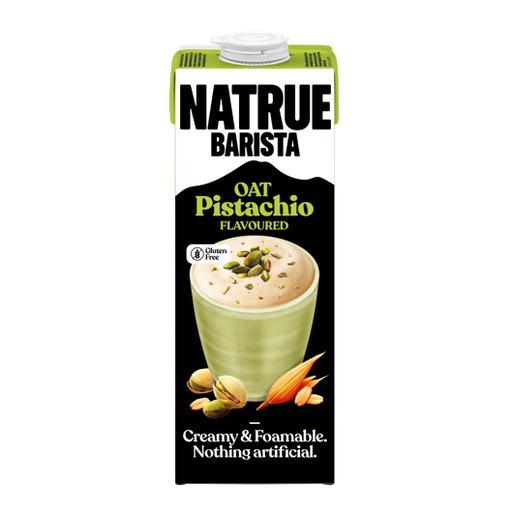 Image unavailable
Consider this for pistachio-flavoured coffee rather than recipes that call for a neutral-tasting oat drink.
If you need to avoid nuts or soya, check the allergen information on the exact product packaging.
Not necessarily: being dairy-free tells you nothing about whether a drink contains gluten. If you need a gluten-free product, look for this claim on the specific product and check its allergens.
No. A drink with no added sugars may still contain sugars: E.Leclerc lists 5,0 g per 100 ml for its Bio Village oat drink carrying this claim. The ‘of which sugars’ line lets you compare products on a like-for-like basis.
Start by checking the ingredients list, highlighted allergens and nutritional information, then look at the storage instructions. The DGCCRF reminds consumers that allergens must be highlighted on food labels.
Don’t replace infant formula with an ordinary oat drink without advice tailored to your baby’s diet. Auchan states that its organic oat drink isn’t suitable as a replacement for breast milk or infant formula for babies under one; speak to a healthcare professional for advice.
Follow the time limit and temperature printed on the carton you buy, as these vary by product. For its organic oat drink, Auchan recommends refrigerating it at no more than +6 °C and using it within five days of opening.