Homes with a mix of hard floors and carpets
If you clean tiles, wooden floors and carpets, compare performance and floorheads for each surface instead of relying on the wattage alone.


For your main vacuum cleaner in a large home with different floor types, start by looking at bagged and bagless cylinder models. A bagged model is a good choice if you want to minimise contact with dust, while a bagless one saves you from buying bags but means you’ll need to empty the container. A stick vacuum or robot vacuum is better suited to easy handling, automated cleaning or quick touch-ups. When choosing a cylinder vacuum, compare the floorheads for your surfaces, cleaning radius, weight and the maintenance required for the specific model.
If you clean tiles, wooden floors and carpets, compare performance and floorheads for each surface instead of relying on the wattage alone.
If you need to clean several rooms in one go, cleaning radius and capacity matter, as does the weight you’ll need to move, particularly between floors.
Choosing between a bag and a dust container affects how you empty the vacuum cleaner. Also check the filters and compatible consumables for the model you’re considering.
For a large home, start with the floor types you have most of, then check that the format and maintenance requirements suit how you move around and your cleaning routine.
Consider it: if you’d prefer to limit contact with dust when emptying the vacuum; Que Choisir’s guide draws this distinction between bagged and bagless models.
Bear in mind: you’ll need to replace the bags and make sure you have a supply of compatible ones.
Consider it: if you’d rather avoid buying bags and don’t mind emptying the dust container.
Bear in mind: the dust container and filters will need maintaining as set out in the model’s instructions.
Consider it: if easy handling, automated cleaning or quick touch-ups matter more than having one main appliance for every surface.
Check: before replacing a cylinder vacuum, make sure this option also meets your needs for carpets, furniture and soft furnishings.
| What matters to you | What to check | Who is this for? |
|---|---|---|
| Performance on different floors | Check how the vacuum performs on the surfaces you have most of, and which floorheads are supplied for wooden floors or carpets. | With wooden floors and carpets to clean regularly, I want to know how the appliance performs on each, not just its motor power. Around 36% of consumers put performance across different floor types first. |
| Coverage and ease of handling | Compare the cleaning radius, capacity and weight, particularly if your home has stairs. | When cleaning takes me through several rooms or floors, I want to avoid changing sockets too often without choosing an appliance that’s awkward to carry. For around 29% of consumers, coverage and ease of handling are the top priorities. |
| Dust management | Check how to remove the bag or empty the dust container, as well as the filter type and maintenance required. | If emptying the vacuum stirs up dust, I want to understand what’s involved before choosing between a bag and a dust container. Dust management comes before other considerations for around 21% of consumers. |
| Long-term maintenance | Find out which bags or filters are compatible and check whether spare parts are available for the model you choose. | Before buying, I want to be sure I can find the consumables I need and keep the appliance in good condition over time. Around 14% of consumers prioritise maintenance and repairability above all else. |
Que Choisir points out that motor power alone doesn’t tell you how well a vacuum will perform in practice. Its tests assess results on different surfaces, including tiles, wooden floors and carpets.
Think about which floors you clean most often, then look for performance results or usage guidance for those surfaces and the supplied floorhead.
Not having to buy bags doesn’t mean you can skip emptying the dust container or maintaining the filters.
Compare the steps set out in each model’s instructions and check the references for compatible consumables.
A floorhead for wooden floors, a turbo brush and nozzles for furniture or awkward corners aren’t interchangeable for every use. Which ones are included depends on the model.
Check the list of accessories supplied with the version you’re choosing and make sure any extras you might need are compatible.
Any essential accessory that isn’t included will need to be bought separately.
Proper maintenance and the option to replace certain parts can help keep your appliance working for longer. ADEME recommends considering repairing a vacuum cleaner before getting rid of it.
If a repairability rating is shown, check it for the specific model and find out about compatible spare parts and consumables too.
The bagged cylinder vacuums in the Guard L1 range offer different filtration and accessory options, depending on the model.
The bagged Silence Force Effitech, Power XXL and Compact Power ranges offer models to compare by capacity and advertised features.
Bosch bagless cylinder vacuums are worth considering for their dust container, cleaning radius and filter maintenance requirements.
Philips offers bagged and bagless cylinder vacuums, with floorheads, accessories and capacities varying between ranges.
This bagged cylinder vacuum could suit you if you’re looking for a main appliance to clean several rooms. Check its features and maintenance requirements against your floor types before choosing.
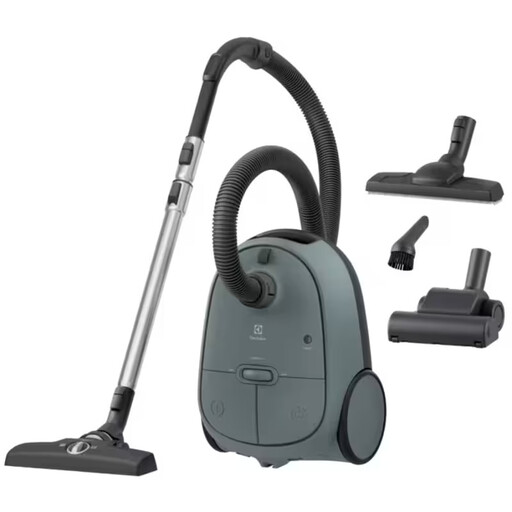 Image unavailable
This bagged cylinder vacuum is worth considering for your main cleaning routine across several rooms. Check that the supplied floorheads suit your floors, consider how easy it will be to move if you have stairs, and find out which bags are compatible.
Start with the floor types you have most of and the floorheads supplied. Que Choisir’s testing method assesses vacuuming on different surfaces separately, including tiles, wooden floors and carpet. Wattage alone can’t replace a comparison based on the surfaces in your home.
Not necessarily. A bagged model needs its bags replacing, while a bagless one needs its dust container emptied and filters maintained. Check the instructions and consumables for the model you’re considering to see which routine suits you best.
No. A filtration feature or marketing claim isn’t enough to prove a medical benefit. Check the filtration system on the specific model and follow the maintenance instructions in its manual. Don’t assume it will have an effect on your health.
Consider having it repaired or donating it if it’s still in working order. Otherwise, take it to an appropriate collection point for electrical equipment. ADEME outlines these options for old vacuum cleaners.