Homes with rugs or fitted carpets
If the vacuum will do the main cleaning of your carpets, look separately at its results on carpets and on embedded fibres. These are two distinct measurements in UFC-Que Choisir’s test protocol.


If you mainly need to clean carpets and large spaces, choose a cylinder vacuum by comparing its test results on your floors with the brush supplied, rather than looking at its wattage alone. UFC-Que Choisir’s guide favours bagged models for suction and less direct exposure to dust when emptying. A bagless model may suit you if you’d rather not buy bags and are happy to empty and clean the bin. A stick vacuum or robot is better suited to quick clean-ups, unless its carpet performance and operating conditions genuinely meet all your cleaning needs.
If the vacuum will do the main cleaning of your carpets, look separately at its results on carpets and on embedded fibres. These are two distinct measurements in UFC-Que Choisir’s test protocol.
If you need to move between hard floors and carpets and clean several rooms, the operating radius, how easily the brush moves and the accessories all matter just as much in everyday use as suction performance.
Choosing between a bag and a bin depends on the availability of compatible bags, filter maintenance and how you want to dispose of dust. According to UFC-Que Choisir, emptying a bin involves more direct contact with dust than removing a bag.
Start with test results for the floors in your home, then check what comes in the box and what maintenance is required. If a stick vacuum or robot is meant to replace your cylinder vacuum rather than complement it, assess whether it can handle a whole cleaning session.
| What to check | Points to consider | Your needs |
|---|---|---|
| Performance on different floors | Compare test results on carpets, embedded fibres and hard floors. Check which brush was used and, if the test covers it, how performance changes as the bag or bin fills. UFC-Que Choisir’s test protocol assesses these surfaces separately. | My carpets need regular, thorough cleaning, but I also need to vacuum my hard floors. The motor’s wattage alone doesn’t tell me how much dirt the vacuum picks up from each surface. |
| Brush supplied | Check the accessories included with the exact model, including whether it comes with a turbo brush. Look for results obtained using the head supplied and consider how easily it moves over carpet. | If fibres or pet hair are left in my carpets, I want to know which brush was tested. A head that’s difficult to push can also make cleaning a large room a chore. |
| Bag or bin | For a bagged model, check which bags are compatible and whether they’re readily available. For a bagless model, look at how the bin is emptied and how easy the filters are to access and maintain. UFC-Que Choisir’s guide distinguishes between these two ways of managing dust. | I’d rather either remove a bag or avoid buying them altogether. If I choose the latter, I’m happy to empty and clean the bin regularly. |
| Manoeuvrability | Check the operating radius, weight, bag or bin capacity and storage requirements. On carpet, also consider how much resistance the brush offers as you move it: UFC-Que Choisir noted this issue with one tested model. | I need to cover several rooms without changing sockets too often or struggling to move the floor head. |
| Secondary appliance | For a stick vacuum, compare battery life in the mode you’ll use and its test results on carpets. For a robot, check how it performs on carpets, in corners and along edges, as well as how the bin is emptied. UFC-Que Choisir reports limitations in suction and battery life at high power for stick vacuums. | A quick clean between deeper cleans would be useful. If I want to do away with my cylinder vacuum, the alternative must also handle my carpets and all the floor space that needs cleaning. |
| Maintenance and repair | Check how easy it is to access the filters and brushes, which parts can be replaced and the repairability index, if available. ADEME recommends considering repair before disposing of a vacuum cleaner. | I want to be able to maintain the appliance and look into having it repaired if a part breaks. |
The motor’s power alone won’t tell you how much dust a vacuum will pick up from a carpet. The floor head and how it makes contact with the floor matter too.
Compare test results on carpets, fibres and hard floors, then check that the brush used in the test comes with the exact model you’re considering.
A bin does away with this consumable, but emptying it and cleaning the filters are different maintenance tasks. According to UFC-Que Choisir, emptying a bin means more exposure to dust than removing a bag.
Weigh up the availability of compatible bags against the time you’re willing to spend emptying and maintaining the bin.
Accessories vary from one model to another. A result achieved with a turbo brush won’t necessarily reflect what’s included with another version.
Check the accessories listed for the exact model and, if possible, look for a test carried out with the brush supplied.
The problem may be with a part or a component that needs maintenance, rather than the whole vacuum cleaner. ADEME recommends considering repair before disposing of an appliance.
Check the hose, brushes and filters, then look into replacement parts and repair options before arranging for the appliance to be collected.
The features below relate to specific ranges or models; they don’t guarantee performance on your carpets or mean that every version comes with the same accessories.
The bagged and bagless cylinder vacuum range includes models worth comparing for their carpet-cleaning brushes and stated noise levels.
The ProAnimal models offer two distinct configurations to compare: a bagless bin or a bagged model with a turbo brush.
The bagged Complete C3 range includes versions with different accessories for different floors and uses.
The bagged Performer range is worth a look if its stated noise level and the brush supplied are important to you.
These models include two bagged cylinder vacuums and one bagless cylinder vacuum. Compare their brushes and maintenance requirements against your carpets and the size of the area you need to cover. Their inclusion here doesn’t take the place of a comparative test.
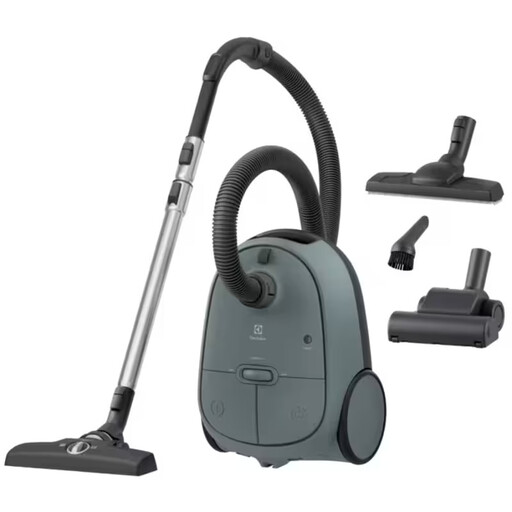 Image unavailable
For regular cleaning of carpets and large rooms, check that the brush supplied is suitable for your carpets and compare test results obtained with that brush. This model uses bags, so check the reference for compatible consumables and whether they’re available.
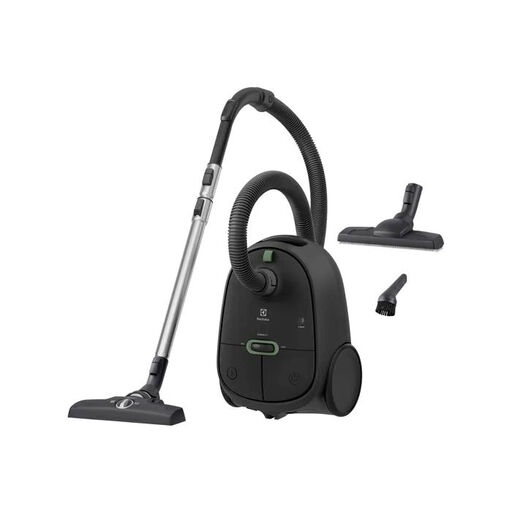 Image unavailable
If you switch between hard floors and carpets, look at results obtained with the brush supplied and check the accessories included with this model. You’ll also need compatible bags to use it.
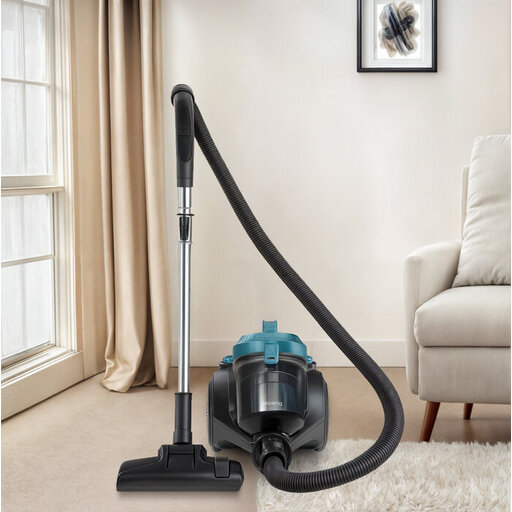 Image unavailable
This bagless cylinder vacuum means you won’t need to buy bags, but you will need to empty the bin. For large rooms with carpets, check its operating radius, the brush supplied and test results on carpets before deciding whether it can handle your main cleaning.
Compare how much dust is picked up from carpets and the results on embedded fibres, then look at performance on your other floors. UFC-Que Choisir’s test protocol assesses these separately. Also check which brush was used and, if the test covers it, how performance changes as the bag or bin fills.
A bagged model is a good starting point if suction and less direct exposure to dust when emptying are your priorities: UFC-Que Choisir’s guide favours it over a bagless model. Choose a bin instead if you’d rather avoid bags and are happy to empty it and maintain the filters. Then compare the performance of specific models on your floors.
Not without checking that it can handle a whole cleaning session. UFC-Que Choisir reports that stick vacuums often have lower suction on rugs and thick carpets, as well as limited battery life at full power. Check test results for your floors and battery life in the mode you’ll use.
A robot can clean regularly, but it won’t automatically replace your main vacuum. Check its performance on carpets, along edges and in corners, as well as how it handles thresholds and how often the bin needs emptying. If it’s a robot vacuum mop, also check how it deals with carpets while mopping.
First, check which parts need maintenance and whether the appliance can be repaired. ADEME recommends considering repair. If the vacuum has reached the end of its life in France, find out about take-back schemes or where to drop it off for electrical and electronic equipment recycling.