Who are these options for?

Cyclists looking for a clear protein serving

After a ride or between meals, you want to know how much protein you’ll get from the serving you eat, rather than choosing a snack simply because it tastes of hazelnut. Remember to consider it as part of your overall intake.

Cyclists who prefer plain hazelnuts

You want to add unsalted, unsweetened hazelnuts to a meal or snack without mistaking them for an enriched product. Manger Bouger recommends a small handful of unsalted, unsweetened nuts each day.

Cyclists who pay attention to ingredients

Whether you’re choosing plain hazelnuts, bars, wafers or desserts, check the recipe, allergens, any sweeteners and the product’s storage instructions before deciding when to eat it.

What should you look for first?

Start with how you plan to use it — as a snack to take with you, part of a post-ride meal or a snack at home — then compare the information per serving and any practical requirements.

What matters What to check Who is this for?
Protein per serving Grams of protein in the serving you’ll eat; what else is included in the meal. After a ride, I want to know how much protein my snack provides so I can factor it into my meal. Around 36% of consumers prioritise a clear amount of protein.
Portability and tolerance A format you can take with you; storage requirements and ingredients to try in the conditions you plan to use it. If I eat on the go, I need a format I can carry and know I tolerate. This is a priority for around 29% of consumers.
Ingredient suitability Ingredient list, highlighted allergens and any warnings about traces. An allergy or dietary restriction may determine my choice before protein content does. Around 21% of consumers would put ingredient suitability first.
Preference for plain options Unsalted, unsweetened hazelnuts; nutritional information for the pack you choose. If I want to add plain hazelnuts to a snack, I don’t necessarily need an enriched bar. Around 14% of consumers would prioritise this type of snack.

Common misconceptions to avoid

  • Assuming the hazelnut or protein content from the flavour

    A hazelnut-flavoured bar isn’t necessarily made mostly from hazelnuts. For example, Carrefour’s product listing for the Isostar bar states that it contains 2.6% roasted hazelnuts.

    Compare the ingredient list and protein per serving before choosing between a bar and plain hazelnuts.

  • Choosing a bar to eat during exercise without trying it first

    Recipes vary. Monoprix’s listing for the Nutramino wafer, for example, flags certain allergens and warns that excessive consumption may have a laxative effect.

    If you plan to take a product on a ride, check the ingredients and try it first during your usual training routine.

  • Thinking an enriched product is essential for sport

    Anses warns about the risks of some supplements and enriched foods marketed to athletes, including adverse effects and, depending on the product, issues relating to prohibited substances.

    Don’t choose a product on the promise of improved performance alone. For a personalised plan or competition, seek advice from a qualified professional.

  • Taking a chilled dessert along as a pocket-sized snack

    Monoprix’s listing for the HiPRO chocolate and hazelnut dessert states that it must be kept between +1 °C and +6 °C.

    Keep this type of dessert chilled and save it for a time when you can meet its storage requirements.

Retailers and brands to know

Carrefour

Carrefour’s product listing for the Isostar hazelnut protein bar lets you check the recipe for this particular product.

  • The stated proportion is 2.6% roasted hazelnuts.
  • The recipe also lists milk, wheat gluten and soya. Check the full ingredients list if any of these matter to you.

Auchan

Auchan lists a 55 g Fulfil chocolate and hazelnut bar.

  • Auchan states that each bar contains 19 g of protein, making it easy to compare with the serving you’ll eat.
  • Check the ingredients and allergens before choosing it to suit your dietary requirements.

Monoprix

Monoprix lists two different formats: a Nutramino hazelnut wafer and a HiPRO chocolate and hazelnut dessert.

  • The wafer may be suitable to take with you, while the dessert is an option for when you can keep it chilled.
  • The wafer lists milk, soya, almond and hazelnut among its ingredients. The HiPRO dessert contains milk and must be kept between +1 °C and +6 °C.

E.Leclerc

E.Leclerc lists a SPORT chocolate and hazelnut protein bar, sold in a pack of three weighing 105 g in total.

  • To compare it with another bar, check the pack for protein per serving, sugars, sweeteners and allergens.

Aldi

Aldi’s roasted hazelnuts are a nut option rather than a protein bar.

  • They’re an option to add to a meal or snack.
  • Check the ingredients and nutritional information on the pack you choose; don’t assume the product qualifies as “high in protein”.

A hazelnut bar on Joybuy

This pick is a 55 g chocolate and hazelnut bar to consider as a portable snack after a ride. Compare its serving size and ingredients with your needs before choosing it.
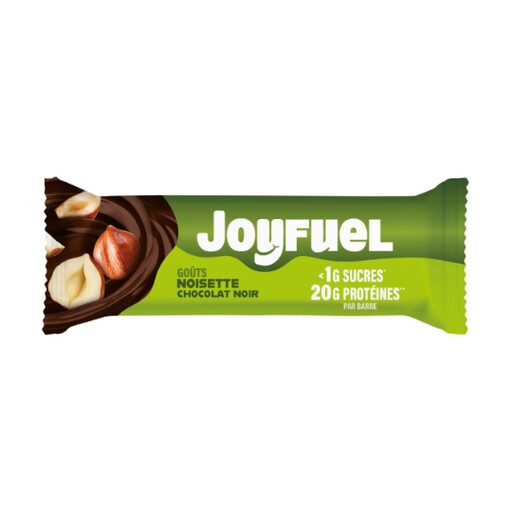
Joyfuel dark chocolate and hazelnut bar, 55 g

Joyfuel dark chocolate and hazelnut, 55 g

This 55 g bar may suit you if you’re looking for a snack to take with you after a ride. Check the protein per bar and the ingredients list before comparing it with plain hazelnuts or another bar. Pay particular attention to allergens and polyols if they affect your choice or how well you tolerate the product.

View on Joybuy

Frequently asked questions

Are plain hazelnuts automatically “high in protein”?

No. The presence of plant protein alone isn’t enough to justify this claim. According to the European Commission’s Knowledge Centre for Food and Agriculture, a “high protein” claim requires at least 20% of a food’s energy value to come from protein. So check the label for the specific product.

Which format should you choose after a bike ride?

A bar or wafer is convenient to take with you, while a chilled protein dessert needs to be kept at the right temperature. Plain hazelnuts can also be part of a meal or snack, but on their own they aren’t a substitute for a nutrition plan suited to your ride.

Which allergens should you check in a hazelnut-flavoured bar?

Start with the ingredients list for the bar you choose. Depending on the product, the recipes mentioned may contain hazelnuts, milk, soya, wheat gluten, peanuts or almonds. The DGCCRF states that allergenic ingredients must be highlighted on the labels of relevant food products.

Is an enriched product necessary for recovery?

Not necessarily. Your choice depends on your overall intake and how you plan to use the product, not on one item alone. Anses warns about the risks associated with some supplements and enriched foods for athletes. For a personalised goal or competition, seek advice from a qualified professional.

Can you take a chocolate and hazelnut protein dessert on a bike ride?

Only if you can keep the HiPRO dessert listed by Monoprix between +1 °C and +6 °C. Otherwise, save it for a post-ride snack somewhere it can be kept chilled.