What should you look for before choosing?
For a cycling snack, first choose a format you can carry and eat, then check the carbohydrates per portion and the ingredients. A jar of spread is better suited to eating with bread or another accompaniment than to having straight from the jar while cycling.
Individually wrapped wafer
Worth considering: if you want a separately wrapped portion with no utensils needed; Nutella France states that a 22 g B-ready contains 13.4 g of carbohydrates.
Bear in mind: one wafer is still below the hourly range cited by the Journal of Sports Sciences for prolonged exercise.
Dip with sticks
Worth considering: if you want a portion of hazelnut and cocoa spread with sticks, without having to make a sandwich.
Bear in mind: Nutella France states that its 52 g portion contains 32 g of carbohydrates; don’t apply this figure to a dip of a different weight.
Spread in a jar
Worth considering: if the recipe is your priority and you’ll eat the spread with something else before or after your ride.
Bear in mind: a jar isn’t a ready-to-eat portion for cycling; you’ll need to plan separately for what to eat it with and how much to have.
| Criteria |
What to check |
Who it matters to |
| Carbohydrates per portion |
Compare the grams of carbohydrates per item and how many items you plan to take, without using the figure for a different format. |
On a long ride, I want to know what each portion provides so I can plan what to take. Carbohydrate intake is the top priority for around 33% of consumers. |
| Easy to carry |
Check whether each portion is individually wrapped and can be eaten without utensils or anything extra to eat it with. |
If I’m not making a sandwich, I’d rather be able to take a snack from my pocket or saddle bag. Around 27% of consumers prioritise this convenience above all else. |
| Ingredients and labelling |
Read the allergens and ingredients for the exact product, then check its nutritional information and Nutri-Score, if displayed. |
When certain ingredients matter to my choice, I check the recipe before the format. This is the top priority for around 20% of consumers. |
| Taste and texture |
Know the difference between a filled wafer, a dip with sticks and a jar of spread; compare the hazelnut content where it’s listed. |
I’m mainly looking for a treat with a texture and recipe I enjoy, even if I eat it before or after cycling. This is the main preference for around 20% of consumers. |
Individual formats available on Joybuy
These two products are the ready-to-eat options mentioned above: individually wrapped wafers and a dip with sticks. Compare the exact formats before using nutritional values per item to plan what to take on a ride.
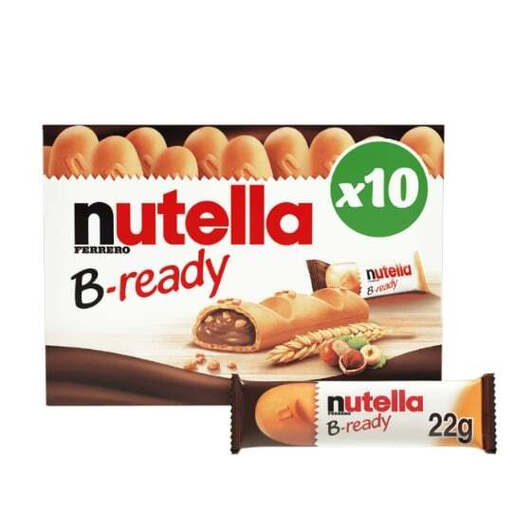 Image unavailable
Nutella B-ready, 10 x 22 g wafers
Worth considering if you want to slip an individually wrapped wafer into your bag, without making a sandwich.
The pack contains 10 pieces, weighing 220 g in total. Nutella France states that each 22 g piece contains 13.4 g of carbohydrates; one piece alone won’t provide everything you need for prolonged exercise. Check the allergens and Nutri-Score on the pack you buy.
View on Joybuy
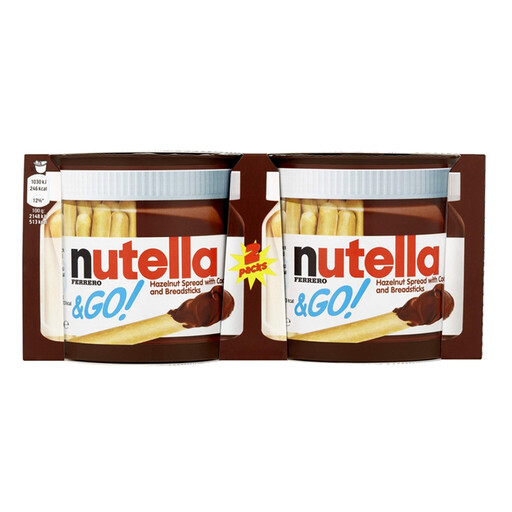 Image unavailable
Nutella & GO!, 78 g dip with sticks
Worth considering if you’d prefer a portion of hazelnut and cocoa spread with sticks, without needing anything extra to eat it with.
This product weighs 78 g: the 32 g of carbohydrates stated by Nutella France for a 52 g portion isn’t the value for this portion. Check the label on the 78 g format for the carbohydrates per item, allergens and any Nutri-Score.
View on Joybuy
Frequently asked questions
Is one Nutella B-ready wafer enough for a long ride?
Don’t rely on one wafer as your only source of energy for prolonged exercise. Nutella France states that each 22 g piece contains 13.4 g of carbohydrates, while a 2011 article in the Journal of Sports Sciences gives a range of 30 to 60 g per hour for endurance sports. Consider all the food and drink you’re planning to take on your ride.
Is Nutri-Score compulsory on spreads in France?
No: the French Ministry of Health describes Nutri-Score as recommended labelling. Don’t confuse this logo with EU rules on nutritional information. If a score is displayed, also check the portion and ingredients.
Can I use the carbohydrate information for a 52 g Nutella & GO! dip for the 78 g version?
No, the 32 g of carbohydrates stated by Nutella France applies to its 52 g portion. To include the 78 g product in what you take, check the carbohydrates per item on its own packaging rather than using the figure for the other format.
Which allergens should I check in a hazelnut and cocoa wafer or dip?
For the individual Nutella formats described by the brand, check in particular for hazelnuts, milk, soya and cereals containing gluten. Read the ingredients list and allergen information on the exact pack you buy, as the ingredients in one format may not apply to all the others.
Is a jar of praline spread as practical as an individual portion for cycling?
A jar needs more preparation if you want to eat a specific amount during your ride: you’ll need to portion it out and bring a suitable container or something to eat it with. An individually wrapped wafer or a dip with sticks can be eaten without making a sandwich; choose the format that suits when you want to eat it.


